




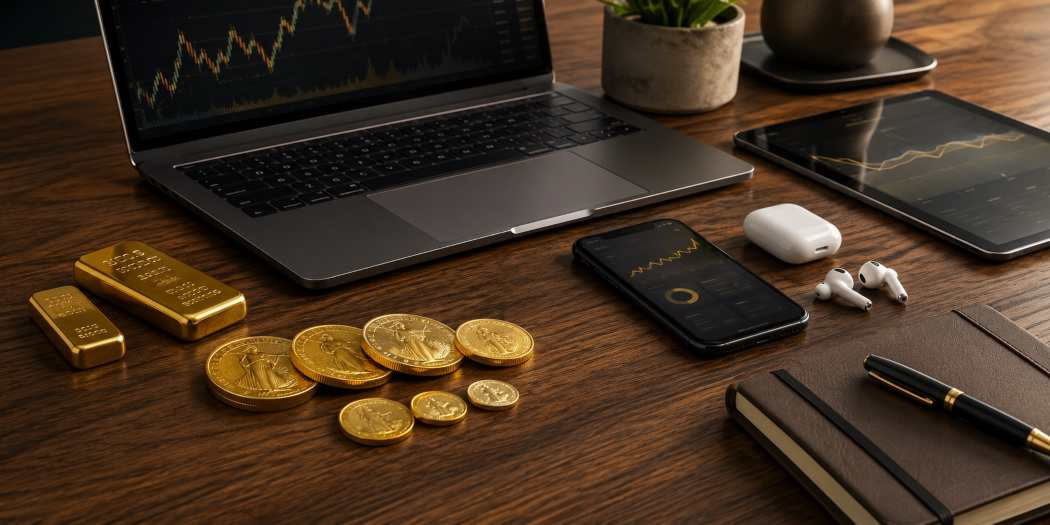
A New Generation Is Redefining Diversification
Not long ago, physical gold was widely associated with retirees, conservative investors, or those preparing for severe economic downturns. Millennials and Generation Z, meanwhile, were expected to build wealth through technology stocks, index funds, exchange-traded funds, and cryptocurrencies. That perception is beginning to shift.
Rather than moving away from modern investing, younger generations are broadening it. Inflation, rising interest rates, banking instability, geopolitical uncertainty, and increasingly volatile markets have encouraged many first-time investors to rethink what a balanced portfolio should look like. Alongside stocks and digital assets, physical gold has emerged as another tool for managing long-term financial risk.
This shift isn't driven by nostalgia or a rejection of technology. It reflects the experiences of a generation that has rarely enjoyed long periods of economic stability. Older Millennials entered adulthood during the global financial crisis. Both Millennials and Gen Z experienced the economic disruption of the COVID-19 pandemic, the highest inflation in decades, rapidly rising borrowing costs, and renewed concerns about the banking system. Those events shaped a generation that has learned diversification through experience rather than theory.
Gold's appeal fits naturally within that mindset. Instead of viewing wealth as something that exists entirely on a screen, many younger investors are recognizing the value of owning an asset that is tangible, globally recognized, and independent of the performance of any single company or financial institution.
Economic Uncertainty Created a Different Investment Mindset
Every generation approaches investing through the lens of its own experiences. Previous generations benefited from long periods of expanding markets, falling interest rates, and relatively predictable economic cycles. Younger investors have encountered something very different.
Technology stocks have produced remarkable gains while experiencing equally dramatic corrections. Cryptocurrencies have demonstrated enormous growth potential but remain among the market's most volatile assets. Inflation has reduced purchasing power more quickly than many younger investors had ever experienced, while rapidly changing interest rates have affected everything from mortgages to bond prices.
Rather than discouraging investing, these events have encouraged broader diversification. Younger investors increasingly recognize that no single asset performs well in every economic environment. Stocks may drive long-term growth, but they also fluctuate with corporate earnings and investor sentiment. Digital assets offer innovation and upside potential but can experience substantial volatility. Physical gold provides exposure to an asset whose price drivers often differ from those affecting equities and cryptocurrencies.
Financial education has also changed dramatically. Previous generations often relied on financial advisors or traditional media to learn about investing. Today, podcasts, newsletters, YouTube channels, and educational content have made portfolio construction far more accessible. Discussions about asset allocation now regularly include precious metals alongside stocks, ETFs, and digital assets, making gold feel less like a niche investment and more like a practical component of diversified wealth management.
Why Tangible Assets Still Matter in a Digital Economy
It might seem surprising that generations raised on smartphones, digital banking, and online investing are showing growing interest in physical bullion. Yet the same technological transformation that simplified investing has also highlighted the unique qualities of tangible assets.
Most modern wealth exists electronically. Brokerage accounts, retirement savings, cryptocurrencies, and even everyday banking depend on digital infrastructure and financial institutions. While these systems have made investing faster and more efficient, they have also reminded investors that much of modern finance depends on technology, networks, and third-party institutions.
Physical gold represents something fundamentally different. A bullion coin or bar exists independently of trading platforms, mobile applications, or financial intermediaries. It can be securely stored, transferred, and owned directly without relying on electronic systems.
For younger investors, this distinction is less about rejecting technology than about balancing it. Diversification no longer means simply owning different sectors of the stock market. It increasingly means owning assets with fundamentally different characteristics. Physical gold complements digital wealth by providing exposure to something tangible, scarce, and universally recognized—qualities that cannot be replicated through software or financial engineering.
Gold and Digital Assets Are No Longer Opposing Ideas
One of the most persistent misconceptions about younger investors is that they must choose between physical gold and digital assets. In practice, many are choosing both.
Bitcoin and other cryptocurrencies have introduced a new generation to concepts such as decentralized finance, limited supply, and alternative stores of value. Gold, however, brings a different set of characteristics to the table. It has thousands of years of monetary history, deep global liquidity, and universal recognition that extends across virtually every economy. Rather than competing for the same role, the two assets often address different investment objectives.
That distinction is becoming increasingly apparent as younger investors gain experience. Cryptocurrency can offer exceptional growth potential but often comes with significant price volatility. Gold has historically moved differently during periods of economic stress, making it a useful complement rather than a substitute. One represents innovation and emerging financial technology; the other represents stability, permanence, and long-established market confidence.
This broader approach reflects an evolution in portfolio construction. Instead of dividing investments into "traditional" and "modern" categories, younger investors are increasingly selecting assets based on how they behave under different economic conditions. A diversified portfolio might include index funds for long-term growth, technology stocks for innovation, cryptocurrency for higher-risk exposure, cash for liquidity, and physical gold for balance. Each asset serves a different purpose, reducing dependence on any single market trend or economic outcome.
Institutional investors have embraced similar thinking for years, using diversification to manage uncertainty rather than attempting to predict every market cycle. As financial education has become more accessible, younger investors are applying many of those same principles to their own portfolios.
Accessibility Has Changed the Bullion Market
Changing attitudes alone would not explain the growing interest in physical gold. Equally important is how much easier it has become to buy.
A generation ago, purchasing bullion often meant visiting a local coin shop, navigating unfamiliar pricing, or making relatively large purchases. Today, online precious metals dealers have transformed the buying experience. Investors can compare products, monitor live spot prices, review educational resources, and purchase securely from virtually anywhere. Greater transparency has helped make physical gold more approachable for first-time buyers who may have had little previous exposure to the bullion market.
Product selection has also evolved. Fractional gold coins and bars have opened the market to investors who want to build positions gradually instead of making a substantial upfront commitment. Rather than waiting until they can afford a full ounce of gold, buyers can accumulate precious metals over time using the same disciplined approach many already apply to retirement accounts and index fund investing.
The growing availability of educational content has reinforced this trend. Younger investors now have access to articles, podcasts, videos, and market analysis explaining bullion products, premiums, secure storage, and portfolio diversification. What was once considered a specialized market has become considerably more accessible, helping remove many of the barriers that previously discouraged new investors from considering physical ownership.
Building Wealth Through Resilience, Not Prediction
Perhaps the most important change isn't that Millennials and Gen Z are buying more physical gold. It's why they're buying it.
Many younger investors have grown skeptical of the idea that successful investing depends on accurately predicting the next winning asset class. Instead, they are building portfolios designed to remain resilient across a variety of market conditions. That philosophy naturally favors diversification over concentration and preparation over prediction.
Physical gold fits comfortably within that framework. It is unlikely to replace stocks as a primary driver of long-term growth, nor is it intended to match the rapid gains sometimes seen in emerging technologies or digital assets. Its value lies in providing balance—offering exposure to an asset whose performance is often influenced by different economic forces than those affecting equities or cryptocurrencies.
Millennials and Generation Z are not reviving an investment habit from previous generations; they are adapting it to today's financial landscape. Gold has become another tool for preserving purchasing power, managing uncertainty, and strengthening long-term portfolios alongside modern investments rather than in place of them.
As these generations continue accumulating wealth, their investment preferences will increasingly shape the future of the precious metals market. If current trends continue, physical gold will be viewed less as a legacy asset and more as an essential component of a diversified portfolio—one that reflects a generation equally comfortable embracing financial innovation and recognizing the enduring value of tangible wealth.
FAQs
Why are Millennials buying physical gold?
Millennials are buying physical gold because many view it as a way to diversify beyond stocks, bonds, and digital assets. Having experienced the financial crisis, pandemic-related economic disruptions, and persistent inflation, they increasingly value assets that can help preserve purchasing power while reducing overall portfolio risk.
Why is Gen Z interested in investing in gold?
Generation Z has grown up during a period of economic uncertainty and has unprecedented access to financial education through digital platforms. Many young investors now see gold as a complement to traditional investments and cryptocurrencies rather than an outdated asset, making it part of a diversified long-term investment strategy.
Is physical gold replacing cryptocurrency?
No. Many younger investors own both physical gold and cryptocurrency because each serves a different purpose. Cryptocurrencies often provide higher growth potential but greater volatility, while physical gold is valued for its stability, global recognition, and long history as a store of value.
Why does physical gold appeal to younger investors?
Physical gold offers direct ownership of a tangible asset that exists independently of financial institutions and digital platforms. For many younger investors, that tangible ownership complements increasingly digital portfolios while providing diversification beyond electronic assets.
Can you start investing in gold with a small budget?
Yes. Fractional gold coins and bars allow investors to purchase smaller amounts of gold without buying a full ounce. These products make physical gold more accessible to first-time buyers and those who prefer gradually building their holdings over time.
How does gold fit into a diversified portfolio?
Gold can help diversify a portfolio because it often responds differently to economic conditions than stocks and many other financial assets. Rather than replacing equities or bonds, gold may provide balance by offering exposure to an asset with unique market drivers.
Are younger investors changing the precious metals market?
Yes. Millennials and Generation Z are helping reshape the bullion market through increased online purchasing, greater interest in fractional bullion, and a broader acceptance of physical precious metals as part of diversified investment portfolios.
Is physical gold a good long-term investment?
Physical gold is generally considered a long-term store of value rather than a short-term trading asset. Many investors use it to preserve purchasing power, diversify portfolios, and provide a measure of stability during periods of economic uncertainty.