


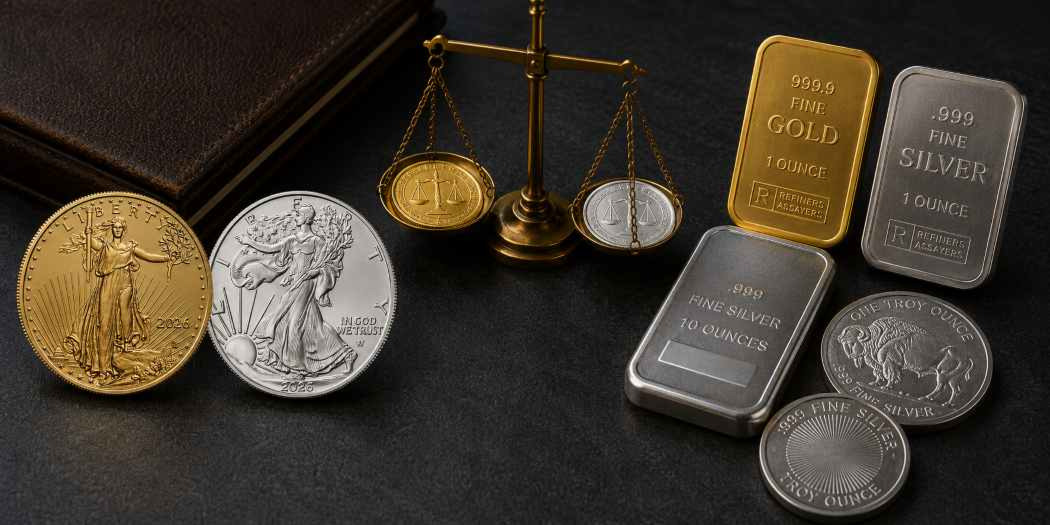
Why the Premium Debate Matters More Than Ever
Recent volatility in the precious metals market, with elevated gold prices and sharper silver price swings, has changed the way many investors evaluate bullion purchases. When prices were lower and market conditions were more stable, paying an extra few dollars for a popular coin often seemed inconsequential. Today, as investors allocate more capital to physical gold and silver while closely watching market movement, premiums have become a far more important factor in determining overall value.
That shift has revived one of the oldest debates in the bullion market: should investors pay more for American Eagles, or focus on acquiring the maximum number of ounces through lower-premium generic products?
At first glance, the answer appears straightforward. Gold is gold. Silver is silver. If two products contain the same amount of precious metal, logic suggests the lower-priced option should always win.
The market rarely behaves that way.
American Eagles have commanded premium prices for decades, often selling well above comparable generic bars and rounds. Despite that difference, demand remains remarkably strong. Investors continue buying them during bull markets, corrections, inflation scares, banking crises, and periods of geopolitical uncertainty. The question, then, is not simply why American Eagles cost more. The more interesting question is why so many investors continue paying the premium.
The answer reveals something important about how the physical bullion market actually works.
The Hidden Choice Behind Every Bullion Purchase
Most buyers assume they are choosing between two forms of precious metal ownership. In reality, they are often choosing between two entirely different approaches to investing.
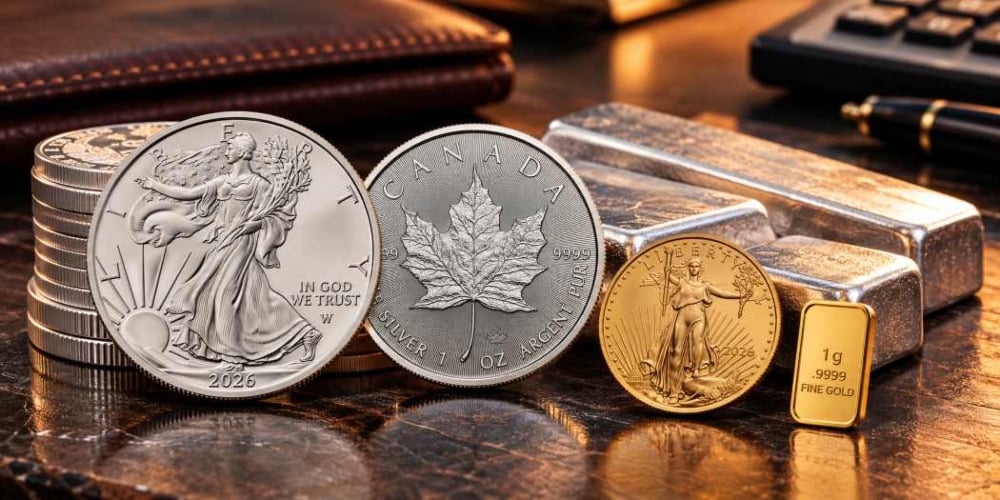
Generic bullion is built around efficiency. Whether it takes the form of a privately minted silver round, a gold bar from a respected refinery, or a low-premium silver bar, the objective is usually straightforward: acquire as much metal as possible for the lowest cost above spot price. The focus remains firmly on ounces.
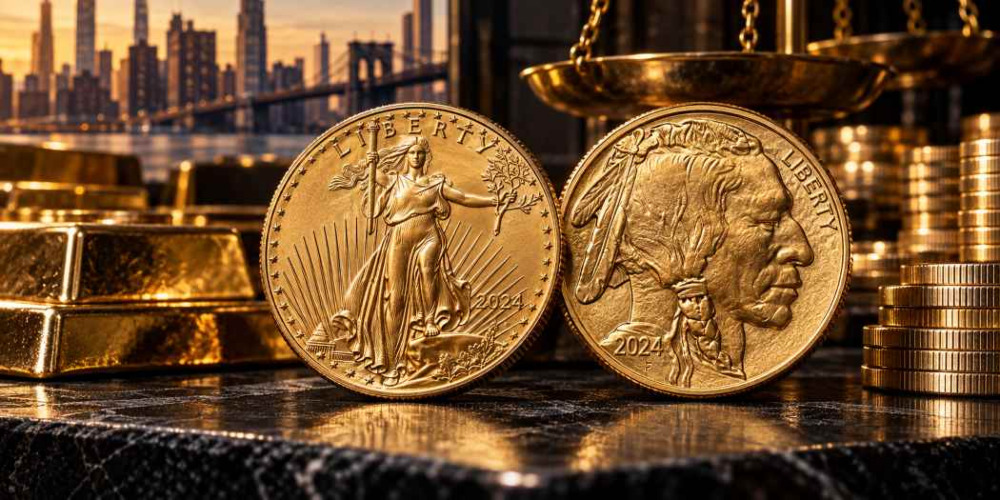
American Eagles occupy a different position in the marketplace. Investors are not merely purchasing gold or silver. They are purchasing the most widely recognized bullion coin program in the United States and one of the most actively traded bullion products in the world. Recognition, government backing, and liquidity become part of the package.
This distinction often becomes clearer when market conditions change.
During stable periods, the premium difference between Eagles and generic bullion can seem difficult to justify. The underlying metal performs the same regardless of what shape it takes. A one-ounce gold bar benefits from rising gold prices just as a Gold American Eagle does.
Yet physical bullion markets are rarely evaluated only during calm periods. Investors purchase precious metals precisely because they are concerned about uncertainty. Inflation, financial instability, geopolitical events, and broader market volatility all influence buying behavior. It is during those periods that differences between products often become more visible.
The comparison begins to resemble the difference between owning a highly liquid blue-chip stock and a smaller company with similar fundamentals. Both may perform well, but one enjoys broader recognition, deeper markets, and greater familiarity among participants. Those advantages may not matter every day, but when demand surges or conditions become more challenging, they often become easier to see.
That dynamic helps explain why the premium discussion has persisted for so long. The debate is not really about whether American Eagles contain more precious metal than generic products. They do not. The debate centers on whether liquidity, recognition, trust, and marketability justify paying more at the time of purchase.
The answer depends heavily on what an investor expects from ownership in the first place.
Why American Eagles Continue to Command Premiums
If the bullion market cared only about metal content, premium differences would eventually disappear. Competition would drive products toward similar pricing, and investors would overwhelmingly choose the lowest-cost option available.
The fact that this has never happened tells us something important.
American Eagles occupy a unique position within the precious metals market because they combine several characteristics that investors consistently value. They are produced by the United States Mint, backed by the U.S. government for weight and purity, and recognized by virtually every major dealer, wholesaler, and investor in the country. Decades of continuous production have reinforced that familiarity.
Recognition creates its own form of value.
A dealer evaluating inventory does not need to spend much time explaining a Silver Eagle to prospective buyers. The product already has a well-established market. Investors know what it is, understand its specifications, and generally trust its authenticity. That widespread acceptance contributes to the coin's liquidity and helps support stronger demand across varying market conditions.
There is also a psychological component that should not be ignored. Investors often gravitate toward products they recognize, particularly during periods of uncertainty. In many cases, buyers are willing to pay a premium simply because they believe others will continue valuing the product in the future. Whether that belief is entirely rational is less important than the fact that it consistently influences market behavior.
The result is a premium structure that has proven remarkably durable over time. While premium levels fluctuate, the underlying reasons investors choose American Eagles have remained largely unchanged across multiple market cycles.
The Case for Generic Bullion Has Never Been Stronger
The enduring popularity of American Eagles sometimes overshadows a simple reality: a large percentage of experienced precious metals investors deliberately choose generic bullion.
Their reasoning is not difficult to understand.
While Eagle buyers focus on recognition and liquidity, generic bullion buyers often view precious metals through a different lens. Their primary objective is maximizing metal ownership. Every dollar spent on premiums is a dollar that could otherwise be converted into additional ounces.
That perspective becomes increasingly compelling as metal prices rise.
When gold traded below $1,500 per ounce, premium differences represented a relatively small percentage of the overall purchase. At today's price levels, however, the premium attached to a one-ounce Gold American Eagle can represent a meaningful amount of capital. Investors allocating tens of thousands of dollars—or more—to physical bullion quickly recognize that premium differences can translate into additional ounces over time.
This is particularly evident in silver. The gap between Silver Eagles and generic silver rounds frequently allows buyers to acquire substantially more silver for the same investment budget. For investors whose primary thesis centers on long-term metal accumulation rather than collectibility or liquidity, that tradeoff often feels logical.
The rise of respected private mints has also strengthened the generic bullion market. Products from established refiners and manufacturers now enjoy broad acceptance among dealers and investors. While they may not command the same universal recognition as American Eagles, many generic products no longer carry the uncertainty that once surrounded lesser-known bullion issues.
As a result, the generic bullion market has evolved far beyond being the budget alternative. For many investors, it has become a deliberate strategy centered on ounce accumulation and cost efficiency.
What Market Stress Reveals About Premiums and Liquidity
The debate between Eagles and generic bullion becomes most interesting when normal market conditions begin to break down.
During periods of strong supply and stable demand, premium differences can appear largely academic. Most products remain readily available, inventories are healthy, and investors have little difficulty buying or selling bullion.
History suggests those conditions rarely persist indefinitely.
The pandemic-era bullion surge offered a useful case study. As demand accelerated across the precious metals market, inventories tightened rapidly. Government mints faced production challenges, supply chains experienced disruptions, and investors rushed toward recognizable products. Premiums expanded dramatically across the board, but American Eagles often experienced some of the most significant increases.
That behavior was not unique to the pandemic. Similar patterns have emerged during banking crises, inflation scares, and periods of heightened geopolitical uncertainty. When investors become more concerned about certainty, liquidity, and trust, demand frequently concentrates in products with established reputations.
This does not necessarily mean Eagles outperform generic bullion in terms of underlying metal value. Gold and silver prices affect both categories. What changes is the premium environment surrounding those products.
In calmer markets, the premium gap may narrow. During periods of stress, the gap can widen considerably.
Understanding this dynamic is important because many investors evaluate products based on current conditions while overlooking how markets behave during less predictable periods. Physical bullion is often purchased as a hedge against uncertainty, which makes it reasonable to consider how different products perform when uncertainty actually arrives.
Resale Is Where the Premium Question Gets Interesting
Much of the premium discussion focuses on the buying side of the transaction. The selling side often receives far less attention.
This is somewhat surprising because resale is where many of the assumptions surrounding premiums are tested.
Investors purchasing generic bullion often begin with a straightforward premise: lower acquisition costs should improve long-term outcomes. In many cases, that assumption proves correct. Paying less upfront means more capital remains invested in metal rather than premiums.
Yet resale markets introduce additional variables.
Dealers frequently maintain strong bid structures for American Eagles because demand remains consistently high. The same recognition that supports premiums on the purchase side often supports liquidity on the selling side as well. Buyers know what they are getting, dealers know they can move inventory efficiently, and transactions tend to occur with minimal friction.
Generic bullion can also be highly liquid, particularly when produced by respected refiners. However, liquidity is not always distributed evenly across every product category. Some bars and rounds enjoy broad market acceptance, while others may appeal to a narrower audience.
The result is that premium recovery varies considerably depending on the product involved and the market environment at the time of sale.
This is one reason experienced investors rarely reduce the decision to a simple premium comparison. The question is not merely how much premium is paid. It is how much value that premium may retain throughout the ownership cycle.
Different Investors Often Reach Different Conclusions
One reason the American Eagle versus generic bullion debate has persisted for decades is that there is no universally correct answer.
The investor building a large long-term silver position may prioritize ounces above all else. For that buyer, generic rounds and bars often represent the most efficient path toward accumulation. Every dollar saved on premiums increases overall metal exposure.
A different investor may place greater emphasis on liquidity, simplicity, and market recognition. That individual may view American Eagles as worth the additional cost because the products are familiar, widely accepted, and consistently in demand.
Still others choose a combination of both approaches.
Many experienced precious metals investors maintain core holdings of lower-premium bars while selectively acquiring Eagles during periods when premiums become more attractive. Others focus on Eagles for silver while using generic products for gold, or vice versa. The strategies vary because ownership objectives vary.
What ultimately matters is that the product aligns with the investor's goals rather than with a universal rule about premiums.
What the Premium Really Buys
The longer one studies the bullion market, the clearer it becomes that premiums are not simply costs. They are prices attached to specific characteristics.
In the case of American Eagles, investors are often paying for liquidity, recognition, trust, and the confidence that comes from owning one of the most actively traded bullion products in the world. Whether those characteristics justify the premium depends on the individual buyer.
Generic bullion represents a different proposition. The focus is efficiency. Investors sacrifice some degree of product recognition in exchange for maximizing precious metal ownership.
Neither approach is inherently superior because they are designed to accomplish different objectives.
The more useful question is not whether American Eagles are worth the premium. It is whether the benefits associated with that premium align with what the investor values most.
Looking Beyond the Price Tag
The debate between American Eagles and generic bullion will likely continue as long as physical precious metals remain an important part of portfolio diversification and wealth preservation strategies.
What makes the discussion enduring is that both sides have compelling arguments. One prioritizes liquidity and recognition. The other prioritizes efficiency and ounce accumulation. Both approaches have produced successful outcomes for investors across multiple market cycles.
As gold and silver continue attracting attention from investors concerned about inflation, debt levels, currency purchasing power, and broader financial uncertainty, the premium conversation is unlikely to disappear. If anything, higher metal prices have made it more relevant than ever.
The most successful bullion investors are often the ones who look beyond the immediate premium and focus instead on the role a product will play within their broader strategy. Once that objective becomes clear, the decision between American Eagles and generic bullion tends to become much easier.
FAQs
Are American Eagles worth the higher premium?
American Eagles can be worth the higher premium for investors who value liquidity, recognition, and strong secondary-market demand. Produced by the U.S. Mint and widely recognized throughout the bullion industry, they often attract consistent buyer interest. While generic bullion may offer more metal for the same budget, many investors view Eagles as paying for marketability and ease of resale rather than simply metal content.
Why do American Eagles cost more than generic bullion?
American Eagles typically cost more because investors place value on their government backing, recognition, and long-established reputation. The coins are among the most actively traded bullion products in the world, creating strong demand across retail and dealer markets. That demand supports higher premiums compared with generic bars and rounds, which focus primarily on providing low-cost precious metal ownership.
Is generic bullion a good investment?
Generic bullion can be an excellent investment for buyers focused on maximizing ounces. Because generic bars and rounds usually carry lower premiums than government-issued coins, investors can often acquire more gold or silver for the same amount of money. This approach appeals particularly to long-term stackers who prioritize metal accumulation over collectibility or brand recognition.
Are American Eagles easier to sell than generic bullion?
In many situations, American Eagles are easier to sell because they are widely recognized and actively traded. Dealers, investors, and wholesalers are familiar with their specifications, making transactions straightforward. Generic bullion is also highly liquid when produced by respected manufacturers, but market demand is often strongest for products with established recognition and long-term popularity.
Do American Eagles perform better during market uncertainty?
American Eagles often experience stronger premium expansion during periods of elevated demand. During financial crises, inflation scares, or supply disruptions, investors frequently gravitate toward widely recognized bullion products. While the underlying gold or silver price affects both Eagles and generic bullion, premium behavior can differ significantly when market conditions become more volatile.
What is the biggest advantage of generic bullion?
The biggest advantage of generic bullion is cost efficiency. Lower premiums allow investors to convert more of their capital into actual precious metal rather than product-related costs. Over time, this can result in significantly greater ounce accumulation, particularly for buyers making large purchases or building long-term positions in gold and silver.
Do American Eagles hold their premiums better?
American Eagles often retain stronger premium support because of consistent demand and broad market recognition. While no premium is guaranteed to remain constant, Eagles frequently command higher resale values than many generic products. The degree of premium retention depends on market conditions, investor demand, and the specific product involved.
Should beginners buy American Eagles or generic bullion?
The best choice depends on investment goals. Beginners seeking simplicity, recognition, and strong liquidity often gravitate toward American Eagles. Those focused on maximizing precious metal ownership may prefer generic bullion. Many investors ultimately own both, using each category for different purposes within a broader precious metals strategy.
Is a Gold American Eagle better than a gold bar?
A Gold American Eagle is not necessarily better than a gold bar, but it offers different advantages. Eagles provide government backing and strong market recognition, while gold bars generally offer lower premiums. Investors must decide whether liquidity and familiarity justify the additional cost compared with acquiring more ounces through lower-premium products.
Why do investors own both Eagles and generic bullion?
Many experienced investors use a blended approach because each product serves a different role. Generic bullion can maximize metal accumulation, while American Eagles provide liquidity and market recognition. Combining both allows investors to balance cost efficiency with flexibility, creating a portfolio that benefits from the strengths of each category.
Related reading you may find interesting:
10 Mistakes Every New Coin Collector Should Avoid