


A Beaten-Down Metal Is Getting a Second Look
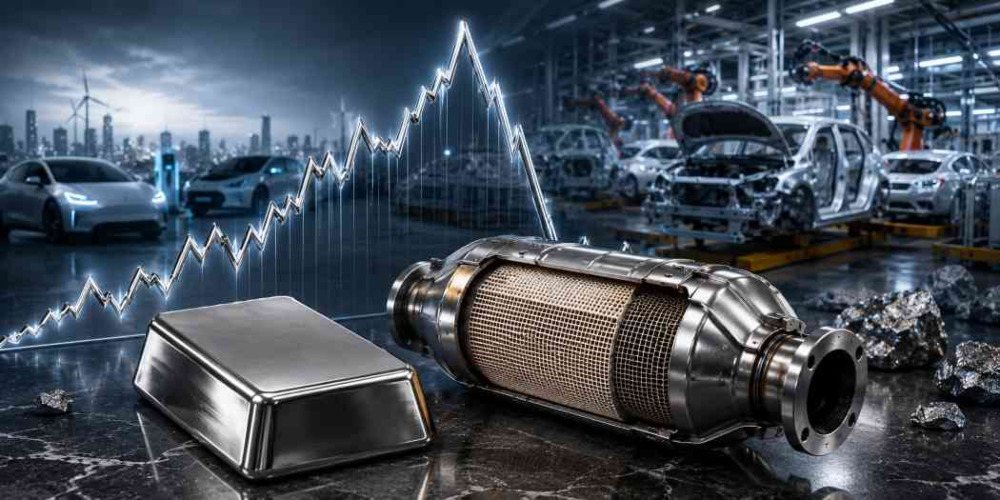
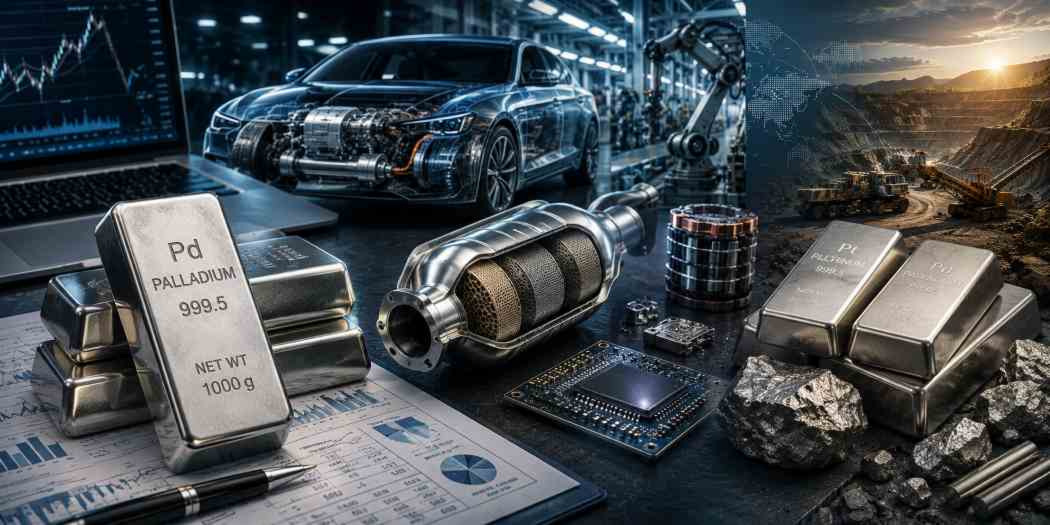
Palladium spent years as one of the most dramatic stories in the precious metals market. It climbed to extraordinary highs when supply was tight, automakers needed more metal for catalytic converters, and investors worried that production disruptions could leave the market dangerously exposed. Then the story changed. Electric vehicles gained market share, platinum substitution became a serious discussion, and prices retreated from the peaks that once made palladium one of the strongest-performing commodities in the world.
That decline is exactly why investors are paying attention again.
Palladium does not have the same wealth-preservation reputation as gold or the same broad monetary and industrial identity as silver. It is a narrower market, more dependent on automotive demand, supply chains, and investor positioning. That makes it riskier, but it also means sentiment can shift quickly when expectations become too negative. In markets like palladium, the recovery potential often begins when investors stop asking how high prices can go and start asking whether the bad news has already been priced in.
The renewed interest is not based on a simple bullish story. Palladium still faces real long-term challenges, especially as the auto industry continues moving toward electrification. But the market has also become more balanced than the most bearish narratives suggest. Gasoline and hybrid vehicles are not disappearing overnight, emissions standards remain important, supply is concentrated in a few key regions, and speculative positioning can leave the metal vulnerable to sharp reversals when sentiment changes.
For investors willing to look beyond the recent weakness, palladium is beginning to look less like a forgotten metal and more like a contrarian opportunity.
The Bear Case Became Too Easy
Every commodity downturn eventually develops its own consensus. In palladium, that consensus has been unusually clear: electric vehicles reduce the need for catalytic converters, catalytic converters are palladium's primary demand source, and therefore long-term demand must decline.
There is truth in that argument, which is why the market repriced so dramatically. Fully electric vehicles do not use traditional exhaust systems, and the growth of EVs has unquestionably changed how investors value future demand for platinum group metals. Automakers have also explored using more platinum in place of palladium where possible, especially after palladium spot prices surged to extreme levels.
Yet markets often overshoot when a narrative becomes too clean. The global auto fleet is not transforming at the same pace in every region, and hybrids continue to complicate the idea of a straight-line decline. Many hybrid vehicles still require emissions-control systems, and gasoline-powered vehicles remain deeply embedded in global transportation, particularly outside the wealthiest markets. Even in countries where EV adoption is rising, affordability, charging infrastructure, policy changes, and consumer preferences can slow the transition.
That does not erase palladium's long-term demand risk. It does, however, make the investment case more nuanced than the phrase 'EV transition' implies. If the market priced palladium as though autocatalyst demand would collapse quickly, any evidence of a slower, uneven transition could support a recovery.
Supply Risk Has Not Gone Away
Palladium's demand outlook receives most of the attention, but supply is just as important. The metal is produced in concentrated regions, with Russia and South Africa playing central roles in global output. That concentration creates a market where geopolitical tension, sanctions discussions, mining disruptions, power shortages, labor issues, or logistical problems can quickly affect investor sentiment.
This matters because palladium is not a market with endless flexibility. New mine supply cannot appear quickly in response to higher prices, and much production is tied to broader platinum group metals operations rather than standalone palladium projects. Recycling helps, but recycled supply depends on the availability of end-of-life catalytic converters and broader scrap-market dynamics. When recycling volumes disappoint or mine output faces pressure, the supply side can become tighter than headline demand trends suggest.
The same concentration that creates risk can also create recovery potential. A market already leaning bearish may react sharply if supply concerns reemerge. Palladium has shown this pattern before: long stretches of weakness can be interrupted by sudden spikes when traders are forced to reconsider the balance between available supply and near-term demand.
That makes palladium different from metals driven mainly by broad macro forces. Gold may respond to interest rates and central bank demand. Silver may follow both investment flows and industrial trends. Palladium is more specialized, but that specialization can produce powerful moves when supply and positioning collide.
Investor Positioning Can Turn Quickly
Palladium's smaller market size is one reason price movements can feel exaggerated compared with gold or silver. When investor interest dries up, selling pressure can weigh heavily on prices. When sentiment improves, the same lack of depth can work in the opposite direction.
This is part of the reason contrarian investors have begun watching the metal more closely. Palladium has underperformed many other precious metals in recent cycles, leaving it discounted relative to its own history and, at times, relative to platinum and gold. Underperformance alone is not a reason to buy an asset, but it can become meaningful when paired with signs that the downside narrative is already widely accepted.
A recovery would likely require more than one catalyst. Stronger-than-expected gasoline or hybrid vehicle production would help. So would tighter mine supply, stronger recycling constraints, renewed geopolitical concern, or a broader rotation into lagging precious metals after major moves in gold, silver, and platinum. If several of those factors emerge together, the market could begin reassessing whether palladium prices fell too far.
That is not the same as saying palladium is returning to its previous highs. The market structure has changed, and investors should be cautious about assuming the next cycle will look like the last one. The more realistic case is that palladium may regain attention as a recovery trade, not because its challenges disappeared, but because expectations became too one-sided.
Palladium Still Carries More Risk Than Gold or Silver
Any serious palladium forecast needs to acknowledge the metal's limitations. This is not the same kind of wealth-preservation asset as gold, and it does not have silver's broad mix of monetary and industrial demand. Palladium is more concentrated, more cyclical, and more dependent on a specific set of industrial uses.
That dependence can create opportunity, but it also raises risk. If EV adoption accelerates faster than expected, if automakers substitute platinum more aggressively, or if global vehicle production weakens, palladium could remain under pressure. The metal's volatility also means timing matters more than it does with traditional long-term precious metal bullion holdings.
For that reason, palladium investing is usually better suited to investors who understand commodity cycles and can tolerate sharper price swings. It may serve as a tactical allocation within a broader precious metals strategy rather than a core preservation asset. Gold remains the anchor for stability. Silver offers a wider industrial base. Palladium belongs in a more specialized category, where recovery potential and volatility are closely linked.
The Recovery Case Depends on a Slower Transition
Palladium is back on investors' radar because the story is no longer as one-sided as it appeared during the downturn. The EV transition remains a major long-term headwind, but the path away from internal combustion engines is uneven. Hybrids still matter. Gasoline vehicles still dominate many markets. Emissions systems still require critical metals. At the same time, supply remains concentrated and investor positioning has already absorbed years of negative expectations.
That combination gives palladium a more interesting setup than it had when prices were elevated and enthusiasm was widespread. The best opportunities in cyclical commodities often appear when investors are uncomfortable, not when the market narrative is universally positive.
Palladium may not reclaim its former status as the hottest precious metal, and it does not need to. The more practical question is whether the market has become too pessimistic relative to the pace of real-world demand changes. If automotive demand proves more resilient than expected, supply remains constrained, or investors rotate toward lagging precious metals, palladium could continue rebuilding its case as one of the more closely watched recovery stories in the sector.
FAQs
Why are investors interested in palladium again?
Investors are revisiting palladium because prices have declined significantly from previous highs while supply risks remain and automotive demand has proven more resilient than some forecasts expected. Many see the metal as a potential recovery opportunity if market sentiment improves.
Is palladium a good investment in 2026?
Palladium may appeal to investors seeking exposure to a contrarian precious metals opportunity. However, its outlook depends on factors such as automotive production, electric vehicle adoption, mine supply, recycling, and global economic conditions, making it more volatile than gold or silver.
Why did palladium prices fall?
Palladium prices declined as concerns grew that electric vehicles would reduce demand for catalytic converters. Increased platinum substitution, slowing vehicle production, and changing investor sentiment also contributed to the market's correction.
What is palladium mainly used for?
Palladium is primarily used in catalytic converters for gasoline-powered and hybrid vehicles, where it helps reduce harmful emissions. It also has applications in electronics, dentistry, chemical processing, hydrogen technology, and jewelry.
Does the growth of electric vehicles hurt palladium demand?
Battery-electric vehicles do not require catalytic converters, creating a long-term challenge for palladium demand. However, gasoline and hybrid vehicles continue to represent a significant share of global vehicle production, supporting ongoing industrial demand.
Could palladium prices recover?
A recovery is possible if automotive demand remains stronger than expected, supply disruptions occur, or investor sentiment improves. Like all commodities, future prices will depend on changing market conditions rather than any single factor.
What makes palladium more volatile than gold?
Palladium trades in a much smaller market and relies heavily on industrial demand, particularly from the automotive sector. Concentrated mine supply and changing manufacturing trends can produce larger price swings than those typically seen in gold.
Where is most palladium mined?
Most primary palladium production comes from Russia and South Africa, making global supply relatively concentrated. Because production is centered in a limited number of regions, geopolitical events and mining disruptions can significantly influence the market.
Is palladium better than gold?
Palladium and gold serve different investment purposes. Gold is widely regarded as a long-term store of value and wealth preservation asset, while palladium is more closely tied to industrial demand and may offer greater upside potential alongside higher risk.
Should palladium be part of a diversified precious metals portfolio?
For investors comfortable with higher volatility, palladium can provide diversification beyond gold and silver. Many investors view it as a tactical allocation rather than a core long-term holding because its performance depends heavily on industrial and automotive trends.
Related reading you may find interesting:
Why Palladium Is More Volatile Than Any Other Precious Metal