

How Diversification Helps Protect Wealth in Volatile Markets
The importance of diversification becomes clearest when markets stop moving in one direction. Stocks can rally while inflation remains stubborn. Gold can rise during geopolitical stress while crypto weakens under rate pressure. Silver can benefit from industrial demand even as broader risk assets cool. In this environment, investors are not just asking what to buy; they are asking how different assets behave when inflation, interest rates, currency risk, and market sentiment shift at the same time.
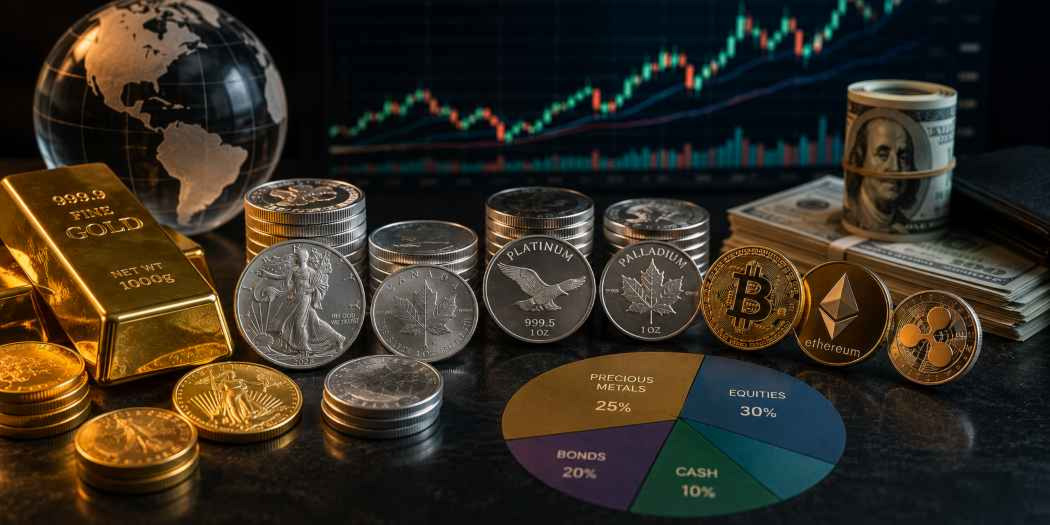
Diversification is not about owning random assets. It is about building a portfolio where each holding serves a specific role. Precious metals, cryptocurrencies, equities, bonds, cash, and collectible assets can all respond differently to the same economic event. Gold may act as a defensive store of value, silver may offer both monetary and industrial exposure, platinum and palladium may track supply-demand pressures in the auto and manufacturing sectors, and Bitcoin may behave as a high-volatility alternative asset tied to liquidity and risk appetite.
Market Conditions Are Making Asset Balance More Important
Investors are operating in a world shaped by uneven growth, persistent policy uncertainty, high debt levels, and shifting inflation expectations. The World Gold Council has noted that geopolitical factors are expected to remain central to gold demand in 2026, supporting central bank buying, gold ETF inflows, and bar and coin accumulation.
That backdrop makes portfolio balance more important. When inflation rises, cash can lose purchasing power. When interest rates rise, bonds and growth stocks can face pressure. When geopolitical risk increases, defensive assets may receive stronger demand. When liquidity improves, speculative assets such as cryptocurrencies may outperform. A diversified portfolio helps investors avoid depending entirely on one market outcome.
The goal is not to eliminate volatility. No portfolio can do that. The goal is to reduce the risk that one asset class, one sector, or one economic scenario controls the entire investment result.
Gold’s Defensive Role Is Different From Growth Assets
Gold has historically served as a store of value during periods of inflation concern, currency stress, and geopolitical uncertainty. Unlike stocks, gold does not represent ownership in a company. Unlike bonds, it does not depend on an issuer’s repayment promise. Unlike fiat currency, it is not created by central bank policy.
This gives gold a distinct portfolio role. Investors often turn to gold when confidence in paper assets weakens or when real interest rates, debt levels, and political risk become difficult to price. Central banks also hold gold as a reserve asset, reinforcing its institutional importance.
However, gold is not designed to behave like a high-growth asset. It does not pay dividends, generate earnings, or produce yield. Its strength is preservation, liquidity, and independence from many financial-system risks. That makes gold useful in a diversified portfolio, but not necessarily sufficient by itself.
Silver Adds Industrial Demand and Higher Volatility
Silver offers a different form of diversification because it behaves as both a precious metal and an industrial commodity. It can benefit from monetary demand, but it is also used in solar panels, electronics, electric vehicles, medical applications, and advanced technology. The Silver Institute expects the silver market to remain in deficit for a sixth consecutive year in 2026, highlighting continued supply-demand tightness.
This dual identity makes silver more volatile than gold. During periods of strong industrial optimism, silver may outperform. During slowdowns or liquidity stress, it may fall more sharply. For investors, that means silver can add upside potential but also requires patience and risk awareness.
A balanced metals allocation may include gold for stability and silver for growth-sensitive exposure. Together, they can provide a broader precious metals position than either metal alone.
Platinum and Palladium Broaden Metals Exposure Beyond Gold and Silver
Platinum and palladium add another layer of diversification because their markets are heavily influenced by industrial use, mine supply, and automotive demand. These platinum-group metals are widely used in catalytic converters, chemical processes, hydrogen technologies, electronics, and other specialized applications.
Their supply chains are also more concentrated than gold’s. South Africa and Russia play major roles in platinum-group metal production, which means labor issues, energy constraints, sanctions, export disruptions, and mining challenges can affect prices. This creates risks, but also potential opportunities when supply tightens.
For investors, platinum and palladium should not be treated as simple substitutes for gold. They are more cyclical, more industrial, and often more sensitive to economic growth expectations. Their value in a diversified portfolio comes from adding exposure to different supply-demand drivers.
Cryptocurrency Can Diversify, But It Requires Risk Discipline
Cryptocurrency has become part of the diversification conversation because digital assets can behave differently from traditional stocks, bonds, and precious metals. Bitcoin, in particular, is often discussed as a scarce digital asset with a fixed supply schedule. Ethereum adds exposure to blockchain applications, smart contracts, and decentralized financial infrastructure.
Still, crypto remains highly volatile. It can respond sharply to liquidity conditions, regulation, investor sentiment, technology risk, and institutional flows. Unlike physical gold or silver, crypto depends on digital networks, custody security, wallet management, and exchange infrastructure.
That does not mean crypto has no place in a diversified portfolio. It means position sizing matters. For many investors, crypto works best as a smaller high-risk allocation rather than a replacement for physical metals, cash reserves, or traditional investments. The key is understanding that diversification should reduce concentration risk, not simply add speculation.
Bullion and Numismatic Assets Serve Different Portfolio Goals
Precious metals investors should also distinguish between bullion and numismatic products. Bullion coins and bars are primarily valued based on metal content, spot price, and product premiums. They are typically used for liquidity, weight accumulation, and direct exposure to gold, silver, platinum, or palladium.
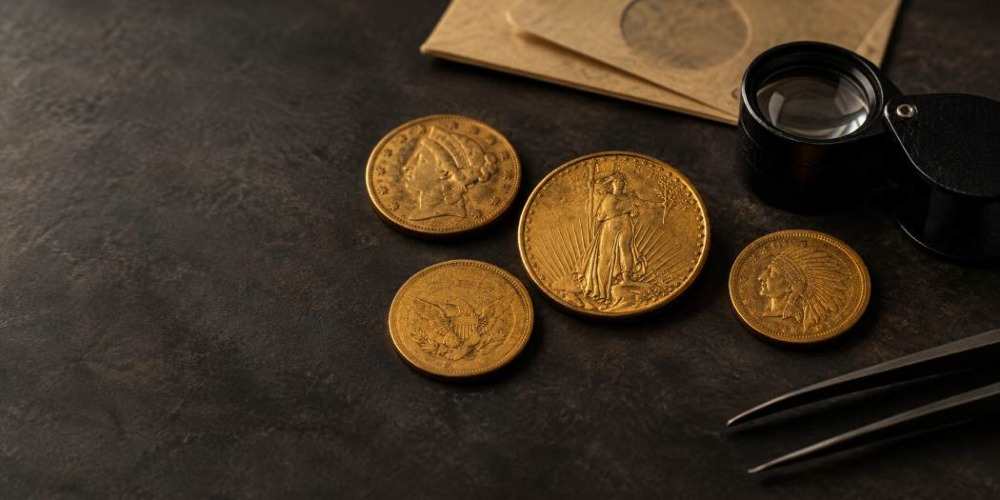
Numismatic coins are different. Their value may depend on rarity, mintage, condition, grading, historical importance, and collector demand. A rare coin can rise or fall for reasons unrelated to the metal spot price. This makes numismatics a specialized form of diversification within the broader hard-asset category.
For example, a gold bullion coin may closely follow the gold price, while a certified rare coin may also reflect population reports, auction activity, and collector demand. Investors should not treat them as interchangeable. Bullion can provide metal exposure; numismatics can provide scarcity-driven collectible value.
The Best Diversification Plans Are Built Around Function
A strong diversification strategy starts by assigning each asset a job. Gold may serve as crisis insurance. Silver may add inflation and industrial leverage. Platinum and palladium may provide exposure to manufacturing and supply constraints. Crypto may offer asymmetric digital-asset potential. Cash may provide flexibility. Equities may deliver growth. Bonds may provide income or stability depending on rate conditions.
This functional approach is more useful than simply spreading money across many assets. Owning ten assets that all fall when liquidity tightens is not true diversification. A better portfolio includes holdings that respond differently to inflation, recession, rate cuts, rate hikes, geopolitical stress, and speculative recoveries.
Investors should also review allocations regularly. A portfolio that was balanced last year may become concentrated after one asset rallies sharply. Rebalancing helps keep risk aligned with the original plan.
Overconcentration Is the Hidden Risk Diversification Solves
Many investors become overconcentrated without realizing it. A portfolio may appear diversified because it contains many stocks, but if most are tied to the same sector, interest-rate sensitivity, or economic cycle, the risk may be more concentrated than it looks. The same applies to precious metals. Owning only silver is not the same as owning a diversified metals allocation.
Diversification helps reduce this hidden risk. It spreads exposure across different market drivers rather than relying on a single forecast. This is especially important when policy, inflation, technology, and geopolitics are all changing quickly.
The point is not to avoid conviction. Investors can still emphasize assets they believe in. But concentration should be intentional, not accidental. Diversification gives investors room to be wrong without destroying the entire portfolio.
Scarcity, Liquidity, and Time Horizon Should Guide Allocation
Different assets serve different time horizons. Physical gold and silver may appeal to long-term investors seeking tangible wealth preservation. Platinum and palladium may suit investors comfortable with cyclical industrial trends. Crypto may fit investors with higher risk tolerance and longer holding periods. Rare coins may appeal to collectors who understand grading, authentication, and market depth.
Liquidity also matters. Common bullion products are generally easier to sell than highly specialized collectibles. Major cryptocurrencies may be more liquid than small digital tokens, but they also carry greater price swings than cash or short-term bonds. A practical portfolio should include assets that can be converted when needed, not only assets with long-term potential.
This is where diversification becomes personal. The right allocation depends on income needs, risk tolerance, storage preferences, market knowledge, and investment timeline.
Diversification Is Becoming a Long-Term Wealth Discipline
The importance of diversification is not fading. If anything, it is becoming more central as investors navigate inflation cycles, digital asset growth, energy transitions, geopolitical risk, and shifting central bank policy. No single asset can answer all of those challenges.
Gold may protect purchasing power. Silver may capture industrial demand. Platinum and palladium may reflect specialized supply pressures. Crypto may offer exposure to digital finance. Traditional assets may still provide income and growth. The strongest portfolios usually combine these roles rather than depending on one story.
For precious metals investors, diversification is not about abandoning conviction in hard assets. It is about building a stronger framework around them. A thoughtful allocation can include bullion, select numismatic pieces, digital assets, and traditional investments while keeping risk aligned with real-world goals.
FAQs
What is diversification in investing?
Diversification in investing means spreading money across different assets to reduce dependence on one market, sector, or outcome. A diversified portfolio may include stocks, bonds, cash, precious metals, cryptocurrencies, and collectible assets. The goal is not to guarantee profits, but to reduce the impact of a single asset performing poorly. Effective diversification works best when holdings respond differently to inflation, interest rates, growth, and market stress.
Why is diversification important for investors?
Diversification is important because markets are unpredictable and different assets perform well under different conditions. Gold may strengthen during geopolitical stress, stocks may rise during growth cycles, and cash may provide flexibility during downturns. Without diversification, investors may become too dependent on one asset class. A balanced portfolio can help manage volatility, preserve capital, and create more consistent long-term results across changing market environments.
How do precious metals help diversify a portfolio?
Precious metals help diversify a portfolio because they often respond to inflation, currency weakness, central bank policy, and geopolitical risk differently from stocks and bonds. Gold is commonly used for wealth preservation, while silver adds industrial demand exposure. Platinum and palladium can provide additional diversification through auto-sector and supply-chain dynamics. Physical metals also offer tangible ownership, which appeals to investors seeking assets outside traditional financial systems.
Is gold a good diversification asset?
Gold can be a strong diversification asset because it has a long history as a store of value and reserve asset. It does not depend on corporate earnings, bond repayments, or digital networks. Investors often use gold to hedge inflation, currency risk, geopolitical uncertainty, and financial stress. However, gold does not pay income, so it usually works best as part of a broader diversified portfolio rather than a complete investment plan.
Should silver be part of a diversified portfolio?
Silver can be part of a diversified portfolio because it combines precious metal characteristics with industrial demand. It is used in solar energy, electronics, electric vehicles, and advanced technology, giving it different drivers from gold. Silver is usually more volatile, which can create opportunity but also larger price swings. Investors often pair silver with gold to balance defensive metal exposure with growth-sensitive industrial demand.
How much crypto should be in a diversified portfolio?
Crypto allocation depends on risk tolerance, investment goals, and time horizon. Because Bitcoin, Ethereum, and other digital assets remain highly volatile, many investors keep crypto as a smaller satellite allocation rather than a core portfolio anchor. Crypto may offer diversification through exposure to digital finance and blockchain adoption, but it also carries regulatory, custody, technology, and liquidity risks that should be managed carefully.
What is the difference between bullion and numismatic diversification?
Bullion diversification focuses on metal content, liquidity, and spot-price exposure, while numismatic diversification includes collector value, rarity, condition, grading, and historical demand. Bullion coins and bars are usually easier to price based on metal markets. Rare coins may perform differently because their value can rise from scarcity or collector interest. Investors should understand both categories before combining them in a precious metals portfolio.
Can diversification prevent investment losses?
Diversification cannot prevent all investment losses, but it can help reduce the damage caused by concentrated exposure. If one asset class declines, other holdings may remain stable or rise, softening the overall impact. However, during severe market stress, many assets can fall together. Diversification is best viewed as a risk-management strategy, not a guarantee. Position sizing, liquidity, and time horizon remain important.
How often should investors rebalance a diversified portfolio?
Investors should rebalance a diversified portfolio periodically or when allocations move far from their intended targets. Some review quarterly, semiannually, or annually, while others rebalance after large market moves. Rebalancing helps prevent one asset from becoming too dominant after a rally or too small after a decline. It also encourages disciplined decision-making rather than emotional buying and selling during volatile periods.
What assets work well with precious metals?
Assets that can work well with precious metals include cash, high-quality bonds, broad equity exposure, select cryptocurrencies, and carefully chosen collectibles. Each serves a different role. Cash provides flexibility, bonds may provide income, equities offer growth, crypto adds digital-asset exposure, and rare coins can add collector-driven scarcity. The right mix depends on risk tolerance, liquidity needs, and long-term financial goals.
Related reading you may find interesting:
Wealth Preservation Strategies in an Uncertain Economy
10 Reasons to Buy Platinum Coins and Bars in 2026