

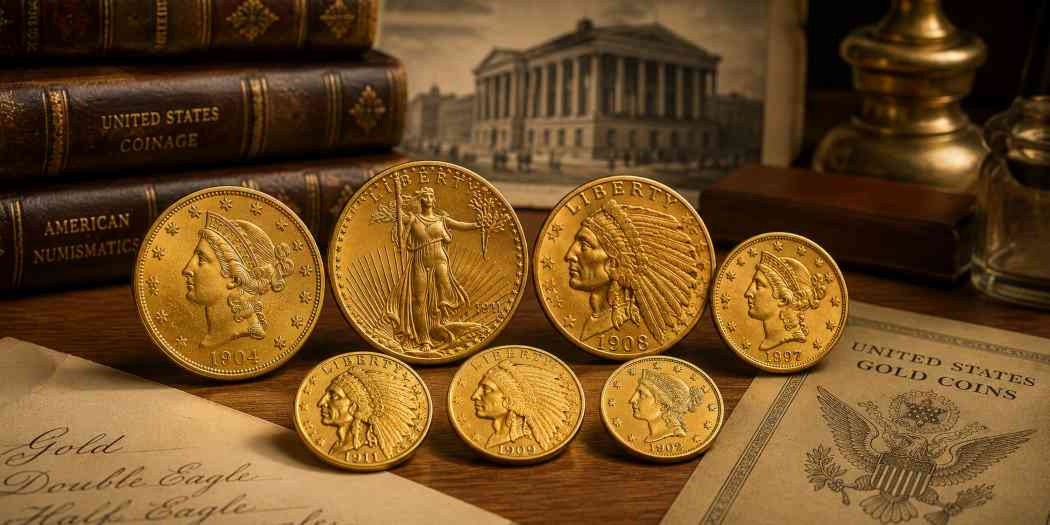
Gold Ownership With History Is Attracting a New Generation of Collectors
Gold's recent strength has drawn renewed attention to physical precious metals, but not every buyer is looking for the same kind of exposure. Some investors want the simplicity of modern bullion bars and coins. Others are increasingly drawn to older U.S. gold coins that combine intrinsic metal value with historical design, limited surviving populations, and numismatic appeal.
That shift has brought classic U.S. gold coins back into focus. For decades, pre-1933 gold coins occupied a specialized corner of the numismatic market, familiar to collectors but often overlooked by bullion-focused buyers. Today, the boundaries between those audiences are becoming less rigid. Investors who began with gold bullion are discovering that historic coins offer exposure to gold alongside scarcity, artistry, and provenance.
The appeal is not simply nostalgia. Classic U.S. gold coins represent a period when gold circulated as money rather than existing primarily as an investment product. That distinction gives them a different character from modern bullion. Their value is shaped by gold content, condition, date, mint mark, design, and collector demand, creating a market where history and metal value meet.
Pre-1933 Gold Coins Offer More Than Melt Value
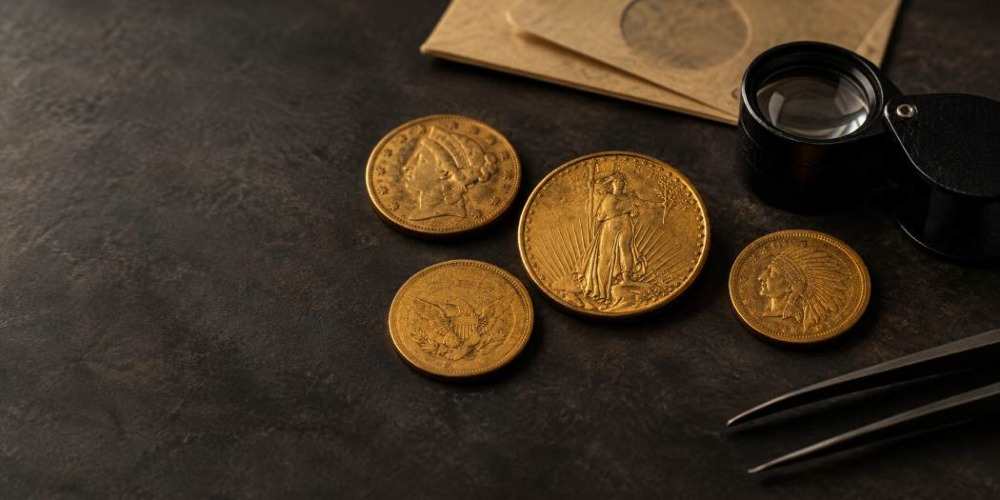
The term “pre-1933 gold coins” generally refers to U.S. gold coins struck before the federal government ended most domestic gold circulation during the Great Depression. These include familiar denominations such as Gold Dollars, Quarter Eagles, Half Eagles, Eagles, and Double Eagles, along with designs that have become icons of American coinage.
For bullion investors, the first attraction is often simple: these coins contain real gold. A Liberty Head Double Eagle or Saint-Gaudens Double Eagle carries nearly one ounce of gold content, while smaller denominations offer fractional exposure in historic form. That makes them easier to understand for buyers already familiar with gold's role as a store of value.
Yet their premiums are not determined by gold alone. A common-date circulated coin may trade relatively close to its bullion value, while a scarce date, low-mintage issue, branch-mint example, or high-grade certified coin can command a substantial numismatic premium. This is where classic U.S. gold coins differ meaningfully from modern bullion products. Their value can respond to both gold prices and collector demand.
That dual identity is exactly what makes the category attractive to crossover buyers. A modern gold bar offers efficiency and simplicity. A classic gold coin offers metal content plus a specific place in American monetary history. For collectors, that added narrative matters. For investors, it can provide a different kind of diversification within physical gold ownership.
The End of Circulating Gold Still Shapes the Market
The historical boundary around classic U.S. gold coins is unusually clear. Before 1933, gold coins were part of everyday American commerce, large payments, bank reserves, and long-term savings. After federal restrictions on private gold ownership and the withdrawal of gold coins from circulation, many pieces were turned in, melted, exported, or disappeared into private holdings.
That disruption permanently changed the surviving population of U.S. gold coins. While millions were originally struck across different denominations and mints, the number available to collectors today is far smaller than mintage figures alone might suggest. Survival rates vary widely depending on the issue, and some coins that appear common on paper are considerably harder to find in attractive condition.
This history gives the market a built-in scarcity story. Unlike modern bullion coins, which can be produced each year to meet investor demand, pre-1933 gold coins are fixed in supply. No new Saint-Gaudens Double Eagles or Liberty Head Eagles will be struck for circulation. The market can only trade what survived.
That finite supply has become more important as interest broadens beyond traditional numismatists. When bullion buyers begin competing with collectors for attractive examples, the market gains another layer of demand. The result is not uniform price appreciation across every coin, but a more active marketplace for pieces that combine recognizable designs, strong condition, and credible historical significance.
Collector Demand Rewards Quality, Not Every Coin Equally
One of the biggest misconceptions surrounding classic U.S. gold coins is that every pre-1933 issue becomes more valuable simply because it is old. In reality, the market is highly selective. Condition, rarity, originality, and historical significance all influence long-term desirability, often more than age alone.
That distinction is why professionally graded coins have become increasingly important. Independent grading services authenticate a coin, assign a standardized condition, and encapsulate it for long-term protection. For buyers entering the market from bullion investing, certification offers additional confidence by reducing uncertainty surrounding authenticity and preservation.
Design also plays a significant role. Augustus Saint-Gaudens' Double Eagle is widely regarded as one of the finest coin designs ever produced by the United States Mint, while Bela Lyon Pratt's innovative Indian Head Quarter Eagle and Half Eagle remain distinctive for their recessed, or incuse, designs. Earlier Liberty Head series appeal to collectors for different reasons, reflecting the country's rapid economic expansion during the nineteenth century and the era of westward growth that followed major gold discoveries.
As a result, collector demand rarely develops evenly across every series. Common-date coins in circulated grades often serve as accessible entry points for investors who appreciate historical gold, while scarcer dates, branch-mint issues, and exceptionally preserved examples attract advanced collectors willing to pay substantial premiums. Understanding those differences is far more important than assuming every classic gold coin follows the same market trajectory.
Bullion Investors Are Beginning to Think Like Collectors
The renewed interest in classic U.S. gold coins also reflects a broader shift within the precious metals market. Investors increasingly recognize that physical gold ownership does not have to be limited to modern bullion products. While bullion remains the most direct way to track the underlying gold price, historic coins introduce characteristics that bullion alone cannot provide.
That crossover has become more noticeable as gold prices remain elevated. Investors already comfortable allocating a portion of their portfolios to precious metals often begin exploring ways to add variety without leaving the asset class. Classic U.S. gold coins provide one avenue by combining precious metal exposure with historical significance, artistic craftsmanship, and collector demand that may evolve independently of bullion premiums.
This does not mean numismatic coins should be viewed as a substitute for traditional bullion. The two markets serve different purposes and respond to different drivers. Bullion prices are closely tied to the spot price of gold, while collectible coins are also influenced by rarity, condition, population reports, and changing collector preferences. Many experienced buyers ultimately view them as complementary rather than competing assets, each serving a distinct role within a broader precious metals strategy.
America's Historic Gold Coinage Continues to Bridge Two Markets
Classic U.S. gold coins occupy a position few other precious metals products can match. They remain tangible stores of gold while preserving a chapter of American monetary history that ended nearly a century ago. Every surviving coin represents more than its gold content—it reflects an era when precious metals circulated through banks, businesses, and everyday commerce before fundamentally reshaping the nation's monetary system.
That combination continues to attract a growing audience. Traditional collectors appreciate rarity, historical context, and exceptional design, while bullion investors increasingly recognize the appeal of owning gold that carries significance beyond its weight alone. As interest in physical assets broadens and appreciation for numismatic history grows, classic U.S. gold coins are finding new relevance with buyers who value both intrinsic worth and enduring legacy.
For investors and collectors alike, their renewed popularity suggests that the strongest opportunities are not always found in the newest products. Sometimes, the most compelling stories—and the most enduring forms of gold ownership—have already been waiting for generations.
FAQs
What are pre-1933 gold coins?
Pre-1933 gold coins are U.S. gold coins struck before the federal government removed most gold coinage from circulation during the Great Depression. They include Gold Dollars, Quarter Eagles, Half Eagles, Eagles, and Double Eagles featuring Liberty Head, Indian Head, and Saint-Gaudens designs. Today they are valued for both their gold content and their historical and numismatic significance.
Why are pre-1933 gold coins popular with collectors?
Collectors value pre-1933 gold coins because they combine intrinsic precious metal value with historical significance, artistic design, and limited surviving populations. Unlike modern bullion, many issues carry collectible premiums based on rarity, condition, mint mark, and demand. This combination appeals to both traditional numismatists and investors seeking historic forms of physical gold ownership.
Do pre-1933 gold coins contain real gold?
Yes. Pre-1933 U.S. gold coins were minted for circulation and contain genuine gold according to their original denomination and specifications. Depending on the coin, they may contain fractional amounts of gold or nearly one full troy ounce, as seen in the Saint-Gaudens Double Eagle. Their market value typically reflects both gold content and collectible demand.
Why did the United States stop circulating gold coins?
The United States stopped circulating gold coins in 1933 after federal policy changes during the Great Depression removed most gold from domestic circulation. Many coins were surrendered, melted, or exported, reducing the surviving supply available to collectors today. That historical turning point continues to shape the rarity and desirability of many classic U.S. gold coins.
Are classic U.S. gold coins good for investors?
They can be. Classic U.S. gold coins provide exposure to physical gold while also offering potential numismatic value. Unlike modern bullion, their prices may reflect rarity, condition, certification, and collector demand in addition to gold prices. Investors interested in both precious metals and historical collectibles often view them as a complement rather than a replacement for bullion.
Should I buy certified pre-1933 gold coins?
Certified coins offer several advantages. Independent grading services authenticate the coin, evaluate its condition, and encapsulate it for long-term protection. Certification can improve buyer confidence, simplify resale, and help establish market value, particularly for higher-grade or scarcer issues where condition significantly influences pricing.
Which pre-1933 U.S. gold coins are most famous?
Some of the best-known examples include the Saint-Gaudens Double Eagle, Liberty Head Double Eagle, Indian Head Eagle, Indian Head Half Eagle, and Liberty Head Half Eagle. Each series reflects a different period of American coinage and attracts collectors for its historical significance, artistic design, and varying degrees of rarity.
How are pre-1933 gold coins different from modern bullion coins?
Modern bullion coins are produced primarily for investors and closely track the spot price of gold. Pre-1933 gold coins also contain gold but may command additional premiums based on rarity, condition, historical importance, and collector demand. Their value is therefore influenced by both the bullion and numismatic markets.
Related reading you may find interesting:
Why Some Gold Coins Are Worth More Than Their Gold Content
Pittsburgh 2026: Inside the ANA World’s Fair of Money