



Understanding Why the Price on the Screen Isn't Always the Price You Pay
Most investors assume silver has a single market price. Financial news outlets display a live spot quote around the clock, commodity exchanges update prices in real time, and buyers often treat that figure as the benchmark for the metal’s value. Yet anyone who has purchased physical silver knows the number on the screen is only part of the story.
The cost of buying a one-ounce coin, round, or bar is shaped by another market altogether—one driven by fabrication, logistics, product availability, dealer inventory, and retail demand. That is why premiums can move independently of spot prices, sometimes changing by several dollars even when silver itself barely budges.
That disconnect often surprises first-time buyers and fuels one of the most common misconceptions in precious metals investing: that premiums are simply arbitrary markups. In reality, premiums respond to their own market pressures. During periods of heightened volatility, the premium attached to physical silver can become just as important as the silver spot price itself, and investors who understand both figures are better equipped to evaluate real buying opportunities.
Silver Trades in Two Markets That Don't Always Move Together
The easiest way to understand premiums is to stop thinking of silver as a single market.
On one side sits the global wholesale market, where futures contracts, institutional transactions, mining companies, refiners, industrial users, and financial firms establish the spot price. This is the number quoted across financial media and used as the benchmark for virtually every silver transaction worldwide. It reflects the value of raw silver before it becomes a finished investment product.
The physical bullion market operates very differently. By the time silver reaches an investor, it has already passed through refiners, private or government mints, wholesalers, transportation networks, distributors, and retail dealers. Every stage introduces additional costs, capacity constraints, and business decisions that have little to do with movements on the COMEX.
That distinction explains why premiums behave independently. Spot prices can change in seconds as traders respond to inflation data, Federal Reserve expectations, or geopolitical headlines. The physical market cannot react nearly as quickly. Manufacturing schedules, shipping logistics, inventory replenishment, and dealer supply all move at a much slower pace, creating temporary imbalances between wholesale pricing and retail availability.
Rather than viewing premiums as an extra fee layered onto silver, it is more accurate to see them as the market's way of pricing everything required to transform wholesale bullion into a finished investment product.
When Investors Rush to Buy, the Bottleneck Usually Isn't the Mine
Many people assume rising premiums mean the world is running out of silver. In most cases, that is not what is happening.
The earliest pressure usually appears much farther down the supply chain.
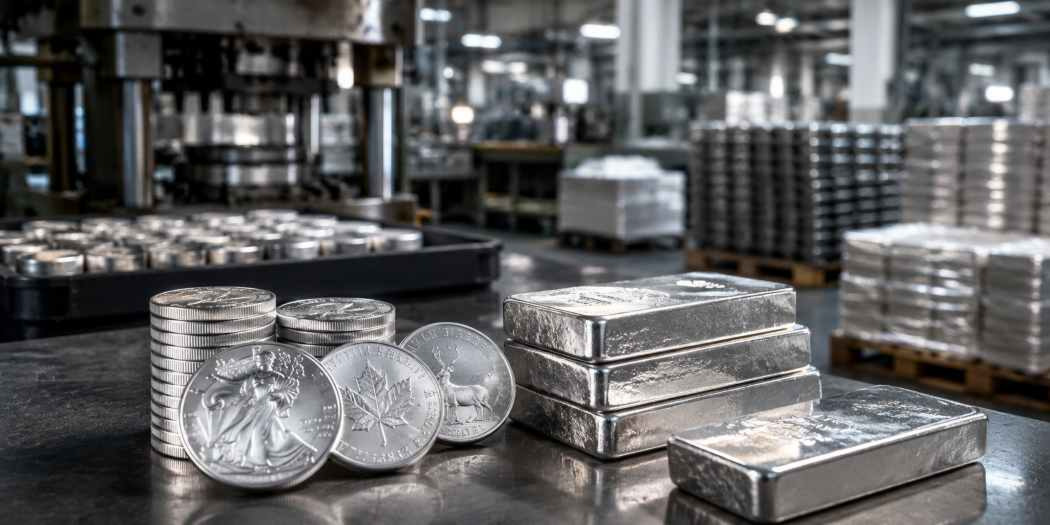
When economic uncertainty increases or financial markets become volatile, retail demand for physical silver can accelerate almost immediately. Dealers receive more orders, wholesalers begin drawing down inventories, and mints suddenly face production schedules that were never designed for a surge in demand. None of that means there is less silver in the ground or that mines have stopped operating. It simply means the infrastructure responsible for turning raw metal into investment-grade products is temporarily struggling to keep pace.
Recent history illustrates this pattern repeatedly. During the market turmoil of early 2020, physical silver remained available within wholesale markets, yet investors often encountered elevated premiums and delayed deliveries for popular retail products. The issue was not that silver had disappeared. Instead, refiners, blank manufacturers, mints, and distributors found themselves attempting to satisfy unprecedented demand with production systems built for more normal market conditions.
The same dynamic has appeared during other periods of heavy retail buying. Whether driven by inflation concerns, banking uncertainty, geopolitical events, or waves of investor enthusiasm, physical demand tends to arrive much faster than fabrication capacity can expand. Premiums respond almost immediately because the retail market adjusts long before additional supply can work its way through the production pipeline.
Not Every Ounce of Silver Carries the Same Value in the Marketplace
Another misconception is that every ounce of silver should command roughly the same premium. In practice, investors are purchasing very different products, each with its own supply-and-demand profile.
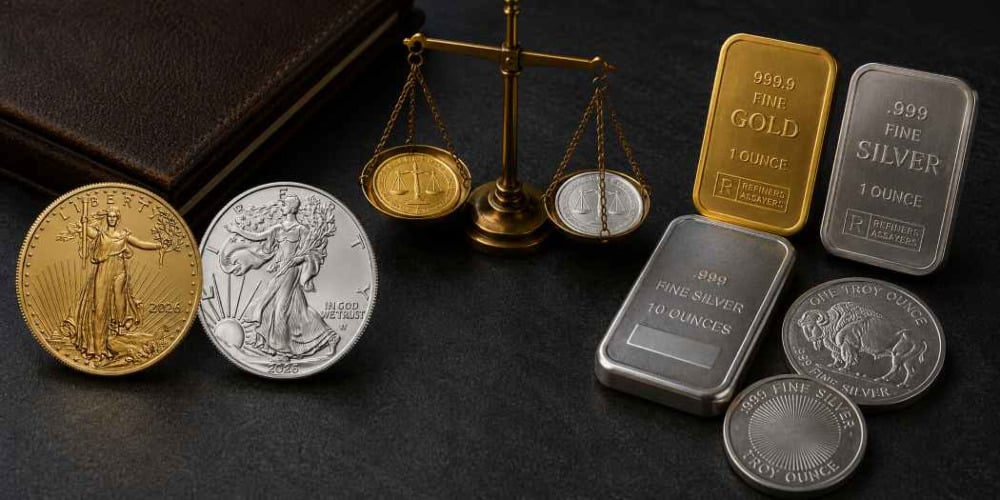
Government-issued bullion coins such as the American Silver Eagle or Canadian Silver Maple Leaf typically trade at higher premiums than privately minted rounds. Those premiums reflect more than just the silver content. Investors are also paying for sovereign backing, advanced security features, global recognition, and consistently strong liquidity. Even during quieter markets, many buyers remain willing to pay more for products that have earned widespread trust over decades.
Generic rounds and larger silver bars generally occupy the opposite end of the spectrum. Their value is tied more closely to metal content than brand recognition, allowing them to trade nearer to spot. Larger-format bars often reduce fabrication costs on a per-ounce basis, making them especially attractive to investors focused primarily on acquiring the greatest amount of silver for their investment.
Collectible bullion introduces another layer altogether. Limited mintages, special finishes, anniversary releases, and exclusive designs create premiums that often respond more to collector demand than movements in the silver market itself. In those cases, numismatic appeal may become just as important as the underlying precious metal value.
Recognizing these distinctions helps explain why two one-ounce silver products can differ significantly in price despite containing the same amount of silver. Investors are not simply purchasing metal; they are purchasing different combinations of fabrication, recognition, liquidity, scarcity, and market demand.
Premiums Can Sometimes Tell the Story Before Spot Prices Do
Because premiums reflect conditions within the physical market, they occasionally provide insights that the spot price alone cannot.
A steady rise in premiums may indicate that dealer inventories are tightening, fabrication capacity is becoming strained, or retail demand is strengthening faster than wholesale markets have yet recognized. Conversely, falling premiums often suggest improving product availability, easing supply-chain pressures, or slower buying activity, even if silver itself continues climbing.
Neither signal guarantees the direction of future prices, but together they create a more complete picture of market conditions. Investors who monitor only the spot price may overlook important changes occurring within the physical bullion market. Those who watch premiums alongside spot gain another layer of information about how buyers, manufacturers, and dealers are responding in real time.
That broader perspective is especially valuable during periods of heightened volatility. Spot prices can fluctuate rapidly as institutional traders react to economic data or changing interest-rate expectations. The physical market follows its own rhythm, shaped by inventories, production schedules, and consumer behavior. Sometimes the two move together. At other times they tell very different stories.
Ultimately, successful physical silver investing has never been about chasing the lowest spot price alone. It is about understanding the full cost of ownership and recognizing that premiums are not merely an additional expense—they are an important market signal. Like the spot price itself, they reflect the ongoing balance between supply, demand, and investor sentiment. Learning to interpret both gives buyers a clearer understanding of what the market is really saying.
FAQs
Why do silver premiums change?
Silver premiums change because they reflect conditions in the physical bullion market rather than the wholesale silver market alone. Retail demand, mint production, fabrication costs, dealer inventory, transportation expenses, and product availability can all influence premiums, sometimes causing them to rise or fall even when the spot price remains relatively stable.
What is a silver premium?
A silver premium is the amount paid above the current spot price when purchasing physical silver. It covers refining, minting, fabrication, transportation, distribution, and dealer operating costs. Premiums also reflect supply and demand for specific bullion products and can vary significantly between coins, rounds, and bars.
Why don't silver premiums always follow spot prices?
Spot prices are established in the global wholesale market, while premiums are determined by conditions in the retail bullion market. These two markets respond to different forces. Spot prices may react immediately to economic news, while premiums are influenced by manufacturing capacity, inventories, and investor demand for physical products.
Why are American Silver Eagle premiums usually higher?
American Silver Eagles generally command higher premiums because they are produced by the United States Mint, carry a legal tender face value, feature advanced security elements, and enjoy exceptional global recognition and liquidity. Their consistent popularity often keeps premiums above those of privately minted silver rounds or bars.
Do higher premiums mean silver is running out?
Not necessarily. Elevated premiums often indicate strong retail demand or temporary production bottlenecks rather than a shortage of raw silver. Refiners, mints, and distributors may struggle to meet sudden increases in buying activity even when wholesale silver remains readily available.
When do silver premiums usually increase?
Premiums often rise during periods of economic uncertainty, financial market volatility, inflation concerns, geopolitical events, or unusually strong investor demand. They may also increase when manufacturing capacity becomes constrained or when dealer inventories become difficult to replenish.
Should investors focus on spot price or premiums?
Both matter. Spot price determines the underlying value of the silver, while the premium determines the actual purchase price of the finished bullion product. Evaluating both together provides a more complete understanding of the true cost of investing in physical silver.
Are lower premiums always better?
Lower premiums can reduce the cost of acquiring silver, but they should not be the only consideration. Product recognition, liquidity, resale demand, and overall market acceptance also influence long-term value. Many investors willingly pay higher premiums for widely recognized bullion products because they are often easier to sell in the future.
Do silver bar premiums differ from coin premiums?
Yes. Larger silver bars generally carry lower per-ounce premiums because fabrication costs are spread across more ounces. Government-issued bullion coins usually command higher premiums due to their official backing, security features, and broad investor demand.