

Why Platinum's Supply Story Is Becoming Harder for Investors to Ignore
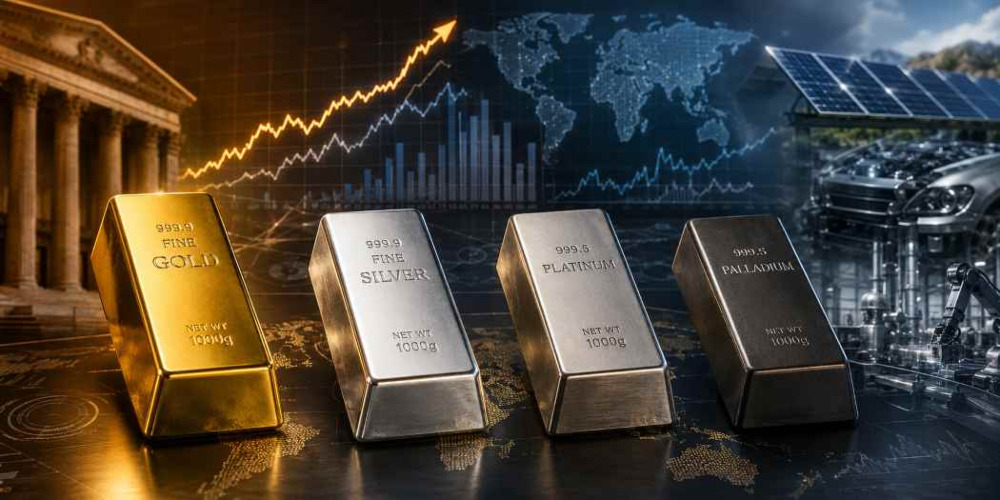
Gold tends to dominate discussions about precious metals, drawing attention whenever inflation rises, central banks adjust policy, or geopolitical risks emerge. Platinum rarely receives the same level of coverage, yet its market dynamics are becoming increasingly difficult to overlook. While gold's value is heavily influenced by monetary conditions and investor sentiment, platinum's outlook is tied more directly to industrial activity, manufacturing demand, and the physical availability of the metal itself.
That distinction has become increasingly important as the platinum market enters another year characterized by supply deficits and tightening inventories. Industry forecasts continue to point toward a market where demand exceeds newly available supply, forcing consumers and investors to rely on existing stockpiles to bridge the gap. This is not a one-year phenomenon driven by temporary disruptions. It reflects a broader trend that has gradually reshaped the platinum market over the past several years.
For investors willing to look beyond traditional precious-metals narratives, platinum presents a different type of opportunity. The investment case is increasingly rooted in scarcity, industrial necessity, and supply limitations that cannot be resolved quickly, even if prices move significantly higher.
A Global Market Dependent on a Handful of Mining Regions
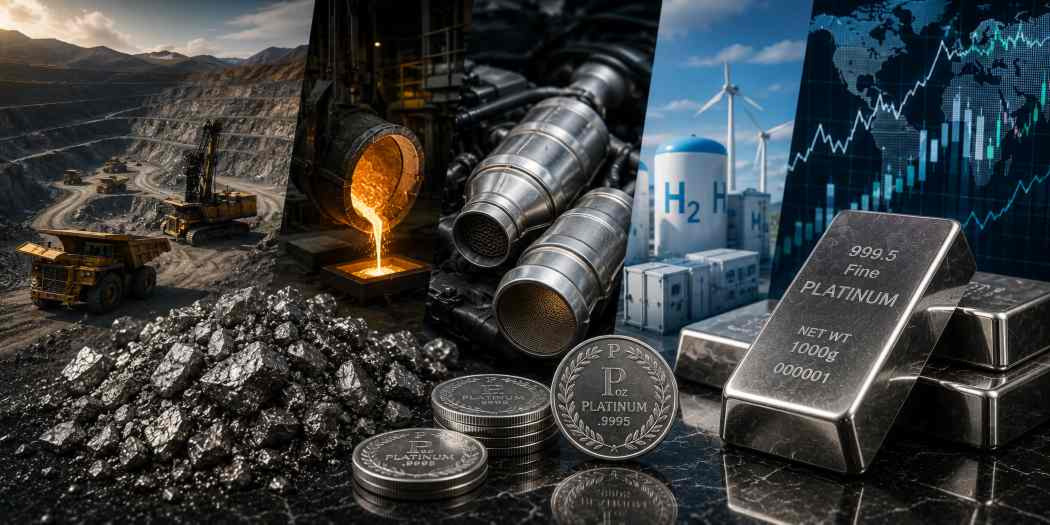
One of the defining characteristics of platinum is how concentrated its production remains. Unlike commodities that benefit from broad geographic diversification, platinum relies heavily on a relatively small number of mining regions. South Africa remains the dominant producer, with Russia and Zimbabwe accounting for much of the remaining global output.
This concentration creates a level of vulnerability that is uncommon in larger commodity markets. Power shortages, labor negotiations, transportation bottlenecks, regulatory changes, and geopolitical tensions can all influence production. Because so much of the world's platinum originates from a limited number of sources, even localized disruptions can have global consequences.
Investors often underestimate the significance of this concentration until a disruption occurs. In markets with abundant alternative supply, production setbacks can often be absorbed without major consequences. Platinum does not enjoy that luxury. The market's dependence on a handful of producing regions means that operational challenges frequently carry greater weight than many investors initially expect.
The result is a supply profile that remains inherently fragile, particularly during periods when demand is already consuming most of the metal entering the market.
Why Higher Prices Do Not Immediately Solve the Problem
Commodity investors are often taught that high prices encourage additional production. While that principle generally holds over long periods, platinum mining operates on timelines that are measured in years rather than months.
Developing a new platinum mine requires significant capital, environmental reviews, permitting approvals, infrastructure investment, and lengthy construction schedules. Even expansions at existing operations can involve substantial technical and financial challenges. As a result, producers cannot simply respond to stronger platinum spot prices by rapidly increasing output.
This lag creates one of the more important dynamics in the platinum market. Demand can accelerate relatively quickly, particularly when industrial consumption remains strong, but supply often struggles to keep pace. The market must then rely on inventories accumulated during previous years to satisfy consumption needs.
That dependence on existing stockpiles is one reason supply deficits attract so much attention. A deficit is not merely a statistical imbalance. It represents a situation where the market is gradually drawing down reserves because newly produced metal is insufficient to meet demand.
Industrial Demand Gives Platinum a Different Market Profile
Gold's value is often discussed through the lens of monetary policy and investor psychology. Platinum operates differently because its industrial applications remain central to the market.
The metal plays a critical role in a wide range of sectors, including automotive manufacturing, petroleum refining, chemical production, glass fabrication, electronics, medical technology, and specialized industrial processes. Many of these applications rely on platinum because of properties that are difficult to replicate, including exceptional catalytic performance, corrosion resistance, and durability under extreme conditions.
This creates a form of demand that is fundamentally different from investment buying. Manufacturers are not purchasing platinum because they expect prices to rise. They purchase it because production processes require it. In many cases, there are limited alternatives capable of delivering the same performance at scale.
When supply tightens, that distinction becomes increasingly important. Industrial users often need access to physical metal regardless of market sentiment, helping create a demand base that can remain resilient even when broader economic conditions fluctuate.
The Automotive Story Is More Complex Than Headlines Suggest
Few areas of platinum demand have generated more debate than the automotive sector. The rapid growth of electric vehicles has led some investors to conclude that platinum's role in transportation is destined to decline steadily. While the transition toward electrification is real, the underlying demand picture remains far more nuanced.
Internal combustion engines continue to represent a significant portion of the global vehicle fleet, and hybrid vehicles have expanded more quickly in some markets than many forecasts anticipated. Platinum remains an important component in emissions-control systems, particularly within diesel and hybrid applications. These technologies are likely to remain relevant for years as automakers balance regulatory requirements, consumer demand, and infrastructure limitations.
At the same time, platinum has benefited from substitution trends within the broader platinum-group metals market. When pricing relationships between palladium and platinum become favorable, manufacturers may adjust catalyst formulations to reduce costs. Those shifts can create additional demand even as broader industry trends evolve.
Rather than disappearing, automotive demand is adapting alongside the industry itself. Investors who view electrification as a simple end to platinum consumption often miss the complexity of the transition currently taking place.
Recycling Provides Support, Not a Complete Solution
Recycling has long served as an important secondary source of platinum supply. Catalytic converters, industrial equipment, jewelry, and other products can be processed to recover valuable metal, helping supplement mine production and ease supply pressures.
The challenge is that recycling volumes depend on factors that are not always predictable. Recovery rates are influenced by scrap availability, collection systems, processing capacity, and replacement cycles across multiple industries. Even when platinum prices rise, additional supply does not automatically appear.
This limitation becomes particularly apparent during periods of structural deficits. Recycling can help reduce the pace of inventory drawdowns, but it rarely generates enough metal to fully offset prolonged shortages. In effect, it functions as a stabilizing mechanism rather than a cure for supply imbalances.
For investors evaluating long-term market conditions, recycling should be viewed as an important contributor to supply rather than a source capable of fundamentally changing the market's trajectory.
Why Inventory Trends May Matter More Than Annual Deficits
Much of the discussion surrounding platinum focuses on annual supply-demand balances, but inventories often provide the more revealing story.
When demand consistently exceeds supply, the market compensates by drawing metal from above-ground stockpiles. Over time, those reserves begin to shrink, reducing the amount of material available to absorb future disruptions. A market with abundant inventories can tolerate temporary supply problems relatively easily. A market with limited inventories faces far less flexibility.
This is why inventory trends have become a growing focus among analysts. Several years of deficits can gradually alter the structure of the market, even if prices do not immediately reflect the change. As stockpiles decline, the consequences of production disruptions become more significant because there is less excess metal available to bridge shortages.
For long-term investors, inventory levels often provide valuable insight into whether a supply deficit is merely a temporary issue or part of a broader structural trend.
Investment Demand Is Becoming Part of the Equation
Industrial consumers are not the only participants competing for platinum. Investor interest has also increased as awareness of supply deficits and shrinking inventories has grown.
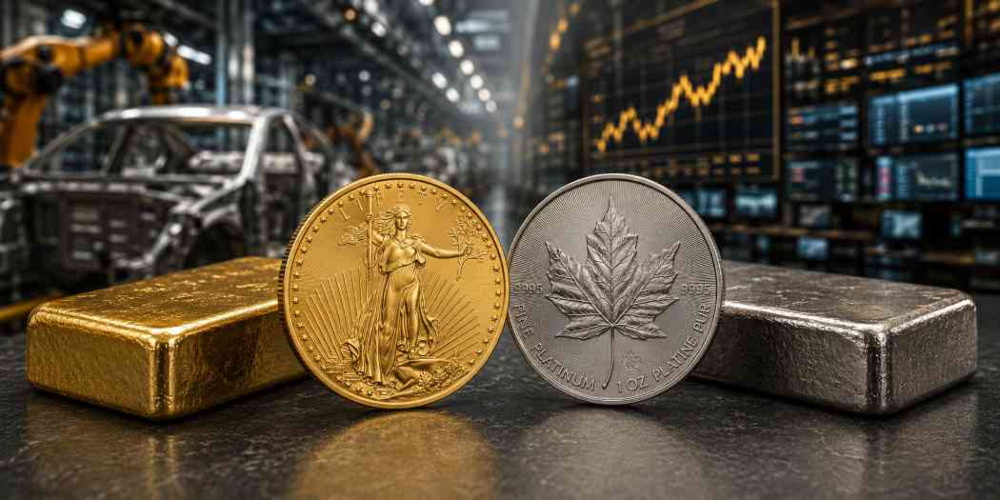
Platinum bars, bullion coins, and exchange-traded investment products have attracted attention from investors looking for exposure to a market with relatively limited supply growth. Because platinum's investment market is considerably smaller than gold's, even modest shifts in investor demand can have a meaningful impact on availability.
This creates an interesting dynamic. Industrial users require platinum for operational purposes, while investors may be attracted by the same scarcity that concerns manufacturers. When both groups seek exposure simultaneously, competition for available metal can intensify.
The relatively small size of the platinum market magnifies these effects. Changes in investor behavior that might have a limited impact in larger markets can become much more noticeable when available inventories are already under pressure.
Platinum Requires a Different Investment Mindset
One of the most common mistakes investors make is approaching platinum as though it behaves like gold. While both are precious metals, the factors influencing their markets are often very different.
Gold is primarily driven by monetary considerations, including interest rates, inflation expectations, currency trends, and safe-haven demand. Platinum remains much more closely tied to industrial activity, manufacturing conditions, supply constraints, and sector-specific demand trends. Economic growth often matters more to platinum than it does to gold.
This distinction affects portfolio construction as well. Platinum can provide diversification within a precious-metals allocation, but investors should recognize that its volatility and market drivers differ from those of traditional bullion holdings. Monitoring mine supply, recycling activity, inventory trends, automotive demand, and emerging technologies is often just as important as tracking macroeconomic developments.
Understanding platinum on its own terms rather than comparing it constantly to gold can lead to more realistic expectations and better investment decisions.
What Platinum Scarcity Could Mean for the Years Ahead
The platinum market enters 2026 facing a set of conditions that continue to attract attention from both industry participants and investors. Demand remains resilient across multiple sectors, mine supply growth is limited, inventories have been trending lower, and recycling alone appears unlikely to close the gap.
None of this guarantees higher prices. Platinum remains sensitive to economic cycles, industrial activity, and shifts in investor sentiment. Yet markets do not need certainty to respond to changing fundamentals. Tightening inventories and persistent deficits gradually alter how participants assess risk, availability, and long-term value.
What makes platinum particularly interesting today is the combination of utility and scarcity. It remains an essential industrial material at a time when supply expansion faces significant structural constraints. That combination creates a market narrative distinct from gold, silver, and many other commodities.
For investors willing to look beyond the headlines that typically dominate the precious-metals sector, platinum's evolving supply story may prove to be one of the more consequential themes shaping the market over the next several years.
FAQs
What causes a platinum supply shortage?
A platinum supply shortage occurs when demand exceeds available mine production, recycling, and above-ground inventories. Platinum supply is concentrated in a few regions, especially South Africa, making the market vulnerable to power shortages, labor issues, infrastructure limits, and operational disruptions. When industrial demand remains firm and mine output struggles to grow, inventories can fall. Repeated deficits make the market more sensitive to future supply shocks or demand increases.
Why is platinum supply so limited?
Platinum supply is limited because major deposits are geographically concentrated and difficult to expand quickly. Developing new mines requires years of exploration, permitting, financing, construction, and processing investment. South Africa supplies much of the world’s platinum, so local electricity reliability, labor conditions, and mining costs can affect global availability. Recycling helps supplement supply, but it cannot fully replace constrained mine production when demand remains strong.
How does industrial demand affect platinum prices?
Industrial demand affects platinum prices by creating real physical consumption across automotive, chemical, glass, medical, electronics, and hydrogen-related applications. When manufacturers need more platinum and supply is limited, prices can rise or become more volatile. Industrial users often require physical metal, not just financial exposure. This makes platinum different from gold, whose price is driven more by monetary demand, central banks, real yields, and safe-haven flows.
Is platinum a good investment during supply deficits?
Platinum can be attractive during supply deficits because limited availability may support prices when demand remains firm. However, it is also more industrial and cyclical than gold, so prices can be volatile if manufacturing or auto demand weakens. Investors should evaluate supply data, recycling trends, product premiums, and liquidity before buying. Platinum may work best as a diversified precious metals allocation rather than a standalone position.
What industries use the most platinum?
The automotive industry is one of the largest users of platinum because the metal is used in catalytic converters to reduce emissions. Platinum is also used in chemical processing, petroleum refining, glass manufacturing, medical devices, electronics, sensors, jewelry, and hydrogen technologies. Its catalytic efficiency, durability, and resistance to corrosion make it valuable in demanding industrial environments where substitution may be difficult or costly.
How does recycling affect platinum supply?
Recycling affects platinum supply by returning metal from used catalytic converters, jewelry, and industrial equipment back into the market. Higher prices can encourage more recycling, but supply depends on scrap availability, collection systems, processing capacity, and replacement cycles. Recycling can reduce pressure during shortages, but it usually cannot solve a persistent deficit alone. Mine production and industrial demand remain critical drivers of the global platinum balance.
Why is South Africa important to platinum?
South Africa is important to platinum because it produces a large share of global mined supply. This concentration means local mining conditions can influence the entire market. Electricity shortages, labor disruptions, infrastructure problems, regulatory changes, and rising operating costs in South Africa can affect output and investor expectations. Because platinum supply is not broadly diversified, disruptions in major producing regions can quickly tighten market conditions.
How is platinum different from gold as an investment?
Platinum is different from gold because it is more dependent on industrial demand and concentrated mine supply. Gold is primarily a monetary metal used for reserves, jewelry, bullion, and safe-haven investing. Platinum is both a precious metal and an industrial input, which means it can respond to manufacturing, automotive, hydrogen, and recycling trends. Platinum may offer diversification, but it usually carries more cyclical price risk than gold.
Do platinum shortages affect bullion premiums?
Platinum shortages can affect bullion premiums when physical product availability tightens. Because the platinum bullion market is smaller than gold or silver, coins and bars may become harder to source during strong demand periods. Premiums can widen due to minting costs, dealer inventory, refining availability, and wholesale replacement costs. Investors should compare total price over spot rather than relying only on the platinum spot price.
Should investors hold platinum with gold and silver?
Investors may hold platinum with gold and silver to diversify precious metals exposure. Gold offers monetary protection and deep liquidity, silver provides affordability and industrial upside, and platinum adds exposure to supply constraints, automotive demand, and specialized industrial uses. The right allocation depends on risk tolerance, storage needs, budget, and market outlook. Platinum can complement a metals portfolio, but it should be purchased with premium and liquidity awareness.