

Why Fed Policy Moves Precious Metals Markets in Real Time
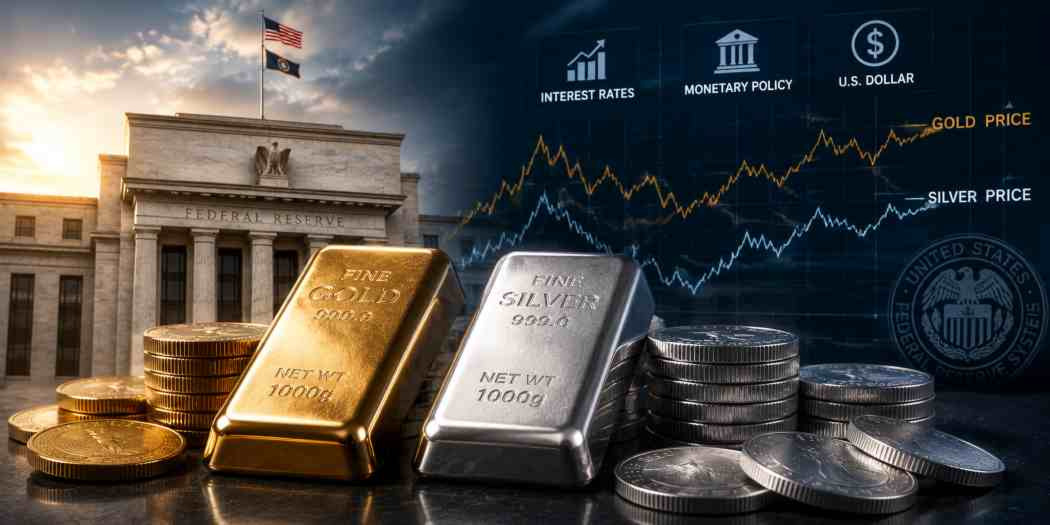
Federal Reserve monetary policy is one of the most powerful forces shaping gold and silver prices in modern financial markets. Every shift in interest rates, inflation expectations, or forward guidance directly influences the opportunity cost of holding non-yielding assets like precious metals. When the Fed signals tighter policy, higher yields and a stronger U.S. dollar often pressure gold and silver. When policy shifts toward easing or rate cuts, metals typically respond with stronger demand as investors reposition into alternative stores of value.
In 2026, this relationship remains especially important as markets react to persistent inflation uncertainty, global growth divergence, and evolving central bank balance sheet strategies. Understanding the Fed rate impact metals channel is essential for investors trying to anticipate short- and long-term price movements in gold and silver.
Interest Rates and the Opportunity Cost of Holding Gold and Silver
One of the most direct ways Federal Reserve policy affects precious metals is through interest rates. Gold and silver do not generate yield, so when interest rates rise, investors can earn more from bonds and cash-equivalent instruments. This increases the opportunity cost of holding metals, often leading to downward pressure on prices.
Conversely, when the Fed signals rate cuts or a pause in tightening cycles, yields decline and precious metals become more attractive relative to fixed-income assets. This shift is especially important for gold, which is highly sensitive to real interest rates. Silver also reacts to this dynamic but tends to experience more volatility due to its industrial demand component.
The U.S. Dollar, Inflation Expectations, and Metal Pricing
The Federal Reserve also influences gold and silver through the value of the U.S. dollar. A stronger dollar, often associated with tighter monetary policy, typically makes metals more expensive for international buyers, reducing demand. A weaker dollar, often linked to easing policy, tends to support higher precious metals prices globally.
Inflation expectations add another layer of complexity. If markets believe the Fed is falling behind the inflation curve, gold often rallies as investors seek inflation protection. Silver can follow this trend but may amplify moves due to its dual role as both a monetary and industrial metal. This interaction between inflation expectations and Fed policy is a key driver of precious metals macro behavior.
Real Yields and Why They Matter More Than Nominal Rates
While nominal interest rates are important, real yields—adjusted for inflation—are often more influential for gold and silver pricing. Rising real yields increase the attractiveness of yield-bearing assets compared to non-yielding metals, often leading to capital outflows from precious metals markets.
When real yields decline, even if nominal rates remain elevated, gold in particular tends to strengthen. This is because investors are more concerned with inflation-adjusted returns than headline rates. Silver tends to follow gold’s direction in these environments but can diverge when industrial demand factors dominate price action.
Historical Cycles: Fed Tightening vs Easing Environments
Historical analysis shows a consistent pattern in how gold and silver respond to Federal Reserve cycles. During aggressive tightening periods, such as rapid rate hike environments, both metals often face headwinds as liquidity tightens and the dollar strengthens. Silver typically underperforms gold in these phases due to its higher volatility and industrial sensitivity.
During easing cycles or post-crisis environments, precious metals often enter strong bullish phases. Lower rates, increased liquidity, and weaker currency conditions create favorable environments for both gold and silver. These cycles highlight the importance of understanding monetary policy as a structural driver of precious metals macro trends rather than a short-term signal alone.
Supply, Demand, and Policy Spillover Effects
Although Federal Reserve policy does not directly impact physical supply, it significantly influences demand behavior across both investment and industrial channels. Higher rates can slow economic activity, reducing industrial demand for silver in sectors like electronics, solar energy, and manufacturing.
At the same time, investment demand for gold can rise during periods of financial uncertainty or perceived policy missteps. ETFs, futures markets, and physical bullion flows often reflect these shifting expectations quickly, amplifying price movements across both metals. This interaction between macro policy and real-world demand creates layered volatility in precious metals markets.
Portfolio Strategy: Positioning Metals Around Fed Cycles
For investors building a precious metals portfolio, understanding Fed cycles is essential for timing and allocation decisions. During tightening phases, some investors reduce exposure or increase gold allocations relative to silver to minimize volatility. During easing phases, both metals may benefit, with silver often offering higher upside due to its cyclical nature.
ETF positioning, physical bullion accumulation, and hedging strategies are all influenced by expectations of Fed policy shifts. Investors who track forward guidance, inflation data, and labor market trends are often better positioned to anticipate moves in gold silver Fed sensitivity and adjust portfolios accordingly.
Market Outlook: What Investors Should Watch Next
Looking ahead, the most important drivers for gold and silver will continue to be Federal Reserve communications, inflation data, and real yield trends. Any shift in tone—from hawkish to neutral or dovish—can quickly reprice precious metals markets.
At the same time, geopolitical risk, global central bank diversification away from the U.S. dollar, and structural industrial demand for silver will continue to add complexity. The interaction between monetary policy and real-world demand ensures that precious metals remain highly responsive to macroeconomic shifts.
For investors, the key is not just reacting to Fed decisions, but understanding how expectations form ahead of those decisions—and how those expectations are already embedded in gold and silver pricing.
FAQs
How does the Federal Reserve affect gold prices?
The Federal Reserve affects gold prices primarily through interest rate policy, inflation expectations, and the U.S. dollar. When the Fed raises interest rates, bond yields increase, making non-yielding assets like gold less attractive. This often pressures gold prices lower. When the Fed signals rate cuts or pauses tightening, gold typically benefits as opportunity costs decline. Additionally, a weaker dollar, often associated with looser monetary policy, makes gold cheaper for international buyers, increasing demand and supporting higher prices.
Why does silver react differently than gold to Fed policy?
Silver reacts differently because it has both monetary and industrial demand components. While Fed policy impacts silver through interest rates and currency strength like gold, silver is also heavily influenced by manufacturing and industrial cycles. During economic slowdowns triggered by tight monetary policy, silver can underperform due to weaker industrial demand. However, during recovery phases or easing cycles, silver often outperforms gold due to its higher volatility and stronger link to economic growth and industrial expansion.
What are real yields and why do they matter for metals?
Real yields represent interest rates adjusted for inflation, and they are a critical driver of precious metals pricing. When real yields rise, investors earn more from bonds relative to non-yielding assets like gold and silver, reducing demand for metals. When real yields fall, even if nominal rates are stable, gold and silver become more attractive as stores of value. Gold is particularly sensitive to real yield changes, making it one of the most important indicators for precious metals investors.
Does a stronger dollar always mean lower gold prices?
A stronger U.S. dollar generally pressures gold and silver prices because it increases the cost of metals for foreign buyers. However, the relationship is not absolute. In some cases, gold can rise alongside a strong dollar if demand is driven by safe-haven flows during periods of global financial stress. Silver is more sensitive to dollar strength due to its industrial demand exposure. Overall, the dollar remains one of the most important macro variables influencing precious metals pricing.
How do Fed rate cuts impact precious metals?
Fed rate cuts typically support precious metals by reducing bond yields and lowering the opportunity cost of holding gold and silver. Lower rates also tend to weaken the U.S. dollar, increasing global demand for metals. Gold usually responds first and more consistently to rate cuts, while silver can experience stronger percentage gains due to its higher volatility and industrial demand sensitivity. Investors often increase exposure to precious metals during expected easing cycles in anticipation of these effects.
Why do gold and silver sometimes move in opposite directions?
Gold and silver can diverge because they are driven by different demand structures. Gold is primarily influenced by macroeconomic risk, inflation expectations, and monetary policy. Silver is influenced by both macro factors and industrial demand from sectors like electronics and renewable energy. If economic growth expectations rise while monetary policy remains tight, silver may outperform gold. Conversely, during financial uncertainty, gold often outperforms silver as investors prioritize stability over industrial exposure.
How should investors position metals around Fed meetings?
Investors often adjust precious metals exposure ahead of Federal Reserve meetings based on expected policy outcomes. If rate cuts are anticipated, increasing exposure to gold and silver may be beneficial. If tightening or hawkish signals are expected, some investors reduce exposure or shift toward gold as a defensive hedge. Silver is generally treated as a higher-risk, higher-reward allocation due to its volatility. ETF flows and futures positioning often reflect these expectations before official policy announcements.
What macro indicators should metals investors watch?
Key macro indicators include Federal Reserve interest rate decisions, inflation data such as CPI and PPI, real yield movements, and U.S. dollar strength. Labor market data and geopolitical developments also influence safe-haven demand for gold. For silver, industrial production data and manufacturing trends are especially important. Monitoring these indicators together helps investors understand how monetary policy and economic conditions interact to shape precious metals macro trends.
Related reading you may find interesting:
How Central Bank Gold Purchases Shape Global Markets
American Eagles vs Generic Bullion: Is the Premium Worth It?