




Large Gold Orders Turn Small Bid-Ask Differences Into Real Money
Gold spread at scale is one of the most overlooked costs in large bullion transactions because small price differences can seem insignificant until order size becomes meaningful. A few cents per ounce may not matter much on a single retail coin, but across hundreds, thousands, or tens of thousands of ounces, the bid-ask spread can become a material execution cost. For high-volume buyers, dealers, family offices, institutions, and active bullion investors, basis point negotiation can directly affect total return, liquidity, and resale efficiency.
The spot price gives the market benchmark, but it is not the full transaction price. Buyers pay the ask, sellers receive the bid, and the difference between the two represents the spread. In normal retail purchases, that spread is often absorbed into product premiums, dealer margins, payment method costs, and market demand. At scale, however, buyers begin evaluating the spread more like professional traders: in dollars, cents, and basis points relative to total notional value.
This matters especially when gold prices are elevated. As the notional value of each ounce rises, even tiny execution differences have larger dollar consequences. A disciplined buyer does not only ask, “What is gold trading at?” The better question is, “What is the true all-in spread, and how much can be negotiated based on size, liquidity, product type, and timing?”
Bid and Ask Prices Define the Real Transaction Window
Every gold market has two sides: the price at which a buyer can purchase and the price at which a seller can sell. The bid is what a dealer or market maker is willing to pay for gold. The ask is what that same dealer is willing to sell gold for. The spread between them reflects liquidity, risk, inventory, volatility, and operational cost.
For a small bullion buyer, this spread may appear as a simple difference between the listed sell price and buyback price. For a large buyer, it becomes a negotiation point. The wider the spread, the more gold must appreciate before the buyer breaks even on resale. The tighter the spread, the more efficient the transaction.
This is why professional gold buyers focus on execution quality. They compare multiple dealers, monitor live spot movement, evaluate product liquidity, and sometimes time purchases around calmer trading conditions. A narrow bid-ask spread does not eliminate premiums, but it reduces the friction between entering and exiting a position.
Basis Points Make Large Gold Orders Easier to Compare
Basis points provide a cleaner way to compare gold spreads across different order sizes and product types. One basis point equals one-hundredth of one percent. In a large bullion transaction, measuring cost in basis points allows buyers to evaluate execution relative to total transaction value rather than just cents per ounce.
For example, a small dollar spread may look harmless in isolation. But on a multimillion-dollar gold purchase, a difference of just a few basis points can represent thousands of dollars. This is why basis point negotiation becomes important for buyers placing institutional-size or high-net-worth orders.
Basis point analysis also helps compare products. A one-ounce coin, kilo bar, 100-ounce bar, or 400-ounce good delivery bar may each carry different premiums and spreads. The lowest quoted price is not always the best execution if the resale spread is wider or liquidity is weaker.
At scale, the buyer’s goal is not simply to minimize premium. It is to minimize total transaction friction while preserving liquidity and resale confidence.
Product Type Changes the Spread Profile
Gold products do not all trade with the same bid-ask spread. Highly liquid bullion products usually trade tighter because dealers can resell them quickly and price them confidently. Less common products often trade wider because they require more verification, storage, marketing, or buyer education.
Large gold bars tend to offer efficient pricing per ounce because fabrication costs are lower relative to gold content. However, they can be less flexible for resale because fewer buyers can absorb a large bar in one transaction. One-ounce coins may carry higher premiums but often have deeper retail liquidity and broader recognition.
Fractional coins usually carry wider percentage spreads because smaller pieces cost more to produce, handle, and distribute relative to their metal content. Numismatic gold coins can carry even wider spreads because pricing depends not only on gold content but also on grade, rarity, demand, and market sentiment.
At scale, product selection becomes a balance between low acquisition cost and future exit strategy. A product that saves a few dollars per ounce at purchase may not be optimal if resale liquidity is weaker.
Liquidity Tightens Spreads for Recognized Bullion
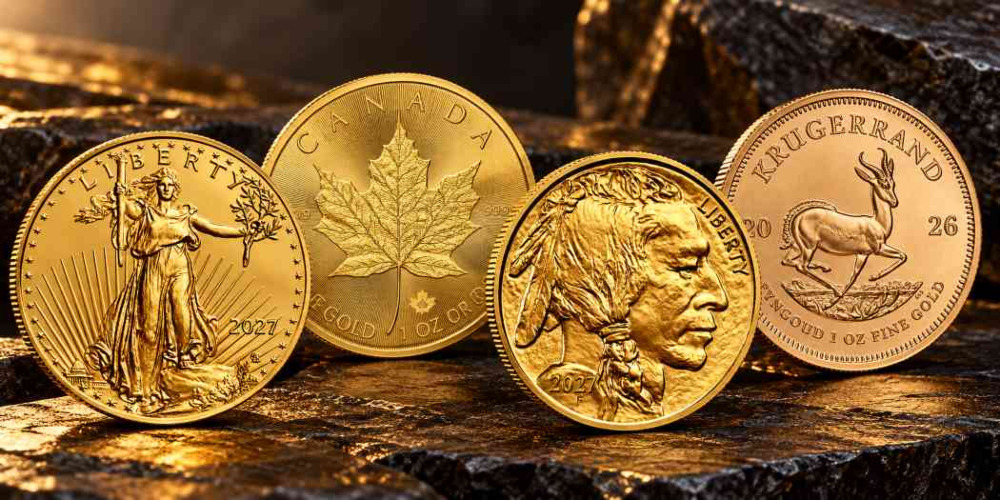
Liquidity is one of the strongest forces behind tighter spreads. Widely recognized products such as American Gold Eagles, Canadian Gold Maple Leafs, South African Krugerrands, Gold Britannias, and major refiner bars tend to trade more efficiently because dealers and buyers know exactly what they are receiving.
Recognition reduces friction. A familiar coin can be authenticated, priced, and resold more easily than an obscure product. A bar from a respected refiner with clear markings and assay packaging may receive stronger bids than a less recognizable bar, even if both contain the same amount of gold.
This is why liquidity has real value. Buyers sometimes focus only on the premium paid above spot, but the buyback side matters just as much. A slightly higher-premium product may still be more efficient if it commands a stronger resale bid.
In large transactions, liquidity becomes even more important. Dealers must consider how quickly they can hedge or resell the inventory. Products with active two-way markets usually support better spread negotiation.
Volatility Can Widen Spreads Quickly
Gold spreads are not fixed. They can widen during volatile markets because dealers face greater pricing risk between quoting, hedging, and settlement. When gold spot prices move sharply, market makers protect themselves by widening bid-ask spreads or reducing quote size.
This often happens during Federal Reserve announcements, inflation surprises, geopolitical shocks, banking stress, or overnight futures volatility. In fast markets, the dealer’s risk is not just the price of gold. It is the possibility that gold moves materially before the transaction can be hedged or inventory can be replaced.
For large buyers, timing matters. Executing during calmer market windows can improve pricing and reduce slippage. If urgency is low, waiting for more stable conditions may produce a tighter quote. If immediate execution is necessary, buyers should understand that wider spreads may reflect real market risk rather than arbitrary pricing.
Volatility rewards preparation. Buyers who know their target product, order size, funding method, and settlement timeline are in a stronger position to negotiate when markets move.
Payment Method and Settlement Terms Affect Execution Cost
The quoted spread is only part of the total transaction cost. Payment method, settlement speed, wire timing, storage selection, and shipping terms can all influence final pricing.
Large bullion orders often receive better pricing when payment is fast, final, and predictable. Wire transfers may support tighter pricing than slower or higher-risk payment methods because they reduce dealer exposure. Delayed settlement, credit card payments, or uncertain funding conditions can increase costs.
Storage also matters. Allocated vault storage, direct shipping, insured transport, and depository transfer each carry different operational considerations. In institutional-style transactions, the cleanest execution may involve direct vault-to-vault transfer or allocated storage rather than retail shipment.
This is why basis point negotiation should include all-in cost, not only the visible bid-ask spread. A tighter quote can be offset by higher shipping, storage, payment, or insurance costs. The best execution is the one that minimizes total cost while satisfying security and liquidity needs.
Dealer Inventory Position Can Influence Negotiation
Dealer inventory plays a major role in pricing. If a dealer is well stocked with a product, they may be more willing to offer tighter spreads on large orders. If inventory is scarce, heavily demanded, or difficult to replace, spreads may widen.
The same applies to buybacks. A dealer seeking inventory may offer stronger bids for popular coins or bars, especially during periods of high demand. If the dealer already has excess inventory, bids may be less aggressive.
This creates opportunities for buyers and sellers who compare multiple quotes. Gold is a global market, but physical product pricing is local and inventory-driven. A product may be tight at one dealer and available at another.
At scale, relationship also matters. Repeat buyers who execute cleanly, settle quickly, and understand market conditions may receive sharper pricing over time. Trust reduces operational friction, and lower friction can translate into better spreads.
The Buyback Spread Determines Real Round-Trip Cost
A buyer does not truly know the cost of a gold transaction until they consider the likely resale price. The difference between purchase price and expected buyback price is the round-trip spread. This matters more than the purchase premium alone.
For example, a product may appear cheaper upfront because it has a lower ask price. But if dealers only repurchase it at a larger discount, the round-trip cost may be higher than a more recognizable coin or bar. This is especially important for investors who may need liquidity quickly.
Round-trip analysis is essential for scale buyers because exit costs multiply with order size. A few basis points saved on entry can disappear if the product trades poorly on exit. Professional buyers therefore ask not only, “What can I buy this for?” but also, “What would the market likely bid for this under normal conditions?”
The best products are often those with both competitive ask prices and strong resale bids.
Numismatic Gold Requires a Different Spread Framework
Gold spread analysis changes when the product has collectible value. Rare coins, certified coins, proof issues, and low-mintage pieces do not trade purely as bullion. Their spreads reflect collector demand, grade rarity, market depth, and auction comparables.
A numismatic coin may have a wide bid-ask spread because the buyer pool is more specialized. That does not automatically make it a poor purchase, but it means the buyer should evaluate it differently from bullion. The coin may offer upside if collector demand strengthens, but it may also be less liquid during periods when buyers only want metal exposure.
At scale, numismatic exposure can be harder to move efficiently than standard bullion. A dealer can often quote large quantities of common bullion coins or bars more tightly than rare certified coins with thinner markets.
Investors should separate bullion execution from collector-market pricing. The basis point discipline used for bullion does not always apply cleanly to rare coins.
Better Spread Negotiation Starts With Preparation
Buyers seeking better execution should approach large gold orders with a clear plan. Product type, desired quantity, funding method, delivery or storage preference, and timing should be known before requesting quotes.
It also helps to compare dealers using consistent terms. A quote should specify product, quantity, premium, payment method, settlement timeline, shipping or storage cost, and buyback expectations. Without consistent terms, buyers may compare incomplete prices.
Negotiation is strongest when the buyer can act quickly. Dealers are more likely to sharpen pricing for serious buyers who are funded, decisive, and realistic about market conditions. Hesitation during fast-moving markets can lead to requotes.
For very large orders, breaking execution into tranches may reduce timing risk. However, splitting orders can also expose buyers to changing prices and inventory conditions. The right approach depends on market volatility, urgency, and available liquidity.
Basis Point Discipline Builds Smarter Gold Ownership
Gold buyers often focus on spot price direction, but execution quality can matter just as much over time. At scale, every penny, spread, and basis point affects total cost. A disciplined approach considers product liquidity, dealer inventory, payment method, volatility, resale pricing, and round-trip efficiency.
This does not mean every buyer must negotiate like an institution. It means understanding that gold has a transaction structure. The visible spot price is only the benchmark. The real purchase decision includes the spread between buying and selling, the product’s liquidity, and the cost of converting market exposure into physical ownership.
For small buyers, the difference may be modest. For large buyers, it can be substantial. The more gold involved, the more important spread discipline becomes.
The best large-scale bullion strategy is not simply buying the lowest quoted price. It is securing efficient execution in a product that remains liquid, recognizable, and easy to sell when the time comes.
FAQs
What is a gold bid-ask spread?
A gold bid-ask spread is the difference between the price a dealer will pay to buy gold and the price they will charge to sell it. The bid is the buyback price, while the ask is the selling price. This spread reflects dealer risk, liquidity, product demand, volatility, and operating costs. For large transactions, even small spreads can create meaningful costs across many ounces.
Why does gold spread matter at scale?
Gold spread matters at scale because tiny price differences become significant when multiplied across large order sizes. A few cents or a few basis points per ounce may seem minor on one coin, but it can equal thousands of dollars on a large bullion purchase. Buyers placing substantial orders should evaluate bid-ask spreads, dealer quotes, payment terms, and resale pricing before executing.
What are basis points in gold buying?
Basis points measure transaction cost as a percentage of total value. One basis point equals 0.01 percent. In large gold purchases, basis points help buyers compare spreads across different products, order sizes, and dealer quotes. This method is useful because it shows how much execution cost affects the total transaction rather than focusing only on cents per ounce or quoted premium.
How can buyers negotiate gold spreads?
Buyers can negotiate gold spreads by comparing multiple dealer quotes, choosing liquid products, using fast payment methods, and being ready to execute quickly. Larger orders may qualify for tighter pricing if inventory is available and market conditions are stable. Buyers should request all-in quotes that include premium, payment method, shipping, storage, and likely buyback terms to compare offers accurately.
Do gold coins have wider spreads than bars?
Gold coins often have wider percentage spreads than large bars because they require more minting, packaging, distribution, and retail handling. However, popular coins may also offer stronger resale liquidity because they are widely recognized and trusted. Bars can provide lower cost per ounce, especially in larger sizes, but resale flexibility may vary depending on brand, size, and market demand.
Why do spreads widen during volatile gold markets?
Spreads widen during volatile gold markets because dealers face greater pricing and hedging risk. When spot prices move quickly, a dealer may need to protect against losses between quoting, executing, and replacing inventory. Federal Reserve announcements, inflation surprises, geopolitical shocks, and liquidity stress can all widen bid-ask spreads. Calmer market conditions often support tighter execution.
What is round-trip cost in gold buying?
Round-trip cost is the total transaction friction between buying gold and later selling it back. It includes the purchase premium, bid-ask spread, dealer buyback discount, shipping, payment, and storage costs where applicable. A product with a low purchase price may not be efficient if the resale bid is weak. Scale buyers often focus on round-trip cost rather than entry price alone.
Are low-premium gold products always better?
Low-premium gold products are not always better because resale liquidity and buyback spreads also matter. A product with a low upfront premium may be harder to sell or may receive weaker bids from dealers. Highly recognized coins or bars may cost slightly more but offer tighter resale markets. Buyers should compare total execution cost, not just the purchase premium above spot.
Does payment method affect gold pricing?
Payment method can affect gold pricing because dealers price risk into transactions. Fast, final payment methods such as bank wires may support better pricing than slower or higher-risk options. Credit cards, delayed settlement, or uncertain funding can increase costs. For large gold purchases, settlement certainty helps dealers quote tighter spreads and reduce execution risk.
Related reading you may find interesting:
What Is Backwardation? Gold and Silver Signals Explained