


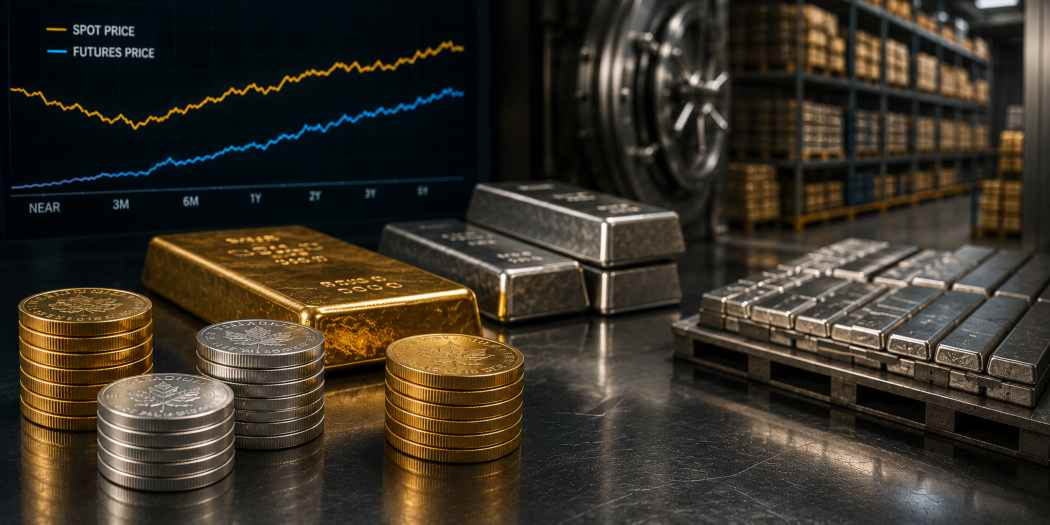
When Spot Prices Outrun Futures, Metals Markets Are Sending a Message
Backwardation is one of the most important futures-market signals for precious metals investors because it shows when immediate demand may be stronger than future delivery pricing. In simple terms, it happens when the spot price of a commodity trades above its futures price. That may sound technical, but for gold and silver buyers, it can point to something very practical: traders may be placing a higher value on metal available now than metal promised later.
This matters because gold and silver are not ordinary commodities. They trade as financial assets, physical stores of value, industrial inputs, and global hedges against inflation, currency weakness, and geopolitical uncertainty. When the normal relationship between spot and futures prices shifts, it can reveal stress in physical supply, changes in investor behavior, or a temporary breakdown in the usual cost-of-carry structure.
Futures Curves Reveal the Price of Time
To understand backwardation, investors first need to understand the futures curve. A futures contract is an agreement to buy or sell an asset at a future date. In gold and silver markets, futures prices are influenced by spot prices, interest rates, storage costs, insurance, financing expenses, delivery expectations, and market sentiment.
Under normal conditions, precious metals often trade in contango, where futures prices are higher than spot prices. This makes sense because holding physical metal involves costs. A future delivery price may reflect the cost of storing, financing, and insuring metal until the contract date. In that environment, the curve slopes upward as later delivery months trade at higher prices than the immediate spot market.
Backwardation flips that relationship. Instead of futures trading above spot, nearby physical metal commands a premium. This can happen when buyers want immediate access, when inventories are tight, when delivery confidence weakens, or when investors prefer ownership today over a paper claim for tomorrow. The curve is no longer simply pricing time; it is pricing urgency.
Gold Backwardation Is Rare Because Gold Is Highly Liquid
Gold backwardation is watched closely because gold is typically one of the world’s most liquid assets. Large above-ground stockpiles, central bank holdings, bullion banks, futures exchanges, ETFs, refiners, vaults, and over-the-counter markets all contribute to deep global liquidity. Because gold is durable and widely held, temporary shortages are usually less common than in consumable commodities such as oil or agricultural products.
That is why backwardation in gold can attract attention. When the gold spot price rises above futures pricing, the market may be signaling unusually strong demand for immediate metal or reluctance among holders to part with physical supply. It does not automatically mean a crisis is unfolding, but it can suggest that paper-market pricing and physical-market preference are moving out of alignment.
For investors, this signal should be interpreted carefully. A short-lived inversion may reflect technical positioning, contract expiration dynamics, interest-rate shifts, or temporary delivery tightness. A persistent pattern, however, may indicate deeper demand for physical ownership, particularly during periods of banking stress, inflation anxiety, geopolitical risk, or strong central bank accumulation.
Silver Backwardation Can Expose Tight Physical Supply Faster
Silver behaves differently from gold because it has a larger industrial demand component. Solar panels, electronics, electric vehicles, power systems, medical applications, and advanced manufacturing all compete with investment demand for available silver. That dual role can make silver more sensitive to supply-chain pressure, fabrication demand, and physical bar availability.
When silver enters backwardation, investors often look for signs of tight near-term supply. Strong retail demand, industrial restocking, exchange inventory declines, refinery delays, or heavy futures delivery interest can all contribute to a firmer spot market. Silver’s smaller market size compared with gold can also make price dislocations more pronounced when demand rises quickly.
This does not mean every silver backwardation episode predicts a major rally. The silver market is volatile, and short-term futures curve shifts can reverse quickly. Still, backwardation may signal that buyers are prioritizing immediate availability, especially when premiums on physical coins, rounds, or bars are also elevated. In those moments, the spot price, futures curve, and retail premium structure should be analyzed together.
Physical Premiums Add Another Layer to the Signal
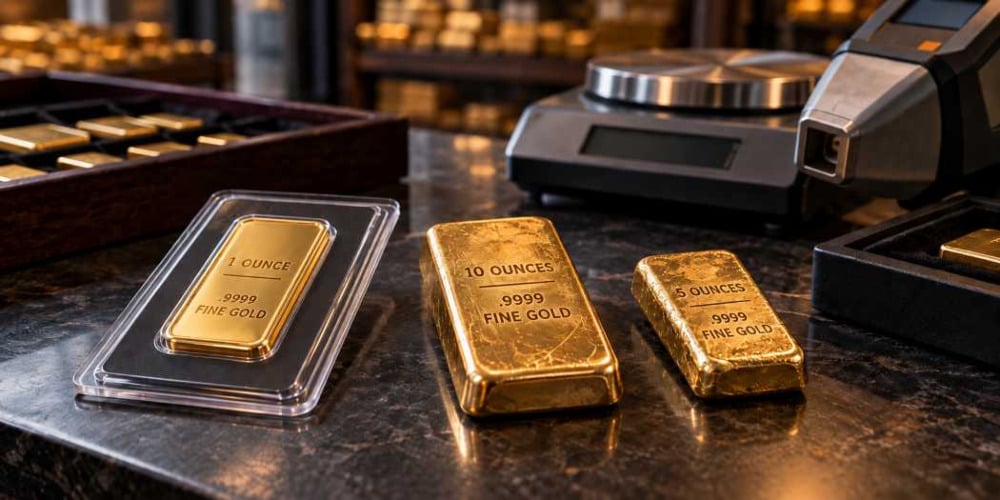
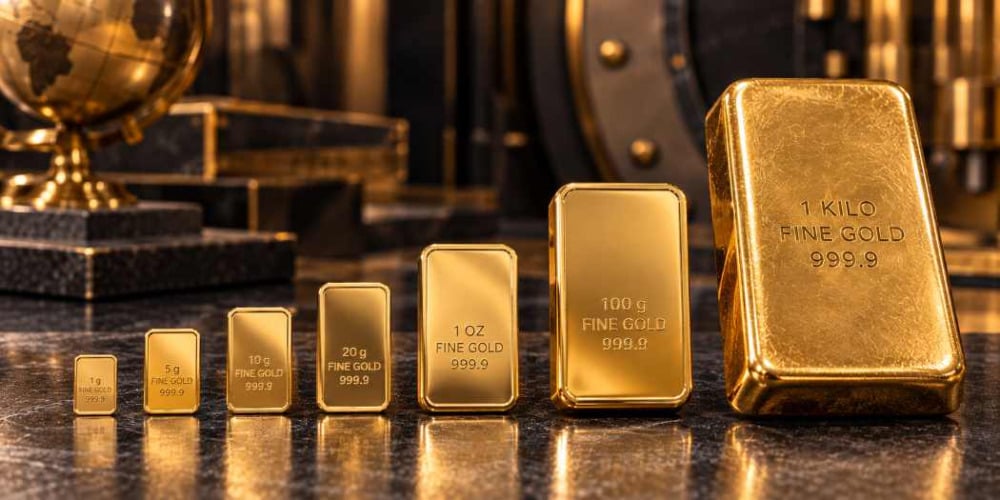
Backwardation is not the same as a high retail premium, but the two can be related. Spot and futures prices reflect wholesale market conditions, while physical premiums reflect product availability, mint production, dealer inventory, fabrication costs, and buyer demand. A one-ounce silver coin may carry a higher premium even when the futures curve is normal, simply because retail product demand is strong or mint supply is limited.
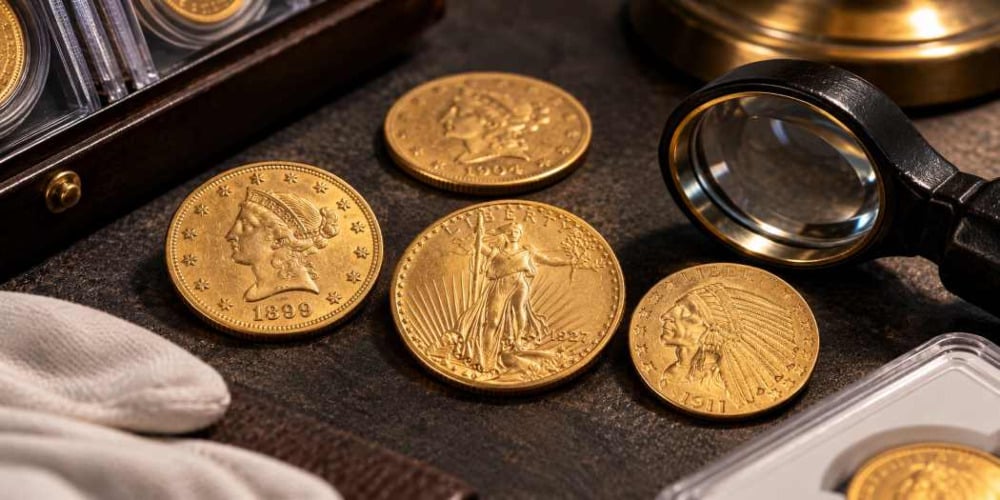
The distinction matters. Bullion value is mainly tied to metal content, spot price, weight, purity, and premium. Numismatic value is different because collectible coins may command added value from rarity, mintage limits, condition, certification, historical significance, or collector demand. A rare gold coin may trade far above melt value for reasons unrelated to futures-market structure.
For bullion buyers, backwardation becomes more meaningful when it appears alongside rising physical premiums, declining inventories, and stronger demand for immediate delivery. When all three signals align, the market may be showing tighter physical conditions than spot price alone suggests.
ETFs, Mints, and Exchanges Shape How Investors Experience Scarcity
Most investors do not interact directly with wholesale futures delivery systems, but they may still feel the effects of market tightness through product availability and premiums. Futures exchanges help establish price discovery, while ETFs can influence demand for vaulted metal. Government mints and private refiners transform wholesale metal into coins, bars, and rounds that reach retail buyers.
These institutions play different roles. Futures markets provide standardized contracts and liquidity. ETFs offer exposure to metal prices through financial products. Mints and refiners produce physical investment products with specific weights, purities, and designs. Dealers connect retail buyers to available inventory.
When futures curves invert, the signal begins in the wholesale pricing system. But if the condition reflects real physical tightness, retail buyers may notice delayed product availability, higher premiums, or stronger demand for widely recognized bullion. That is why experienced investors often watch both market structure and product-level behavior before drawing conclusions.
Backwardation Does Not Always Mean Prices Will Rise
One common mistake is assuming backwardation guarantees higher future prices. It does not. Backwardation describes the relationship between spot and futures prices at a given time. It may reflect tight supply, strong immediate demand, delivery concerns, or unusual financing conditions, but it is not a standalone price forecast.
Prices can still fall in a backwardated market if macro conditions turn negative, the U.S. dollar strengthens, real yields rise, industrial demand weakens, or investor flows reverse. Gold and silver are influenced by many forces beyond futures-curve structure, including Federal Reserve expectations, inflation data, geopolitical developments, ETF flows, central bank buying, and broader risk sentiment.
The better way to use backwardation is as a market-quality signal. It can help investors ask sharper questions: Is physical metal becoming harder to source? Are premiums widening? Are futures traders pricing near-term stress? Are inventories declining? Is the move short-lived or persistent? Those questions provide more insight than treating backwardation as a simple buy signal.
Contango and Backwardation Help Buyers Read Market Pressure
Contango and backwardation are best viewed as opposite market structures. Contango suggests future delivery trades at a premium to spot, often reflecting storage, financing, and time value. Backwardation suggests immediate metal is priced higher than future delivery, often reflecting urgency or tightness in nearby supply.
For gold and silver buyers, this comparison can clarify market tone. A normal contango curve may suggest orderly supply conditions and standard carrying costs. A flat curve may indicate uncertainty or a narrowing balance between immediate and future demand. A backwardated curve may suggest buyers are competing more aggressively for available metal today.
None of these structures should be read in isolation. A thoughtful investor compares the futures curve with spot price action, physical premiums, inventory reports, macro data, ETF flows, and dealer availability. The strongest signals usually come when several indicators point in the same direction.
The Next Metals Cycle May Make Market Structure More Important
Gold and silver markets are becoming more complex as investors respond to inflation, debt concerns, central bank policy, geopolitical instability, and changing industrial demand. Gold remains a global reserve asset and safe-haven metal, while silver is increasingly tied to electrification, solar energy, electronics, and technology infrastructure. These forces can create moments when physical demand and financial-market pricing diverge.
Backwardation deserves attention because it highlights that divergence. It reminds investors that spot prices and futures prices are not just numbers on a screen; they represent availability, timing, confidence, and demand for real metal. When immediate ownership becomes more valuable than future delivery, the market is revealing something about urgency.
For buyers, the practical takeaway is simple. Watch the curve, but do not rely on it alone. Combine backwardation analysis with premiums, inventory trends, monetary policy expectations, and product availability. In gold and silver, market structure is most useful when it helps explain why physical demand may be behaving differently from headline futures pricing.
FAQs
What is backwardation in precious metals?
Backwardation in precious metals occurs when the spot price trades above the futures price for later delivery. This market structure suggests that immediate ownership may be valued more highly than future delivery. In gold and silver, backwardation can reflect tight physical supply, strong near-term demand, delivery concerns, or unusual financing conditions. It is an important signal, but it should be analyzed alongside premiums, inventories, and broader market trends.
What causes gold backwardation?
Gold backwardation can occur when immediate physical demand becomes unusually strong relative to future delivery pricing. Potential causes include tight available supply, increased safe-haven buying, delivery concerns, interest-rate shifts, or reluctance among holders to sell physical metal. Because gold is normally highly liquid, sustained backwardation can attract attention. However, short-term episodes may also result from technical futures-market factors rather than lasting physical scarcity.
What causes silver backwardation?
Silver backwardation can occur when spot silver becomes more valuable than future delivery because near-term demand is strong or available supply is tight. Silver’s industrial use in solar panels, electronics, vehicles, and manufacturing can intensify pressure during periods of heavy physical consumption. Investment demand, retail shortages, exchange inventory declines, or strong delivery interest may also contribute. The signal is strongest when premiums and inventories confirm the same trend.
Is backwardation bullish for gold and silver?
Backwardation can be bullish, but it does not guarantee that gold or silver prices will rise. It may indicate tight near-term supply or strong immediate demand, both of which can support prices. However, metals can still decline if the dollar strengthens, yields rise, investor demand weakens, or macro sentiment shifts. Backwardation is best used as a market-structure signal rather than a simple price prediction tool.
How is backwardation different from contango?
Backwardation means spot prices are higher than futures prices, while contango means futures prices are higher than spot prices. Contango is common in many precious metals markets because future prices may include storage, financing, insurance, and time value. Backwardation reverses that relationship and may signal stronger demand for immediate metal. Comparing the two helps investors understand whether the market is pricing normal carrying costs or near-term urgency.
Does backwardation affect physical bullion premiums?
Backwardation can affect physical bullion premiums if it reflects real tightness in available metal. Retail premiums are also influenced by mint capacity, dealer inventory, fabrication costs, product type, and buyer demand. A futures curve inversion alone does not guarantee higher premiums. However, when backwardation appears alongside rising coin or bar premiums and limited product availability, it may indicate stronger stress in the physical market.
Is gold backwardation rare?
Gold backwardation is relatively rare compared with some other commodities because gold has large above-ground stocks, deep liquidity, and broad global ownership. Unlike oil or agricultural commodities, gold is not consumed in the same way, so supply can often return to market when prices rise. When gold backwardation persists, investors pay attention because it may suggest unusual demand for immediate physical ownership or reduced willingness to sell.
Why does silver backwardation matter to investors?
Silver backwardation matters because it may reveal tight physical supply in a market already influenced by both investment and industrial demand. Silver is used in solar technology, electronics, vehicles, and manufacturing, which can create additional competition for available supply. If immediate silver trades above future delivery, investors may interpret it as a sign of stronger near-term demand, especially when premiums and inventories confirm the pressure.
Can backwardation happen in crypto markets?
Backwardation can happen in crypto futures markets when spot prices trade above futures prices. This may reflect strong immediate demand, leverage resets, funding stress, bearish expectations, or temporary dislocations between spot and derivatives markets. Crypto backwardation differs from metals because digital assets do not have physical storage or delivery constraints in the same way. Still, the futures curve can provide useful insight into trader positioning and market sentiment.
Should investors buy during backwardation?
Investors should not buy solely because a market is in backwardation. The signal may indicate tight supply or strong immediate demand, but it must be evaluated with spot price trends, premiums, inventories, macro conditions, and personal risk tolerance. For physical buyers, backwardation may justify closer attention to product availability and premiums. A disciplined strategy should consider allocation goals rather than reacting only to futures-curve movement.
Related reading you may find interesting:
Silver Shortage Signals: COMEX vs LBMA Inventory Clues