




Why Smaller Gold Options Are Reshaping Physical Gold Ownership
As the gold spot price trades near historic highs, many investors are looking for practical ways to add physical gold to their portfolios without committing to a full one-ounce purchase. Fractional gold bars, coins, and even innovative products like Goldbacks are increasingly becoming the solution. These smaller denominations provide flexibility, accessibility, and strategic advantages while maintaining direct exposure to movements in gold prices.
In today’s environment of inflation concerns, currency volatility, and market uncertainty, investors are seeking tangible assets that balance affordability with long-term wealth preservation. Fractional gold makes entry into the precious metals market more attainable while still offering the intrinsic value that defines physical bullion.
What Is Fractional Gold?
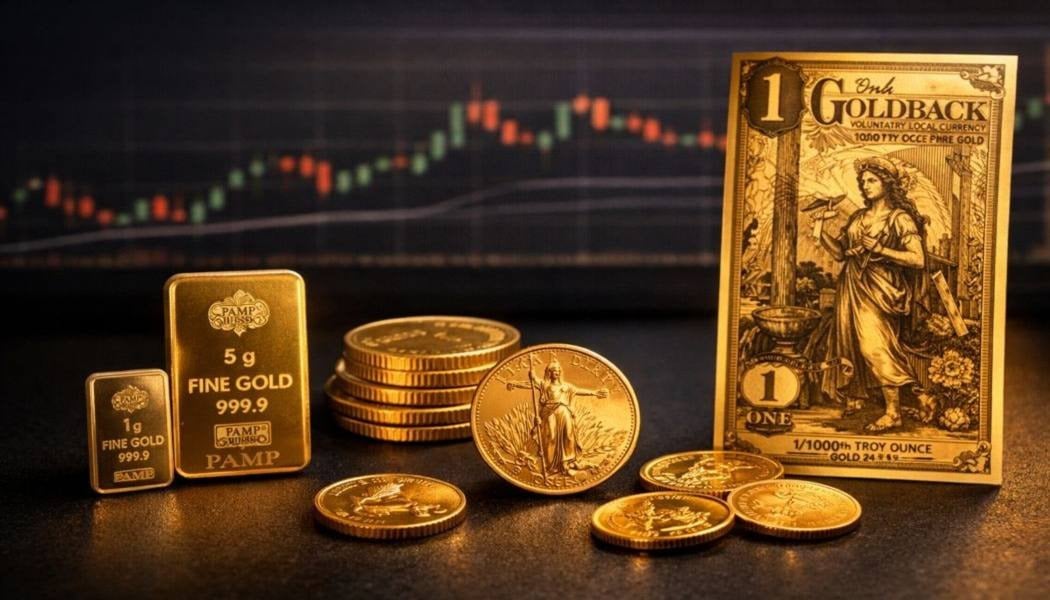
Fractional gold refers to bullion products containing less than one full troy ounce of gold. Common formats include:
-
1/2 oz, 1/4 oz, and 1/10 oz gold coins, such as the American Gold Eagle and Canadian Gold Maple Leaf
-
1 gram, 5 gram, and 10 gram gold bars from globally recognized refiners
-
Goldbacks, which contain fractional amounts of .9999 fine gold embedded in each note
These products are typically struck in .999 or .9999 fine gold and priced based on the prevailing spot price of gold, plus a premium reflecting minting, fabrication, and distribution costs.
Despite their smaller size, fractional gold coins, bars, and Goldbacks maintain the same purity standards and global recognition as full one-ounce bullion products, making them practical and highly liquid options within a diversified precious metals strategy.
The Rise of Goldbacks in the Fractional Gold Market
Goldbacks represent a modern evolution in fractional gold ownership. Each Goldback note contains a precise, spendable amount of .9999 fine gold embedded within a durable polymer note. While much smaller in gold weight than traditional bullion coins, Goldbacks provide an ultra-fractional entry point into physical gold ownership.
Unlike traditional gold bars or coins, Goldbacks are designed for divisibility and practical exchange. For investors seeking micro-denomination gold exposure tied directly to the gold spot price, Goldbacks offer:
-
Extremely accessible entry pricing
-
Recognizable gold content backed by independent verification
-
A unique bridge between bullion ownership and transactional utility
For small-scale investors or those looking to diversify beyond standard fractional coins, Goldbacks provide an innovative addition to a precious metals strategy.
Why Fractional Gold Is Growing in Popularity
Accessibility in a High Gold Price Environment
When the gold spot price rises above multi-thousand-dollar levels per ounce, purchasing a full ounce requires substantial capital. Fractional gold allows investors to build positions gradually through dollar-cost averaging rather than waiting to accumulate a larger lump sum.
This incremental approach reduces timing risk and makes gold ownership more approachable.
Liquidity and Strategic Flexibility
Fractional pieces allow investors to liquidate smaller portions of their holdings when needed. Rather than selling a full ounce, smaller denominations offer selective flexibility — a valuable feature during periods of rapid movement in the gold spot price.
This liquidity advantage is one of the primary reasons fractional gold remains attractive despite slightly higher premiums.
Understanding Premiums on Fractional Gold
Fractional gold typically carries a higher premium per ounce compared to one-ounce bullion. Fabrication costs are proportionally higher for smaller pieces, and demand for accessible gold options often supports stronger retail premiums.
For example:
-
1 oz gold bar → lower premium per ounce
-
1/10 oz gold coin → higher premium per ounce
-
Goldbacks → premium reflects fabrication complexity and micro-denomination utility
While premium matters, cost efficiency should be viewed within the broader investment strategy. Smaller denominations provide flexibility and divisibility that may outweigh the slightly higher premium for many investors.
Monitoring both the gold spot price and prevailing retail premiums is key to making informed buying decisions.
Fractional Gold vs Silver: Strategic Allocation
Many investors compare fractional gold with silver bullion, particularly when the silver spot price appears attractive relative to gold. Silver offers lower price points and industrial demand exposure, while gold serves primarily as a monetary hedge and store of value.
A balanced precious metals portfolio may include:
-
Gold for stability and long-term purchasing power
-
Silver for growth potential and industrial demand
-
Fractional gold for flexibility and accessibility
Tracking the gold-to-silver ratio can provide additional insight into allocation decisions between gold and silver bullion.
How Fractional Gold Fits Into a Diversified Strategy
Dollar-Cost Averaging Into Gold
Fractional gold enables disciplined accumulation regardless of short-term volatility in the gold spot price. Smaller purchases over time can smooth entry points and reduce exposure to short-term price swings.
Wealth Preservation and Portability
Gold has historically maintained purchasing power across monetary cycles. Smaller denominations enhance portability and storage flexibility while preserving intrinsic value.
Entry Point for New Investors
For first-time buyers, fractional gold removes the psychological and financial barrier of a full-ounce purchase. It provides a practical way to begin building tangible wealth.
The Bigger Picture: Accessibility Strengthens Gold Demand
The growing demand for fractional gold reflects a broader trend in precious metals investing: accessibility fuels participation. As the gold spot price and silver spot price respond to global macroeconomic forces, investors increasingly value flexibility alongside intrinsic value.
Fractional gold bars, coins, and Goldbacks provide scalable exposure to physical gold without requiring large capital commitments. For small-scale investors and seasoned bullion buyers alike, these options make physical gold ownership adaptable, strategic, and aligned with modern portfolio management.
In a market defined by uncertainty, the ability to own gold in multiple denominations — from micro-fractional notes to traditional bullion coins — strengthens the case for precious metals as a core component of diversified wealth preservation.