


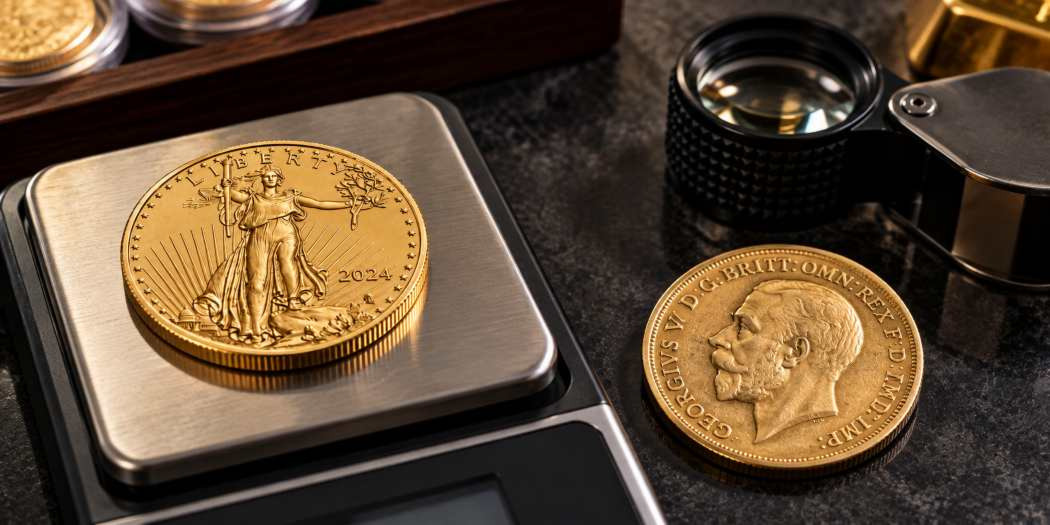
Why a Gold Coin's Total Weight Can Be Misleading
A gold coin weighs 33.93 grams on a scale, yet its specifications say it contains only 31.10 grams of gold. Nothing is missing, and the coin is not necessarily underweight. The difference comes from the additional metals used in its composition. For buyers comparing coins from different countries and historical periods, understanding this distinction is essential to calculating how much gold they actually own.
The relevant measurement is called actual gold weight, or AGW. It represents the quantity of pure gold inside a coin, excluding copper, silver, or other alloy metals. Unlike face value or physical size, AGW provides a consistent basis for comparing precious-metal content. Determining it requires just two specifications: the coin's total weight and its gold purity. The arithmetic is simple, but choosing the correct figures is where mistakes often begin.
The Actual Gold Weight Formula
Actual gold weight is calculated by multiplying a coin's gross weight by its fineness. Gross weight includes every metal in the coin, while fineness describes the proportion that is gold. A coin marked .900 fine contains 90% gold by mass; the remaining 10% consists of other metals. Likewise, .9167 indicates approximately 91.67% gold, while .9999 represents 99.99% purity.
The basic formula is:
Actual Gold Weight = Gross Weight × Gold Fineness
If the gross weight is measured in grams, the result is grams of pure gold. To convert that figure into troy ounces, divide by approximately 31.1035, the number of grams in one troy ounce. For example, a hypothetical 10-gram coin containing 90% gold has an AGW of 9 grams, or approximately 0.2894 troy ounce. Using the same units throughout the calculation prevents an otherwise straightforward formula from producing a misleading answer.
Karat markings can also be converted into fineness. Divide the karat rating by 24: 18K gold is 75% pure, while 22K is approximately 91.67% pure. Published mint specifications may use slightly rounded values, so calculations performed from those figures sometimes differ by a few thousandths of a gram from an official stated gold content. For recognized bullion coins, the issuing mint's specifications should take precedence over an estimate based on rounded numbers.
Calculating the Gold in an American Gold Eagle
The one-ounce American Gold Eagle provides a particularly useful example because its name refers to its fine-gold content rather than its complete weight. The coin weighs approximately 33.931 grams and consists of 91.67% gold, with silver and copper making up the remainder. Multiplying the gross weight by the gold proportion produces approximately 31.104 grams, allowing for rounding, which corresponds to its guaranteed one troy ounce of gold.
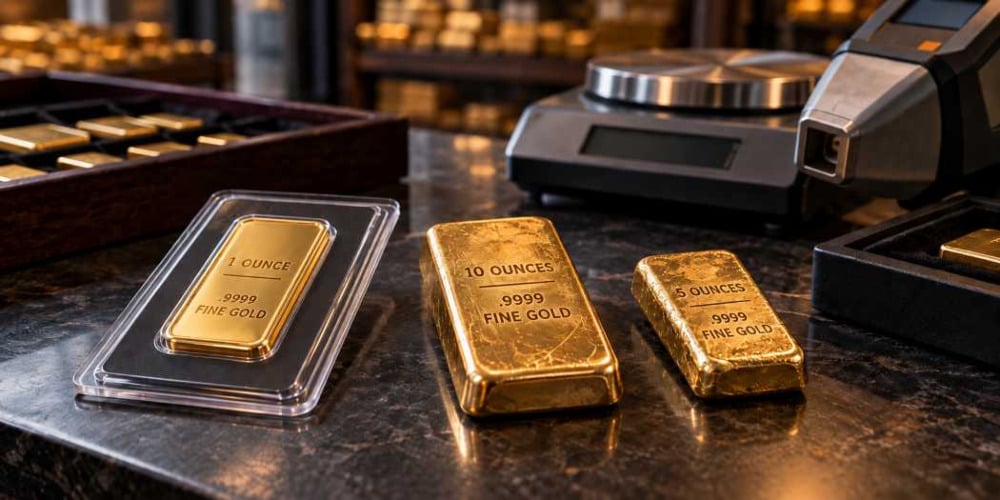
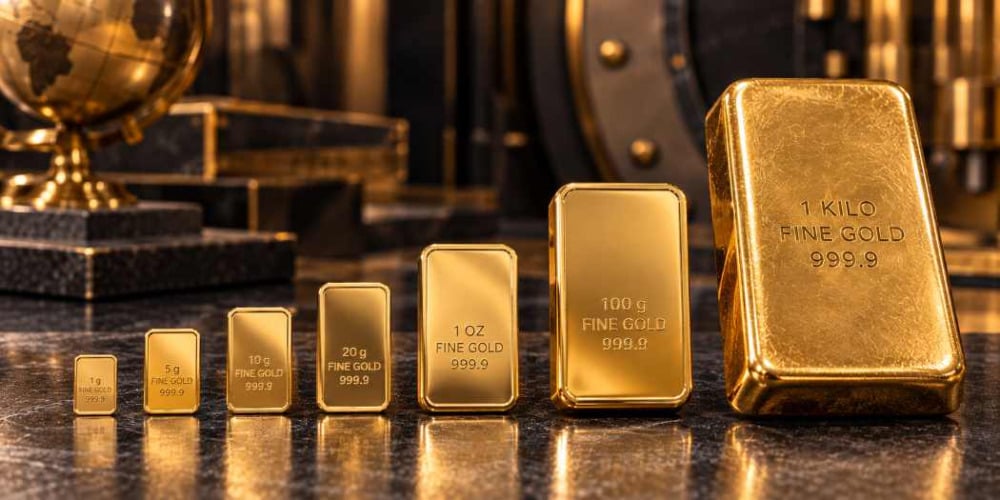
This means the Eagle weighs more than one troy ounce overall without containing more than one troy ounce of gold. The additional mass comes from its alloy. A one-ounce American Gold Buffalo, by comparison, is struck in .9999 fine gold and weighs approximately 31.103 grams. Despite their different gross weights, both coins offer the same stated fine-gold content. For a buyer comparing these coins, the distinction is between alloy composition and total mass, not the amount of gold received.
Fractional Gold Eagles follow the same principle. A quarter-ounce Eagle has a published gross weight of approximately 8.483 grams, but its AGW is one-quarter troy ounce, or about 7.776 grams. Multiplying the gross weight by the published fineness produces a close approximation of that amount. This example also demonstrates why a coin should not be judged against its fractional-ounce designation using total mass alone. The denomination and advertised gold content refer to established mint specifications, not an instruction that every component of the coin must be gold.
A British Sovereign and a Swiss 20 Franc Coin
Historical gold coins provide an important second test because they were often issued according to monetary standards rather than modern one-ounce bullion conventions. A traditional British Gold Sovereign weighs approximately 7.98 grams and uses a 22-karat alloy. Multiplying 7.98 by .9167 gives roughly 7.315 grams of gold using rounded specifications. The official fine-gold content is approximately 7.322 grams, or 0.2354 troy ounce, reflecting the greater precision of its established standard. The Royal Mint's Sovereign reference provides the published weights and fineness for the denomination.
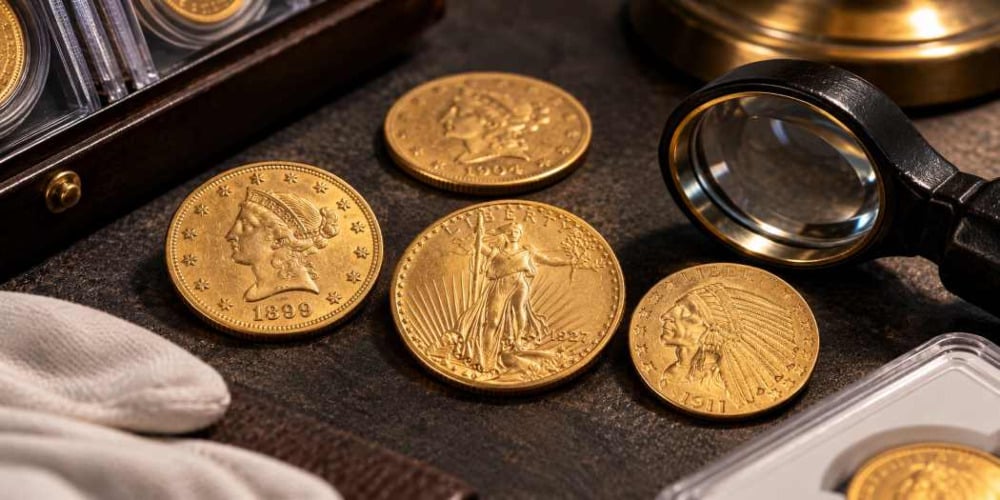
A Swiss 20 Franc gold coin offers another practical comparison. These coins are generally struck in .900 fine gold with an overall weight of approximately 6.45 grams. Multiplying those figures gives about 5.805 grams of fine gold, equivalent to approximately 0.1867 troy ounce. The specifications for a Swiss 20 Franc gold coin illustrate why its monetary denomination cannot be treated as a statement of gold weight. Twenty francs describes its historical currency value, not twenty grams or any other quantity of precious metal.
For owners comparing inherited European coins, the lesson is to identify each denomination before performing the calculation. A Sovereign and a Swiss 20 Franc piece have different gross weights and fineness standards, so their metal content differs even though both are familiar historical gold coins. Dates and varieties may also affect collector value, but those characteristics should be assessed separately from the AGW calculation.
Common Mistakes When Calculating Gold Content
One frequent error is confusing ordinary ounces with troy ounces. A standard avoirdupois ounce weighs approximately 28.35 grams, while the troy ounce used in precious-metals markets weighs approximately 31.1035 grams. Substituting the household conversion in a gold calculation introduces a significant error. Similarly, an electronic scale displaying grams provides gross mass, not an automatic determination of how much of that mass is pure gold.
Another mistake is treating a coin's color or apparent age as evidence of fineness. A reddish gold coin may contain a relatively high proportion of copper, but its appearance cannot establish the precise alloy. Historical issues also followed different national standards, making generalizations about purity unreliable. NYC Bullion's explanation of how gold buyers test gold in NYC describes why weight, published specifications, and verification work together when identifying precious-metal items.
Wear introduces another consideration. A heavily circulated gold coin may weigh slightly less than its original mint specification because some metal has been lost through handling. Calculating AGW from its current weight can estimate remaining fine-gold mass, but the calculation assumes the coin's identity and composition are genuine. Significant discrepancies in weight should prompt further verification rather than an immediate conclusion that the gold content is lower than advertised.
Turning Actual Gold Weight Into a Useful Comparison
Once AGW is known, multiplying it by the current gold price per troy ounce provides a theoretical estimate of the coin's intrinsic metal value. A coin containing 0.2354 troy ounce of gold would have a metal value of approximately $941.60 at a hypothetical gold price of $4,000 per troy ounce. This figure is a calculation, not a dealer purchase or resale quote; spreads, premiums, condition, and market demand can affect actual transaction prices.
The distinction matters when comparing bullion with collectible coins. Two pieces containing identical amounts of gold may sell for different prices because of their dates, mintmarks, grades, or demand among collectors. As explained in NYC Bullion's guide to selling gold by weight, precious-metal value is only one component of the amount a seller might receive. AGW establishes the metal baseline without claiming to determine the entire market value of a particular coin.
For an unfamiliar coin, the most reliable process is to establish its identity, confirm the correct official specifications, calculate its fine-gold content, and then investigate any potential collector premium. This separates measurable precious-metal content from the judgments involved in pricing a finished or historical object. A calculation based on verified weight and fineness gives buyers and sellers a useful common reference, whether the coin is a modern Eagle, a British Sovereign, or a century-old European issue.
FAQs
What is actual gold weight in a coin?
Actual gold weight, commonly abbreviated AGW, is the amount of pure gold contained in a coin after excluding any additional alloy metals. It differs from gross weight, which includes the entire coin's mass. For example, a one-ounce American Gold Eagle contains one troy ounce of gold but weighs more overall because it also contains silver and copper. AGW allows buyers and sellers to compare the precious-metal content of different coins using a consistent measurement.
How do you calculate actual gold weight from grams?
Multiply the coin's gross weight in grams by its gold fineness expressed as a decimal. A 10-gram coin made from .900 fine gold contains 9 grams of pure gold. To convert that result into troy ounces, divide by approximately 31.1035. This calculation assumes the coin's identity, purity, and weight are correctly established. When an issuing mint publishes an official fine-gold weight, that figure is generally preferable to a calculation using rounded specifications.
Does a 22K gold coin contain less gold than a 24K coin?
Not necessarily. A 22K gold coin has a lower percentage of gold by mass, but it can weigh more overall and contain the same fine-gold amount as a smaller 24K coin. A one-ounce American Gold Eagle and a one-ounce Gold Buffalo both contain one troy ounce of gold despite their different compositions. The correct comparison is actual gold weight, not purity percentage alone. Gross weight must also be considered before deciding which coin contains more gold.
How much actual gold is in a British Sovereign?
A standard British Gold Sovereign contains approximately 7.322 grams, or 0.2354 troy ounce, of pure gold. Its gross weight is approximately 7.98 grams, and its traditional composition is 22-karat gold. These values distinguish it from modern one-ounce bullion coins and from other Sovereign denominations, such as the Half-Sovereign. When identifying an unfamiliar example, confirm the precise denomination and type before relying on a published weight specification.
Can I calculate gold coin value using actual gold weight?
Actual gold weight can establish a coin's theoretical intrinsic metal value. Multiply AGW in troy ounces by the gold price per troy ounce to produce a reference figure. However, the result is not necessarily the amount a dealer will pay or the price a buyer must spend. Transaction spreads, product premiums, authenticity, condition, and collector demand can change the market value. Rare historical issues may sell for considerably more than their underlying gold content.
Why does my gold coin weigh less than its official specification?
A small difference may result from circulation wear, limitations in the scale, or rounding in published measurements. However, a noticeable discrepancy can also indicate that the coin has been misidentified, altered, or is not genuine. The proper response is to confirm the exact coin type, check that the scale is calibrated, and compare the result with reliable official specifications. Professional examination may be advisable before buying or selling an unfamiliar or potentially valuable example.