


A Gold Evaluation Is About More Than Authenticity
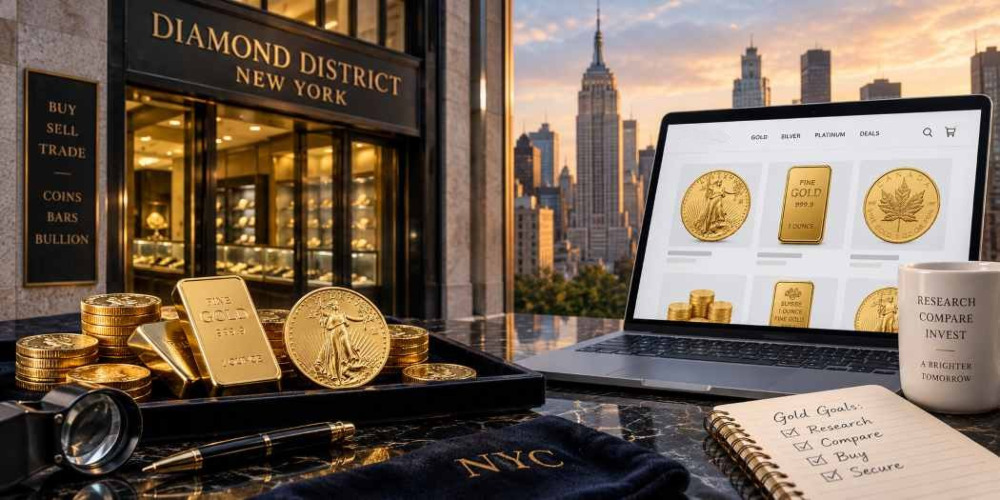
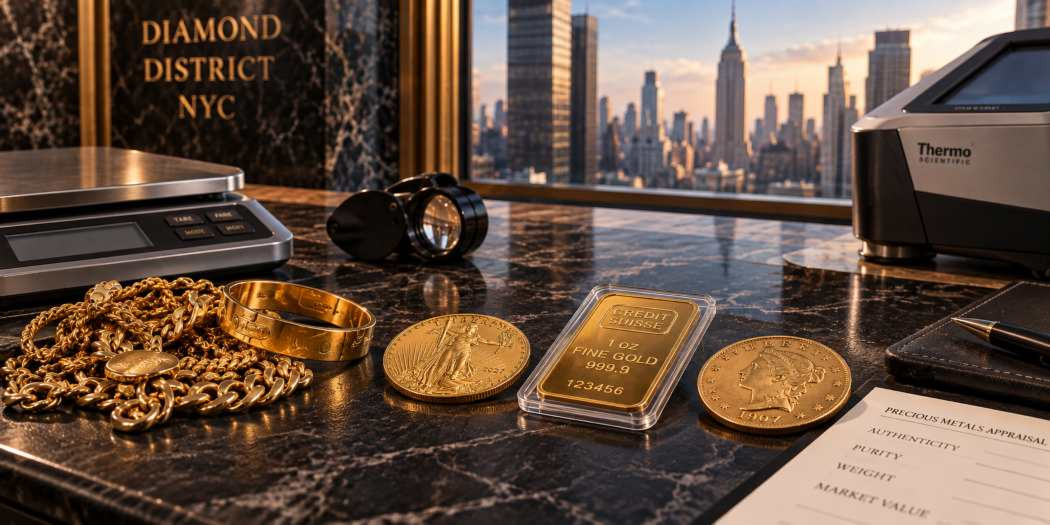
Walk into a gold buyer in New York's Diamond District with a bracelet, bullion bar, Gold Eagle, or older U.S. coin, and the evaluation often begins before any testing equipment appears. The buyer first needs to establish what the item is, whether its stated purity is credible, how much precious metal it contains, and which market should ultimately determine its value. Those questions matter because different forms of gold are not necessarily priced the same way. A broken 14K chain may primarily be valued for recoverable metal, while a recognizable bullion product can have an established resale market. An older gold coin may warrant a numismatic evaluation before its melt value becomes relevant. For someone preparing to sell gold in New York City, testing is therefore better understood as part of identifying and classifying the item rather than simply determining whether it is real.
The process can begin with markings, dimensions, construction, condition, manufacturer, mint, and packaging. Jewelry commonly carries 10K, 14K, or 18K markings, while other marks may identify a manufacturer or indicate that an item is plated or gold-filled. The Federal Trade Commission's guidance on precious-metal jewelry explains how these markings communicate metal content, but they may still require verification. Bullion offers different clues because established coins and bars have published specifications that can be compared with the item being examined. With older coins, date, mint mark, condition, and potential collector demand can introduce another layer before formal testing even begins.
Weight and Purity Establish the Metal Content
Weight alone does not determine how much gold an item contains. A 20-gram piece of 14K jewelry, for example, is not 20 grams of pure gold. Because 14K represents 14 parts gold out of 24, the alloy is approximately 58.3% gold, while 18K is 75% gold. Combining verified purity with weight gives a buyer a basis for estimating the precious-metal content of jewelry that may ultimately be sold for refining. NYC Bullion's guide to selling gold by weight in NYC explores why gross weight and actual gold content should not be confused.
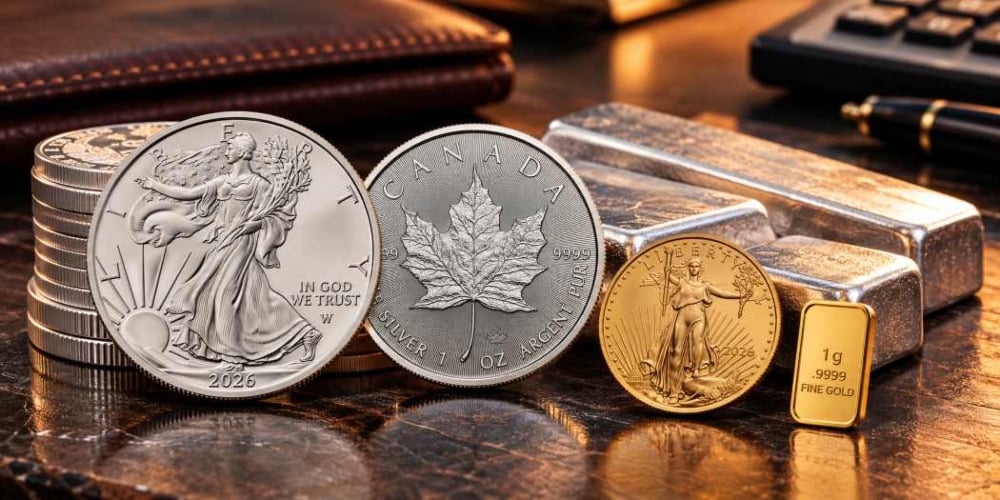
Standard bullion changes the calculation because a genuine investment coin or bar normally has a specified precious-metal weight and fineness. Physical measurements can help establish whether the product matches its expected specifications, but once authenticated, a recognizable bullion product may be valued as an intact item rather than simply as raw gold. This distinction becomes especially important when comparing jewelry, bullion, and collectible coins. The underlying metal provides a starting point, but the form in which that metal reaches the market can influence what happens next.
Gold Buyers Can Use More Than One Testing Method
There is no single gold test that makes sense for every type of gold item. Depending on what is being evaluated, a buyer may combine visual examination and physical measurements with touchstone testing, electronic methods, specialized bullion-verification equipment, or X-ray fluorescence. XRF is particularly useful because it can provide information about elemental composition without requiring an item to be cut apart. The Gemological Institute of America discusses XRF as an established analytical technique used in precious-metal analysis, although surface composition and plating can complicate some readings.
The item itself helps determine which approach is appropriate. An unmarked chain of uncertain composition presents a different problem from a standardized bullion coin whose expected dimensions, weight, and design characteristics are already known. Potentially collectible coins require additional caution because condition can contribute to their value. Scratching or otherwise altering an older coin simply to test its metal could damage something worth more intact than its gold content suggests. Professional evaluation is therefore less about applying every available test and more about gathering enough consistent evidence to identify the item confidently.
The Most Important Finding May Be What Kind of Gold It Is
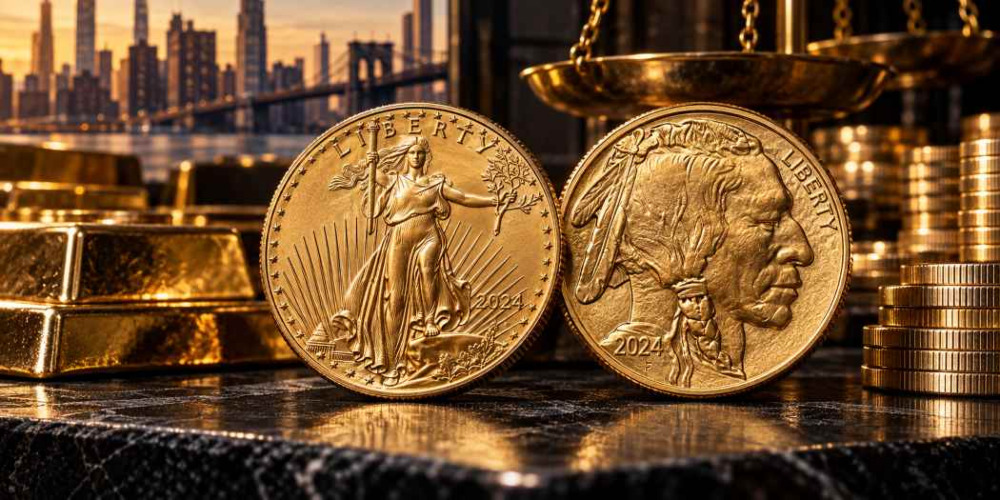
Consider four items brought to a Diamond District buyer: a broken 14K bracelet, a sealed refinery bar, a modern Gold Eagle, and an older U.S. gold coin. The bracelet may be destined for refining and valued largely according to recoverable gold content. The refinery bar may remain a marketable bullion product after authentication, while the Gold Eagle has both known precious-metal content and an established secondary market. The older coin could require further examination because rarity, condition, or collector demand might place its value above melt.
This is also why packaging and documentation can matter without settling the question of authenticity. An assay card may help identify and preserve a bullion bar in a recognizable form, but a buyer can still independently verify the product. Likewise, a coin holder, receipt, or certificate may provide useful context without replacing examination of the item itself. Once the buyer understands what is genuine and what type of product is being presented, the evaluation shifts from testing metal to choosing the appropriate market: refining, bullion resale, jewelry resale, or numismatics.
How an Evaluation Becomes an Offer
A purity test does not automatically produce a purchase price. For scrap jewelry, an offer may begin with recoverable gold content and the prevailing gold price while accounting for processing and resale. Standard bullion can be evaluated against the precious-metals market and the secondary-market value of the specific product, while a collectible coin may require an entirely different comparison because condition, rarity, and collector demand can outweigh its melt value. Two buyers can therefore agree on an item's purity and weight yet arrive at different offers because they assess its resale market differently.
For sellers, the useful question is what the evaluation established and how that information affected the price. If jewelry is being purchased as scrap, its weight and verified purity should help explain the calculation. If a bullion coin or bar can be resold intact, that market may also factor into its value. If an older coin has potential collector interest, it should not automatically be reduced to gold content. A transparent evaluation connects the item on the counter with the market where it actually belongs, giving the resulting offer a more meaningful foundation.
FAQs
How do gold buyers test gold in NYC?
Gold buyers may combine visual inspection, weight and dimension checks, hallmarks, electronic testing, touchstone methods, XRF analysis, or specialized bullion-verification equipment. The appropriate approach depends on the item, so jewelry, standardized bullion, and collectible coins do not necessarily undergo identical testing. If one result is inconclusive, additional examination can help establish the item's authenticity, composition, and appropriate market before an offer is determined.
What is XRF testing for gold?
X-ray fluorescence, or XRF, is an analytical method that can provide information about the elements present near an item's surface. It is useful in precious-metal evaluation because testing can be performed without cutting apart the item. Surface composition or plating can sometimes complicate interpretation, however, so an XRF reading may be considered alongside physical examination, measurements, or other authentication methods when additional verification is appropriate.
Will a gold buyer damage my jewelry while testing it?
Not necessarily. XRF and several electronic testing methods are nondestructive, while other procedures may involve different levels of contact with the item. The appropriate method depends on what is being evaluated and what the buyer needs to establish. If jewelry has antique, designer, collectible, or sentimental value, ask how it will be tested before agreeing to a procedure that could permanently alter its surface or condition.
Why do gold buyers check both weight and purity?
Weight tells a buyer how much material is present, while purity indicates how much of that material is gold. Both are important when estimating the precious-metal content of scrap jewelry. Standard bullion is different because genuine coins and bars normally have specified weights and fineness, although physical measurements can still help determine whether an item corresponds with the specifications expected for that particular bullion product.
Does an assay card guarantee a gold bar is authentic?
No. An assay card can help identify a gold bar and preserve it in the manufacturer's intended packaging, but packaging alone does not guarantee authenticity. A buyer may still independently verify the bar before purchasing it. Keeping original packaging intact can nevertheless be useful because it preserves identifying information and may make a recognized bullion product easier to handle and resell in its familiar market form.
Are gold coins evaluated differently from scrap jewelry?
Often, yes. Scrap jewelry may primarily be evaluated for purity and recoverable gold content, while a recognized bullion coin can also be authenticated and valued as an intact investment product. Older coins require additional consideration because date, mint mark, rarity, condition, and collector demand may affect their value. A potentially collectible gold coin should therefore be identified properly before it is valued solely according to melt.
Why can two gold buyers offer different prices?
Buyers can agree on an item's weight and purity while evaluating its resale potential differently. An offer may reflect the gold market, processing requirements, product demand, inventory needs, and whether an item can be resold intact or will likely be refined. Testing establishes important facts about the gold, but those facts still need to be translated into the particular market where the buyer expects the item to be sold.
Related reading you may find interesting:
Can You Start Buying Gold and Silver With $500?