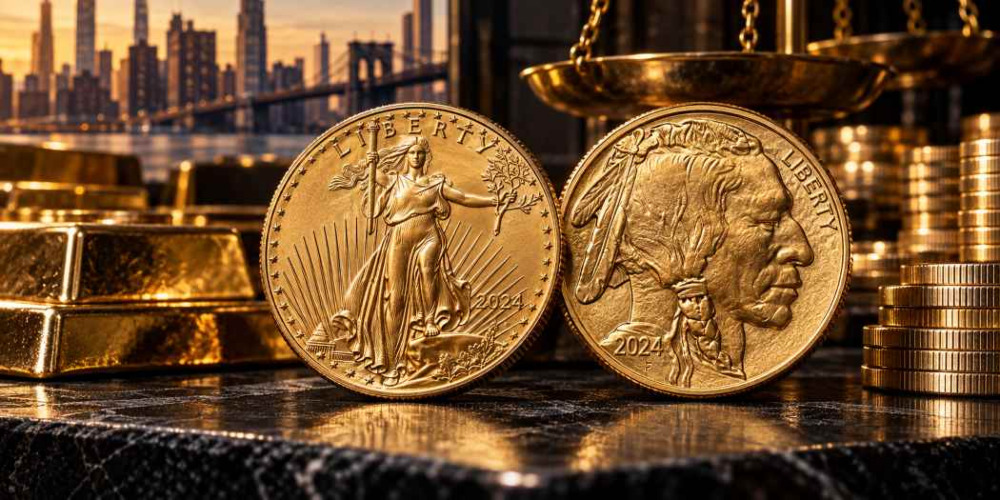




A Smaller Budget Changes the Bullion Buying Decision
Physical gold and silver can look increasingly inaccessible when precious metal prices are high. A one-ounce gold coin or bar requires thousands of dollars, while silver’s own rise has made a stack of one-ounce products considerably more expensive than it was only a few years ago. For someone approaching bullion for the first time, that can create the impression that meaningful physical ownership requires a large upfront commitment.
A $500 budget tells a different story. It can still provide access to physical gold, silver, or a combination of the two, but it places greater importance on product size and premiums. The central question is not simply whether $500 is enough to buy bullion. It is how much of that budget goes toward actual precious metal, how much goes toward the premium above spot, and what flexibility the chosen product provides later. With a smaller starting amount, those trade-offs become easier to see—and more important to understand.
What Can $500 Buy in Physical Silver?
Silver provides the widest range of choices within a $500 bullion budget. Unlike gold, where the price of a full ounce places standard one-ounce products well beyond this spending limit, silver allows a buyer to acquire multiple physical pieces while choosing among government-issued coins, privately minted rounds, and bars.
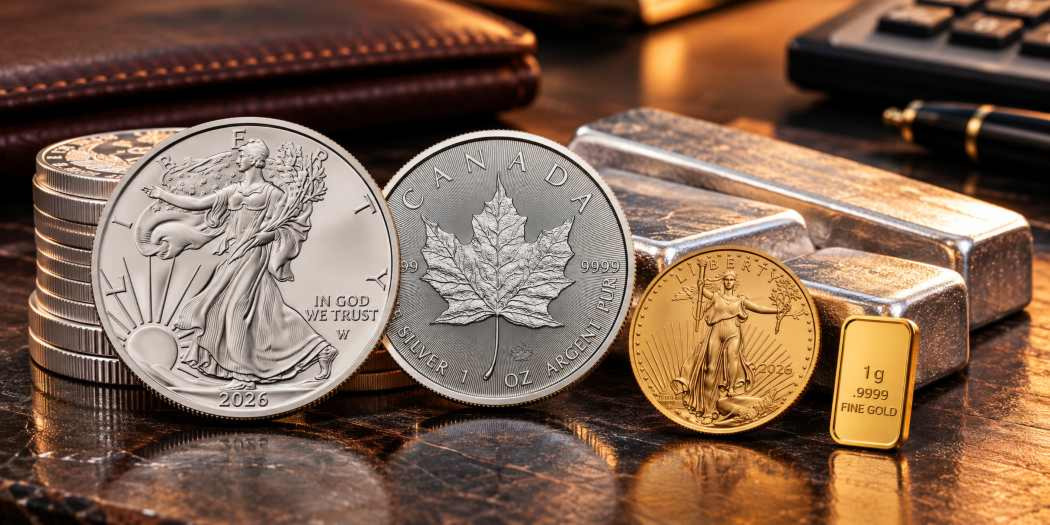
Those formats serve somewhat different purposes. Sovereign bullion coins such as American Silver Eagles and Canadian Silver Maple Leafs are widely recognized and often command higher retail premiums. Generic silver rounds, by contrast, can provide the same basic one-ounce bullion exposure with less emphasis on government issuance or a particular design. Silver bars extend the range further, with common sizes allowing buyers to consolidate more metal into fewer pieces.
The Silver Institute distinguishes the same basic physical-investment categories: government-issued coins, privately produced rounds, and bullion bars of at least 99.9% purity. Its research into the U.S. physical investment market also shows that American buyers have historically favored coins more heavily than buyers in many other countries, while rounds typically trade at lower premiums than sovereign bullion coins.
For a $500 buyer, this creates a practical choice. Someone prioritizing recognizable government coinage may accept a higher premium and receive fewer ounces for the same amount of money. A buyer focused primarily on silver weight may instead compare lower-premium rounds and bars. Neither approach changes the underlying amount of silver contained in a one-ounce product; what changes is how much the market charges above that metal value for its format, mint, fabrication, and demand.
Can You Buy Physical Gold With $500?
Gold requires a different approach. A $500 budget cannot currently reach a conventional one-ounce investment coin or bar, but that does not eliminate physical gold from consideration. It shifts the buyer toward fractional gold—coins containing fractions of a troy ounce and bars measured in smaller gram denominations.
Fractional bullion can include 1/10-ounce gold coins and compact bars containing one gram, 2.5 grams, or other small weights. The World Gold Council notes that investment gold is available across numerous bar sizes, including gram-denominated products, and that buyers of physical bars and coins normally pay a premium above the underlying spot price.
The important issue is proportional cost. Fabricating, packaging, distributing, and handling a small gold product still carries real expenses. Those costs are spread across much less metal than they are with a one-ounce bar. As a result, a fractional product can cost more per ounce of gold contained than a larger piece.
That does not make fractional gold inherently impractical. It provides something a one-ounce product cannot provide to a $500 buyer: accessibility. Smaller pieces can also offer flexibility later because an owner can sell an individual fractional coin or bar rather than liquidating an entire ounce. NYC Bullion’s guide to fractional gold examines those denominations and liquidity considerations in greater depth.
The trade-off is therefore straightforward. Fractional gold lowers the dollar threshold for physical ownership, but the buyer generally sacrifices some premium efficiency to obtain that smaller denomination.
Why Premiums Matter More With a $500 Budget
The spot price is only the starting point for a physical bullion purchase. A finished coin, round, or bar must be fabricated and brought through the physical distribution chain before reaching the buyer, and its retail price reflects those costs along with product demand and dealer market conditions.
Consider the principle rather than a fixed price example. If two silver products contain the same amount and purity of silver but one carries a substantially higher premium, more of a $500 budget is being spent above the underlying metal value. The higher-premium product may offer greater recognizability, stronger demand, or another feature the buyer values, but those benefits are not additional ounces of silver.
The effect can be even more pronounced with small gold products because the premium represents a larger percentage of the metal value. That is why comparing only the final price—“this coin costs less than $500”—does not reveal the entire transaction. A more informative comparison looks at the product’s actual metal content, current gold price or silver price, and the amount being charged above that benchmark.
Premiums can also change. Mint output, wholesale availability, investor demand, fabrication capacity, and broader market conditions can widen or narrow the difference between spot and retail prices. A product that offers strong premium efficiency during one market environment may not necessarily retain the same advantage later. NYC Bullion’s broader explanation of bullion premiums examines those mechanics separately.
Should You Split $500 Between Gold and Silver?
A mixed purchase sounds intuitive: rather than choosing one metal, use part of the $500 for fractional gold and the remainder for silver. Depending on current spot prices, premiums, and available products, that may be possible. But dividing a small budget introduces another layer of trade-offs.
Splitting the money can provide physical exposure to both metals from the beginning. Gold and silver occupy different places within the precious metals market. Gold is predominantly an investment and monetary asset, while silver combines investment demand with extensive industrial consumption. The Silver Institute notes that physical silver investment itself spans bars, government coins, and rounds, giving smaller buyers several ways to obtain the metal.
At the same time, dividing $500 may push both sides of the purchase toward smaller, relatively higher-premium products. Instead of buying a more cost-efficient silver bar, for example, the buyer may choose only a few individual silver pieces after allocating enough money to fractional gold. The result is greater metal diversification but potentially less bullion weight for each dollar spent.
This is why the decision is better framed as a trade-off than a formula. A buyer emphasizing total physical ounces may find silver more accommodating. Someone determined to establish physical gold ownership may accept the premium associated with a fractional piece. Another buyer may value having both metals enough to divide the budget despite the resulting premium considerations.
Is It Better to Buy Now or Save for a Larger Bullion Purchase?
A $500 buyer also has an option that is easy to overlook: not spending the entire budget immediately. Saving toward a larger denomination can improve premium efficiency in some circumstances, particularly with gold. Buying ten fractional pieces over time is not economically identical to eventually purchasing one larger product containing the same aggregate weight.
Larger purchases, however, introduce their own compromises. Waiting requires delaying physical ownership while the market price can move in either direction. Committing more money at once also concentrates the purchase at a single entry price. Smaller purchases spread capital commitments across time and allow the buyer to adjust as personal finances or market conditions change.
There is therefore no universal dollar amount at which buying bullion suddenly becomes “worth it.” The World Gold Council describes investment bars and coins as one of the simplest routes to physical gold ownership while explicitly recognizing the premiums, delivery, storage, and insurance considerations that accompany them. The relevant question is whether the size and format of a purchase make sense for the buyer’s objective and available capital.
That distinction matters for beginners. Waiting for the lowest possible premium is one objective; beginning to accumulate physical metal in manageable increments is another. They can lead to different purchase sizes without either requiring a prediction about where gold or silver prices will move next.
Your First $500 Is Really a Product-Selection Decision
A $500 budget does not remove physical precious metals from reach. Instead, it makes the differences among bullion formats more consequential. Silver offers the broadest selection within that spending range, allowing buyers to compare multiple coins, rounds, and bars. Gold remains accessible through fractional coins and small bars, although buyers generally pay more per ounce for the convenience of those smaller units.
The most useful comparison therefore goes beyond asking whether gold or silver is better. A prospective buyer can ask how much metal each option provides, what premium accompanies it, how recognizable the product is, and how easily it could be sold in the future. Those questions remain relevant whether the first purchase is $500, $5,000, or substantially more.
Starting with a smaller amount can even make those mechanics clearer. When every portion of the budget matters, the distinction between spot price, premium, product size, and actual metal weight becomes difficult to ignore. A buyer who understands those relationships is better equipped to evaluate the next purchase as well—regardless of whether that eventually means accumulating more silver, moving into larger gold denominations, or continuing to own both.
FAQs
Can I buy physical gold with $500?
Yes, although a $500 budget generally directs buyers toward fractional gold rather than standard one-ounce products when gold prices are elevated. Options can include small gram-denominated bars and certain fractional-ounce coins, depending on current spot prices and retail premiums. Smaller gold products typically carry higher premiums per ounce than larger denominations, so buyers should compare actual gold content and total acquisition cost.
How much silver can I buy with $500?
The amount changes with the live silver spot price and retail premiums. A $500 budget can generally access multiple ounces through government bullion coins, privately minted rounds, or silver bars. Lower-premium products may provide more silver weight for the same budget, while sovereign coins can cost more because of minting, recognition, market demand, and other factors beyond their underlying silver content.
Is silver easier to buy than gold on a small budget?
Silver generally offers more physical product choices within a $500 budget because its per-ounce price is substantially lower than gold's. Buyers can choose among individual coins, rounds, and bars without necessarily committing most of the budget to one piece. Gold can still be accessible, but smaller budgets usually require fractional-ounce coins or gram-denominated bars carrying proportionally higher premiums.
Why does fractional gold have higher premiums?
Smaller gold pieces still require fabrication, minting or refining, packaging, handling, and distribution even though they contain less metal. Those costs are therefore spread across a smaller underlying gold value, resulting in a higher premium percentage. Fractional gold compensates for that reduced cost efficiency by making physical ownership accessible at lower dollar amounts and allowing owners to buy or sell gold in smaller increments.
Are silver rounds cheaper than silver coins?
Generic silver rounds commonly carry lower premiums than government-issued bullion coins because they are produced by private mints and do not have legal-tender status. Government coins may command additional premiums because of sovereign issuance, recognition, security features, and market demand. The lowest-premium option can vary with inventory and market conditions, so buyers should compare current prices rather than assuming one format is always cheaper.
Should I spend $500 on gold, silver, or both?
Each approach produces different trade-offs. Concentrating on silver can provide more physical ounces and product choices, while fractional gold provides access to gold at a lower dollar threshold but typically at a higher percentage premium. Splitting $500 between both metals provides diversification but may push each part of the purchase toward smaller denominations. The appropriate choice depends on the buyer's priorities.
Should I save for a larger gold bar instead of buying fractional gold?
Saving for a larger gold product may reduce the premium paid per ounce, but it also delays the purchase and requires a larger capital commitment at one time. Fractional gold offers earlier access, smaller transaction sizes, and greater divisibility. Buyers can compare premium efficiency against flexibility rather than assuming that either purchasing immediately or waiting for a larger denomination is universally preferable.
Related reading you may find interesting:
Why Do Gold Coins Have Face Values Far Below Their Gold Value?