


Secondary Market Gold Is Not the Same as “Used Gold”
A gold bar can change hands several times without changing what matters most: the amount and purity of gold it contains. That is the basic idea behind secondary-market bullion. Instead of coming directly from a mint, refinery, or distributor as newly manufactured inventory, the product has previously been owned or has returned to a dealer through a buyback, trade-in, estate sale, liquidation, or wholesale transaction.
The term can sound less desirable than “new,” especially to buyers accustomed to consumer products where prior ownership often means wear or reduced useful life. Bullion works differently. A one-ounce .9999 fine gold bar does not become less pure because another investor owned it first. If the bar is authentic and its weight and fineness are correct, its core bullion value still comes from the gold it contains and the market price for that metal.
What can change is everything around the metal: manufacturer, packaging, surface condition, documentation, presentation, and premium. Understanding those differences explains why secondary-market gold can sometimes offer an efficient way to buy physical metal—and why the lowest-priced option is not automatically the best choice.
Why Secondary-Market Gold Can Carry a Lower Premium
New bullion prices reflect more than the underlying gold. Refining, fabrication, packaging, wholesale distribution, insurance, inventory financing, and dealer margin can contribute to the premium above the gold spot price. Some branded bars also command extra premium because buyers value their design, assay packaging, or refinery reputation.
A secondary-market bar has already passed through much of that original chain. Once it returns to dealer inventory, its next selling price depends on current replacement cost, demand, product recognition, condition, and how easily it can be resold. That can allow certain secondary-market bars to trade at a lower premium than newly produced versions of comparable weight and purity.
Lower is not guaranteed. A discontinued vintage bar, sought-after refinery, or older product with collector interest can trade above common new bullion. Strong retail demand can also narrow the gap. The useful comparison is the total price for the specific product, not an assumption that “secondary market” always means cheapest. The CFTC advises physical-metals buyers to compare retail prices with spot, understand dealer spreads, and ask what they might receive if they sold the product back.
Brand and Packaging Are Part of the Trade-Off
Secondary-market listings can be less predictable than listings for newly manufactured branded bars. A dealer may identify the exact bar, or a listing may cover a “random brand” or “our choice” product that meets stated weight and purity requirements while the manufacturer varies with inventory.
For buyers focused primarily on gold exposure, that flexibility can be useful. Paying less for a one-ounce bar from a recognized refiner may matter more than choosing a particular design or assay-card color. Buyers who want matching sets, unopened packaging, specific serial-number formats, or a particular refinery may prefer a clearly identified product even at a higher premium.
Brand recognition still matters because it can affect how quickly another buyer identifies the product later. The London Bullion Market Association’s Good Delivery standards show the wider importance of refinery quality, purity, markings, and market acceptance. Retail one-ounce and gram bars are not themselves London Good Delivery bars, but the principle carries over: established names and clear specifications can reduce uncertainty in physical gold trading.
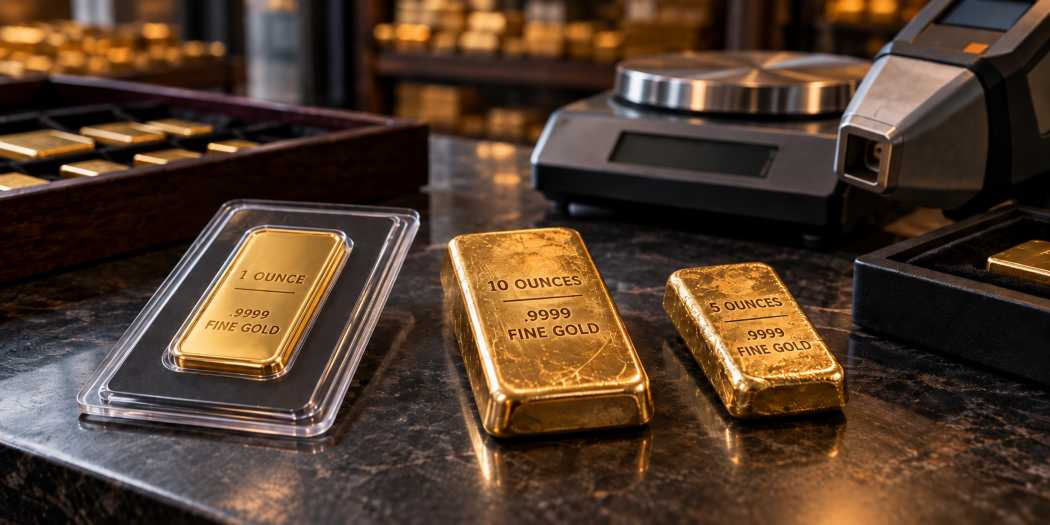
Packaging is similar. Secondary-market bars may arrive in original assay cards, older packaging, replacement holders, or no retail packaging at all. Scratches or handling marks may affect appearance without changing the intrinsic value of the gold. Condition can still influence resale, especially when sealed packaging is part of a product’s authentication system, but common bullion is generally valued much more heavily on verified metal content, recognizability, and demand than on cosmetic perfection.
Authentication Matters More Than Whether the Bar Is New
Secondary-market bullion only functions when dealers can establish that the metal is genuine. When gold returns to inventory, a reputable buyer does not simply accept the stamp at face value. Evaluation can include checking weight and dimensions, examining markings and packaging, comparing the bar with known specifications, and using appropriate non-destructive testing methods when needed.
The process varies with the product. A sealed one-ounce bar from a familiar refinery may be handled differently from an older poured bar, an opened assay package, or an unfamiliar manufacturer. NYC Bullion’s explanation of how gold buyers test gold shows why identification, purity, weight, and market category matter before a dealer can determine value.
Damaged packaging should therefore not be confused with fake gold. A compromised assay card may require additional verification, but the bar can still be genuine. Conversely, attractive packaging is not proof by itself. The underlying metal and specifications remain the foundation of the transaction.
Secondary-Market Gold Still Has a Resale Market
The secondary market is not merely where pre-owned bullion comes from; it is also where most bullion owners eventually exit. A bar bought new today can become secondary-market inventory tomorrow when its owner sells it to a dealer. The term describes a stage in the product’s trading life, not a permanent class of inferior gold.
Resale pricing will depend on conditions at that future moment. Spot gold, dealer inventory, wholesale replacement costs, refinery recognition, product demand, transaction size, and authentication requirements can all influence a bid. NYC Bullion’s guide to why gold buyback prices differ from retail prices explains why the premium paid at purchase is not automatically recovered when the bar is sold.
That can make secondary-market bullion attractive to buyers who prioritize metal value over presentation. Paying a lower premium may reduce the amount of premium that must be recovered before a position reaches break-even, but it does not eliminate the buy-sell spread or protect against changes in gold prices. Buyers should still compare total acquisition cost and consider future liquidity. NYC Bullion’s gold bar selection illustrates how physical gold inventory can include both specifically branded products and more price-focused formats.
The Better Question Is What You Are Paying For
“Secondary market” should not be read as a warning label. In bullion, it usually means the gold has circulated through private ownership and returned to market rather than arriving as newly produced inventory. Gold does not have a service life in the way electronics or machinery do; it can be traded, melted, refined, and fabricated repeatedly without losing the elemental properties that give it value.
The practical differences are in presentation and marketability. A new branded bar may offer pristine packaging, a predictable manufacturer, and stronger gift or collection appeal. A secondary-market bar may offer the same stated gold content with more variation and, in some cases, a lower premium. Neither choice is automatically superior.
The decision becomes clearer once the label is translated into concrete questions: Who produced the bar? Are the weight and fineness verified? What packaging or condition should be expected? How much premium is being paid above the metal value? How easily could the product be sold later? Once those questions are answered, “secondary market” stops sounding like a quality judgment and becomes what it really is—a description of how physical gold continues to circulate.
FAQs
What does secondary-market gold mean?
Secondary-market gold is bullion that has previously been owned or has returned to dealer inventory rather than arriving as newly manufactured stock. It may come from customer buybacks, estate sales, trades, liquidations, or wholesale transactions. The term does not mean the gold is impure or defective. If the bar is authentic and its weight and fineness are correct, its core bullion value still comes from the amount of gold it contains.
Is secondary-market gold worth less than new gold?
Secondary-market gold is not automatically worth less than newly manufactured gold because the underlying metal can have the same weight and purity. What may differ is the retail premium, packaging, condition, brand, or collector appeal. A common pre-owned bar may sell for less than a pristine new version, while a vintage or desirable discontinued bar can sometimes command a higher premium. The market evaluates the specific product, not simply whether it was previously owned.
Why can secondary-market gold bars have lower premiums?
Secondary-market bars can carry lower premiums because they have already moved through the original refining, fabrication, packaging, and distribution chain. When they return to dealer inventory, pricing is based on current gold value, replacement cost, demand, recognizability, condition, and resale potential. Buyers may therefore pay less for a random-brand or previously owned bar than for a newly produced branded bar, although market conditions and product scarcity can reverse that relationship.
Are secondary-market gold bars safe to buy?
Secondary-market gold bars can be a practical bullion purchase when they come from a reputable dealer that verifies authenticity, weight, and purity before resale. Dealers may examine dimensions, markings, packaging, and known product specifications and use appropriate testing methods when necessary. Buyers should also understand what the listing guarantees, especially regarding brand and assay packaging. A lower premium should not replace basic due diligence about the dealer or the product being purchased.
Does damaged assay packaging reduce a gold bar’s value?
Damaged assay packaging does not automatically reduce the intrinsic value of a genuine gold bar because the metal content remains the primary source of bullion value. However, damaged or missing packaging can affect presentation and may require additional authentication when the bar is resold. Some buyers also prefer intact original packaging and may pay more for it. The effect therefore depends on the product, brand, market demand, and how easily authenticity can be established.
Can I resell secondary-market gold later?
Yes. Secondary-market gold can generally be resold just like bullion that was purchased new, provided the product can be authenticated and there is a market for it. A future dealer bid will depend on spot gold, the bar’s weight and purity, refinery recognition, condition, inventory needs, and current demand. The original purchase premium is not guaranteed to be recovered, so buyers should consider both entry cost and likely liquidity before choosing a product.