


Why Palladium Rarely Trades Like Gold
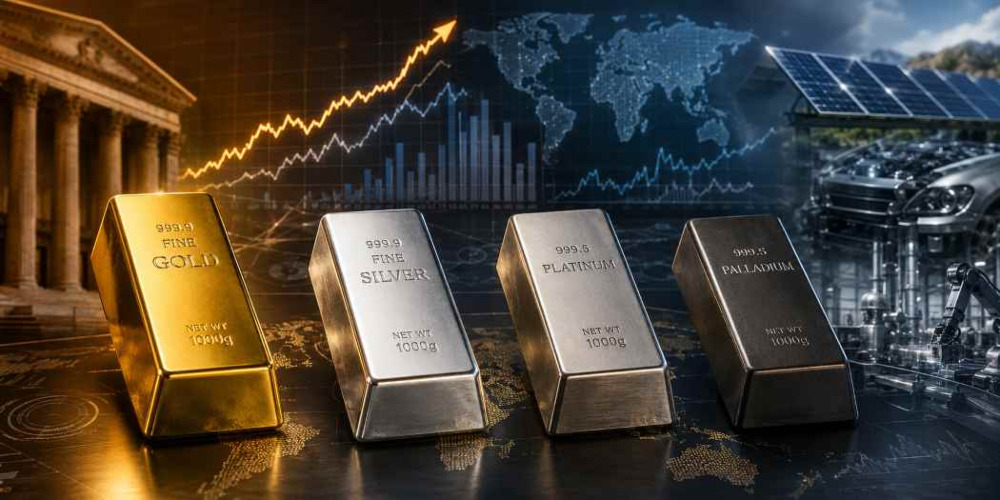
Gold has earned a reputation for stability. Even during periods of significant market stress, its price usually moves in response to familiar forces such as inflation expectations, central bank policy, currency movements, or geopolitical uncertainty. Silver is generally more volatile, but its demand is spread across investment, jewelry, electronics, solar energy, and manufacturing. Palladium, by contrast, follows a much narrower path. Its market is smaller, its industrial base is far less diversified, and both its supply and demand are concentrated in ways that leave little room for error. Those structural characteristics have allowed the metal to experience some of the largest price swings in the entire precious metals sector, climbing to record highs before retreating just as dramatically when market conditions shifted.
That doesn't necessarily make palladium a riskier metal than gold or silver, but it does make it a different one. Investors who approach palladium expecting it to behave like traditional bullion are often surprised by how quickly sentiment can change. In many cases, prices begin moving long before physical shortages or surpluses actually develop because the market is constantly trying to anticipate what the automotive industry will need several quarters into the future.
The Automotive Industry Drives Almost Everything
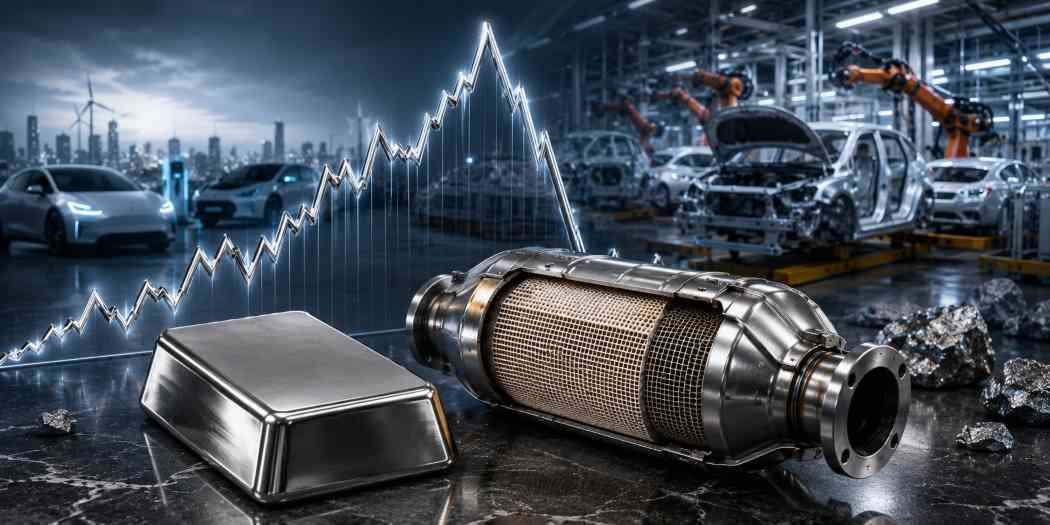
The single biggest reason for palladium's volatility is its dependence on one industry. For decades, gasoline-powered vehicles have accounted for the overwhelming majority of global palladium consumption because the metal is exceptionally effective at helping catalytic converters reduce harmful exhaust emissions. While platinum-group metals have applications in electronics, chemical processing, dentistry, and other industrial sectors, none of those markets comes close to matching the automotive industry's influence over palladium demand.
That concentration means developments that might seem routine elsewhere can have an outsized impact on the palladium market. A slowdown in global vehicle production, weaker consumer demand, supply-chain disruptions, or changes to emissions regulations can quickly alter demand forecasts. Investors also pay close attention to production guidance from major automakers because even relatively small revisions can affect expectations for future palladium consumption. The market frequently reacts to those changing expectations well before they appear in official supply-and-demand statistics, contributing to the sharp price swings that have become one of palladium's defining characteristics.
Supply Is Concentrated in Just a Few Regions
Demand alone doesn't explain why palladium prices can move so dramatically. Supply is equally important, and here the market becomes even more concentrated. Most newly mined palladium originates in Russia and South Africa, leaving global production dependent on a relatively small number of mining operations. Labor disputes, power shortages, geopolitical tensions, transportation bottlenecks, or operational issues at a handful of large mines can quickly tighten expected supply and reshape market sentiment.
Unlike many commodities, palladium production cannot simply be increased because prices rise. The metal is often recovered as a byproduct of nickel or platinum mining, so output depends largely on the economics of other metals rather than palladium itself. Developing new mining capacity is also a lengthy process requiring exploration, permitting, financing, and construction. By the time additional supply reaches the market, the price cycle that encouraged new investment may already have changed. That lack of production flexibility leaves the market especially vulnerable whenever demand strengthens unexpectedly or mine output is interrupted.
A Small Market Magnifies Every Change
Another reason palladium behaves differently from gold or silver is the market's relatively modest size. Annual production is far smaller, above-ground inventories are limited, and liquidity is thinner than in larger precious metals markets. As a result, shifts in investor positioning or industrial buying can have a disproportionately large effect on prices. What might amount to a modest adjustment in another commodity can become a significant move in palladium.
Because both supply and demand are so concentrated, the market spends much of its time looking ahead rather than reacting to current conditions. Traders are constantly evaluating how electric vehicle adoption, platinum substitution, recycling rates, mining disruptions, and automotive production could reshape future balances. Those expectations often move prices long before physical shortages or surpluses appear, helping explain why palladium has earned its reputation as the most volatile of the major precious metals.
Platinum, Recycling, and the EV Transition Are Reshaping the Market
Palladium's volatility isn't driven solely by today's supply and demand. Investors are also trying to anticipate how the market itself is changing. One of the biggest shifts has been the automotive industry's gradual move toward using more platinum in gasoline catalytic converters.
For years, soaring palladium spot prices gave manufacturers a powerful financial incentive to redesign catalyst systems. Engineers spent considerable time testing new formulations that could replace a portion of palladium with platinum while still meeting increasingly strict emissions standards. The transition was never as simple as swapping one metal for another—catalytic converters are carefully engineered systems—but sustained price differences made the investment worthwhile.
That substitution trend has altered the market's psychology. Palladium is no longer viewed as having an uncontested role inside gasoline vehicles, and investors now evaluate the metal alongside platinum rather than in isolation. Whenever the price gap between the two metals widens, speculation quickly turns to how much additional substitution may become economically attractive. Even if manufacturers cannot make immediate changes, expectations alone can influence prices months before new catalyst designs reach production.
Recycling has introduced another layer of uncertainty. End-of-life catalytic converters have become an increasingly important source of secondary palladium supply, reducing the industry's dependence on newly mined metal. Unlike mine production, however, recycling is difficult to predict. It depends on vehicle retirement rates, scrap collection, metal prices, and refining capacity, all of which fluctuate from year to year. A stronger flow of recycled material can ease concerns about supply deficits, while weaker recovery rates can quickly tighten market balances.
Investors Must Look Beyond Headlines
Perhaps the biggest mistake investors make is assuming palladium responds to the same forces as other precious metals. During periods of market uncertainty, gold often attracts safe-haven buying. Palladium rarely benefits in the same way because its price is influenced far more by industrial activity than by financial markets.
Instead, investors closely monitor indicators that might seem unrelated to precious metals at first glance. Automobile production forecasts, emissions legislation, manufacturing surveys, mine operating updates, and geopolitical developments affecting Russia or South Africa can all move palladium prices more than traditional macroeconomic data. Even changes in expectations surrounding electric vehicle adoption can trigger large market reactions as traders reassess the long-term outlook for catalytic converter demand.
The rise of battery-electric vehicles remains one of the market's most closely watched themes. Because fully electric vehicles do not require catalytic converters, widespread EV adoption is expected to reduce long-term demand for palladium. That transition, however, has proven more gradual than many early forecasts suggested. Hybrid vehicles continue to represent a growing share of global sales, and because they still rely on internal combustion engines, they require catalytic converters containing platinum-group metals. Rather than disappearing overnight, automotive demand is evolving, creating an environment where shifting expectations often matter just as much as current consumption.
Volatility Is Part of Palladium's Identity
Palladium has earned its reputation as the most volatile major precious metal not because it lacks intrinsic value, but because its market leaves little margin for surprise. Demand is concentrated in a single global industry, mine supply depends heavily on a handful of producing regions, and recycling, substitution, and electrification are all reshaping the balance at the same time.
That combination ensures the market is constantly looking ahead. Investors aren't simply evaluating current supply and demand—they're attempting to forecast where the automotive industry, mining sector, and emissions technology will be several years from now. As those expectations change, prices often adjust long before physical shortages or surpluses become visible.
For investors willing to understand those dynamics, palladium offers exposure to one of the most specialized corners of the commodities market. It can experience periods of extraordinary appreciation, but it also demands a greater appreciation for industrial trends than traditional precious metals. In that respect, palladium is less a monetary metal than an industrial one whose price happens to trade on precious metals exchanges—and that distinction explains why its journey is rarely a smooth one.
FAQs
Why is palladium more volatile than gold?
Palladium prices are primarily driven by industrial demand rather than investment demand. Because the automotive industry accounts for most palladium consumption and mine supply is concentrated in only a few countries, relatively small changes in production or demand can cause significant price movements.
Why is palladium used in catalytic converters?
Palladium is an excellent catalyst for reducing harmful emissions from gasoline-powered vehicles. Its chemical properties help convert carbon monoxide, hydrocarbons, and nitrogen oxides into less harmful gases before they exit a vehicle's exhaust system.
Does electric vehicle adoption reduce palladium demand?
Yes. Battery-electric vehicles do not use catalytic converters, reducing long-term demand for palladium. However, hybrid and plug-in hybrid vehicles still require catalytic converters, meaning automotive demand is expected to decline gradually rather than disappear immediately.
Why do Russia and South Africa matter so much to palladium prices?
Together, Russia and South Africa produce most of the world's newly mined palladium. Supply disruptions caused by geopolitical events, labor strikes, power shortages, or operational problems in either country can significantly affect global availability and market prices.
Can platinum replace palladium?
In some applications, yes. Automakers have increasingly substituted platinum for palladium in gasoline catalytic converters to reduce costs. However, complete replacement is not always practical because catalyst formulations must meet strict engineering and emissions requirements.
How does recycling affect palladium prices?
Recycling spent catalytic converters provides an important secondary source of palladium. Higher recycling volumes can increase supply and help moderate prices, while lower recovery rates can tighten the market and contribute to greater volatility.
Is palladium a good investment?
Palladium can offer significant upside during periods of strong industrial demand and constrained supply, but it is generally more volatile than gold or silver. Investors should understand the automotive industry, mine supply dynamics, and broader economic conditions before investing.
Will palladium remain important in the future?
Although electric vehicles present a long-term challenge, palladium is expected to remain important for years because millions of gasoline-powered and hybrid vehicles will continue to require catalytic converters. The pace of electrification and future emissions regulations will largely determine long-term demand.