




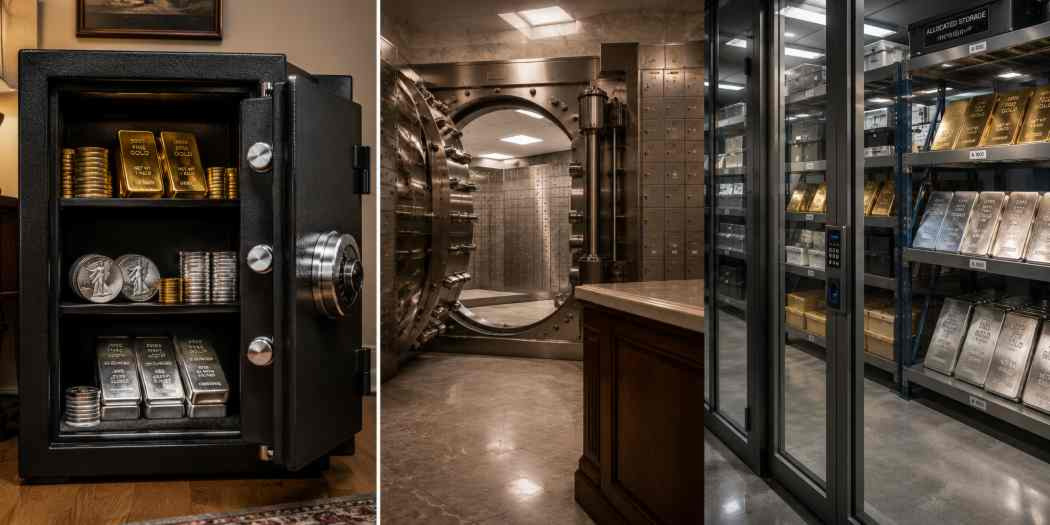
Bullion Storage Is Part of the Investment
Buying physical gold and silver is only part of the investment decision. Protecting those assets is equally important, yet storage is often treated as an afterthought. In reality, where bullion is kept can influence everything from insurance costs and liquidity to long-term security and peace of mind.
The right storage strategy isn't simply about choosing the strongest safe or the most secure vault. It requires balancing several competing priorities, including accessibility, privacy, protection, and cost. Someone building a modest collection of silver coins may value immediate access at home, while an investor holding a substantial portfolio of gold bars may prioritize institutional-grade security and comprehensive insurance. Neither approach is inherently better—only better suited to different objectives.
Experienced precious metals investors often think of storage as another form of risk management. Just as diversification reduces portfolio risk, selecting the appropriate storage solution—or combining several of them—can help protect bullion from theft, accidental loss, environmental damage, and other unforeseen events without sacrificing flexibility.
As more investors incorporate physical precious metals into long-term wealth preservation strategies, understanding today's secure metals storage options has become increasingly important. Whether that means a professionally installed home safe, a bank safe deposit box, a private bullion vault, or a combination of all three, the best solution is the one that matches your collection, your goals, and your tolerance for risk.
1. A High-Quality Home Safe Offers Convenience and Immediate Access
For many bullion owners, a home safe is the logical starting point. It provides immediate access to your metals without relying on a third party, making it an attractive choice for investors who value convenience alongside security.
Not all safes, however, provide the same level of protection. A lightweight lockbox offers little resistance against determined thieves, while a properly installed burglary- and fire-rated safe anchored to the structure of a home presents a far greater challenge. Placement also matters. Keeping a safe out of obvious locations and limiting who knows about it can significantly improve overall security.
Home storage also allows owners to inspect or retrieve their holdings whenever they choose, without business hours or appointment requirements. That flexibility appeals to investors who actively buy and sell bullion or simply prefer maintaining direct possession of their assets.
The tradeoff is responsibility. Homeowners must evaluate insurance coverage, physical security, and personal privacy. Many standard homeowners insurance policies provide only limited protection for precious metals, making supplemental coverage worth considering for larger collections.
2. Bank Safe Deposit Boxes Provide Traditional Security
For decades, safe deposit boxes have been a trusted storage solution for valuable documents, jewelry, and precious metals. Banks offer professionally secured facilities with controlled access, surveillance systems, and reinforced vault construction that are difficult for most homeowners to replicate.
A bank safe deposit box also removes bullion from the home, reducing the likelihood that valuables could be discovered during a residential burglary. For investors storing moderate holdings that do not require frequent access, this remains a practical option.
There are important limitations to understand, however. Access is restricted to bank operating hours, and some institutions have reduced or eliminated safe deposit box services in recent years. Additionally, the contents of a safe deposit box are generally not insured by the bank itself, meaning owners should verify whether separate insurance is appropriate for their holdings.
Rather than viewing a safe deposit box as a complete storage solution, many investors use it to protect bullion they intend to hold for the long term while keeping smaller amounts readily available elsewhere.
3. Private Bullion Vaults Offer Institutional-Level Protection
Investors with substantial precious metals holdings often look beyond home storage and banks to dedicated bullion vaulting services. These private facilities are designed specifically for storing gold, silver, platinum, and palladium, combining advanced physical security with professional inventory management and insurance options.
Modern bullion vaults typically feature multiple layers of protection, including biometric access controls, continuous surveillance, reinforced construction, and independently audited storage procedures. Depending on the provider, investors may also choose between allocated storage—where specific coins or bars remain assigned to their account—or segregated storage, which keeps their holdings physically separated from those of other clients.
Professional vaulting does come at a cost. Fees generally depend on the value of the metals stored or the amount of vault space required, making this option more expensive than storing bullion at home. For many investors, however, those ongoing costs are offset by enhanced security, insurance coverage, and the peace of mind that comes from knowing valuable assets are protected in a purpose-built facility.
Private vaults also simplify transactions. Many providers allow clients to buy, sell, or transfer metals directly from storage without shipping them back and forth, reducing both handling risks and transportation expenses.
4. Diversifying Storage Is a Form of Risk Management
One of the most effective bullion storage tips isn't choosing the single "best" location—it's recognizing that storage itself is a risk-management decision. Many experienced investors divide their holdings according to purpose, balancing convenience with security rather than relying on one solution for every circumstance.
Experienced investors often divide their holdings based on purpose. Bullion intended for emergency access may remain in a home safe, while long-term investments are stored in a bank vault or private depository. This approach reduces the potential impact of theft, natural disasters, or other unforeseen events affecting one location.
Diversification also provides flexibility. If one storage option becomes temporarily inaccessible because of severe weather, travel restrictions, or facility maintenance, investors still retain access to part of their holdings. The strategy is similar to diversification within an investment portfolio: reducing concentration can help manage risk without significantly increasing complexity.
Regardless of where metals are stored, maintaining an updated inventory with photographs, purchase records, and serial numbers for larger bars is a prudent practice. Accurate documentation supports insurance claims, simplifies estate planning, and helps verify ownership if assets are ever transferred or sold.
5. Match Your Storage Strategy to Your Collection
The best safe storage for gold and silver depends less on the metal itself than on the size, value, and purpose of the collection. Someone building a modest stack of silver bullion may find that a quality home safe provides sufficient protection, while a larger portfolio containing gold bars and premium collectibles may justify the additional expense of a professional vault.
Cost should be evaluated alongside security rather than in isolation. A home safe requires an upfront investment, a bank safe deposit box typically involves an annual rental fee, and private vaulting services charge recurring storage costs that often include insurance and professional asset management. Each option represents a different balance between accessibility, protection, and long-term value.
Choose a Storage Strategy That Fits Your Investment
There is no universally "best" way to store bullion because every investor faces a different balance of risk, convenience, and cost. What remains constant is the importance of treating storage as part of the investment itself rather than something decided after the purchase. A thoughtful storage strategy protects not only gold and silver, but also the long-term value and flexibility those assets are meant to provide.
FAQs
Is it safe to store bullion at home?
Yes, storing bullion at home can be safe when appropriate precautions are taken. A high-quality burglary- and fire-rated safe that is securely anchored and placed in a discreet location offers significantly better protection than lightweight lockboxes or easily accessible hiding places. Investors should also review their homeowners insurance, since many standard policies provide limited coverage for precious metals without additional riders.
Should I keep gold and silver in a bank safe deposit box?
A bank safe deposit box is a reliable option for long-term bullion storage because it provides professional physical security away from the home. However, access is limited to banking hours, and banks generally do not insure the contents of safe deposit boxes. Investors should determine whether separate insurance is appropriate based on the value of their holdings.
What is a private bullion vault?
A private bullion vault is a professional storage facility designed specifically for precious metals. These facilities typically offer advanced security systems, continuous monitoring, insurance options, and professionally managed storage for gold, silver, platinum, and palladium. Many investors choose private vaults for larger collections because they combine institutional-grade protection with convenient buying, selling, and transfer services.
What's the safest way to store precious metals?
The safest approach depends on the size and value of your collection, but many experienced investors use more than one storage method. Keeping a small portion of bullion at home for accessibility while storing larger holdings in a bank vault or private depository helps reduce concentration risk and provides flexibility should one location become temporarily inaccessible.
Are private bullion vaults insured?
Many private vault operators offer insurance as part of their storage services, although coverage varies by provider. Investors should review the vault's insurance policy, storage agreement, and terms of coverage before depositing precious metals. Understanding exactly what is insured—and under what circumstances—helps avoid unexpected gaps in protection.
How much does bullion storage cost?
Bullion storage costs vary depending on the storage method. Home safes require an upfront purchase, bank safe deposit boxes typically involve an annual rental fee, and private vaults usually charge recurring fees based on the value or quantity of metals stored. Comparing security, insurance, accessibility, and long-term costs can help investors choose the most appropriate solution.
Should I store all my bullion in one location?
Many investors prefer not to store all of their bullion in a single place. Dividing holdings between multiple secure locations can reduce the impact of theft, natural disasters, or temporary access restrictions. The right balance depends on the collection's size, investment objectives, and the owner's need for immediate access to physical metals.
Do I need insurance for stored bullion?
Insurance is often worth considering, especially for larger bullion collections. While some private vaults include insurance, homeowners policies and bank safe deposit boxes may provide little or no protection for precious metals. Reviewing available coverage and maintaining detailed records of your holdings can simplify claims if a loss ever occurs.
How should I document my bullion collection?
Maintaining a detailed inventory is an important part of responsible bullion ownership. Investors should keep purchase receipts, photographs, serial numbers for larger bars, and an up-to-date list of their holdings in a secure location. Good documentation supports insurance claims, simplifies estate planning, and makes future sales or transfers more efficient.