


When Confidence Fades, Gold Enters the Conversation
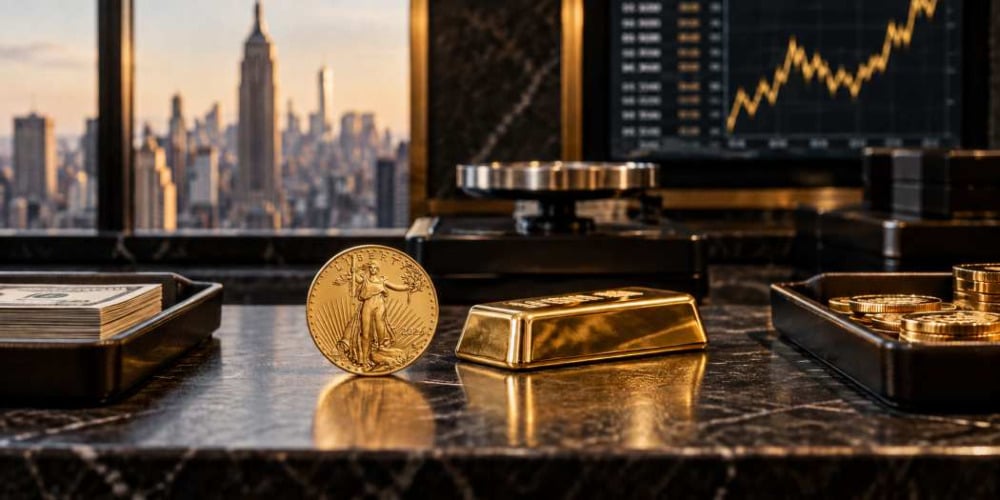
Every market cycle has moments when confidence gives way to caution. A banking crisis, an unexpected inflation surge, geopolitical conflict, or fears of recession can quickly change how investors think about risk. During those periods, one asset repeatedly returns to the center of the conversation: gold.
Gold's reputation as a safe-haven investment is well established, but its behavior is often misunderstood. The metal does not automatically rise whenever headlines become alarming, nor does every crisis produce a sustained rally. Instead, gold tends to perform best when uncertainty makes it more difficult for investors to value traditional financial assets or assess the future direction of the economy. As confidence weakens, preserving capital often becomes a higher priority than pursuing returns.
That distinction explains why gold has remained relevant through vastly different economic environments. Whether the concern is inflation, financial instability, political uncertainty, or geopolitical conflict, investors frequently turn to bullion because its value is not tied to the earnings of a corporation, the creditworthiness of a government, or the policies of a central bank. Understanding why that shift occurs offers valuable insight into both investor psychology and the broader role precious metals continue to play in modern portfolios.
Gold's Safe-Haven Status Was Earned Over Centuries
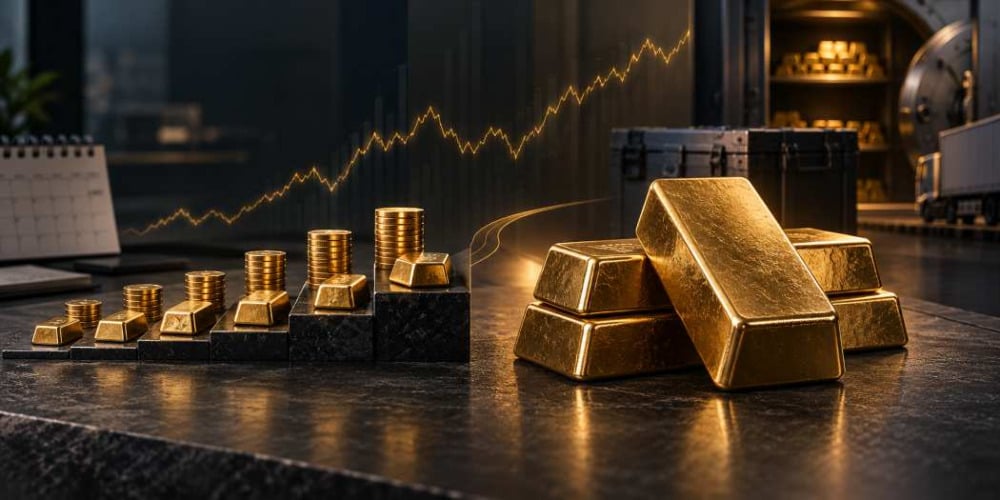
Gold's appeal during uncertain times did not emerge with today's financial markets. For thousands of years, civilizations have recognized gold as a reliable store of value because it possesses characteristics few other assets can match. It is scarce, durable, easily recognizable, and cannot be created at will by governments or central banks.
Modern financial markets have expanded the range of investment choices, yet those fundamental qualities remain relevant. Shares of stock represent ownership in businesses whose earnings fluctuate with economic conditions. Bonds depend on the ability of borrowers to meet future obligations. Even currencies derive their purchasing power from confidence in the institutions that issue them. Physical gold carries no such counterparty risk. Its value does not depend on another party fulfilling a contractual promise.
That independence becomes especially attractive when confidence in financial institutions begins to erode. Investors are not necessarily predicting economic collapse when they buy gold. More often, they are seeking diversification through an asset that operates outside many of the risks affecting conventional investments.
Different Types of Uncertainty Can Lift Gold Prices
Not every period of uncertainty looks the same, and the catalyst often determines how strongly the spot price of gold responds. Economic uncertainty, for example, may develop when inflation remains elevated, recession risks increase, or central banks signal significant policy changes. These conditions can create volatility across equities and bonds, encouraging investors to increase allocations to defensive assets.
Political uncertainty can produce similar effects. National elections, debt-ceiling negotiations, fiscal disputes, and abrupt policy changes often leave businesses and investors waiting for greater clarity before making long-term decisions. Gold frequently benefits during these periods because it is viewed as politically neutral and globally recognized.
Geopolitical events add another dimension. Military conflicts, trade disputes, sanctions, and diplomatic tensions introduce risks that are difficult to quantify using traditional financial models. Because these events can disrupt global supply chains, energy markets, and international trade, investors often seek assets that have historically preserved value during periods of instability.
Financial crises may produce the strongest response of all. Concerns about banking stability or credit markets can undermine confidence in the broader financial system, prompting investors to move toward assets perceived as independent of the institutions experiencing stress. Gold has repeatedly benefited from that shift in sentiment, even when the underlying causes of each crisis differ significantly.
Why Gold Doesn't Rise During Every Crisis
Although gold has earned its safe-haven reputation, it is not immune to short-term selling pressure. Some of the largest market disruptions have demonstrated that investors occasionally sell gold alongside other assets, particularly when liquidity becomes the immediate priority.
The market turmoil of early 2020 offers a clear example. As global markets reacted to the onset of the COVID-19 pandemic, investors initially sold stocks, bonds, and gold simultaneously to raise cash and meet margin requirements. Gold recovered quickly once central banks stabilized financial markets, but the episode illustrated that even traditional safe havens can experience temporary declines during periods of widespread liquidation.
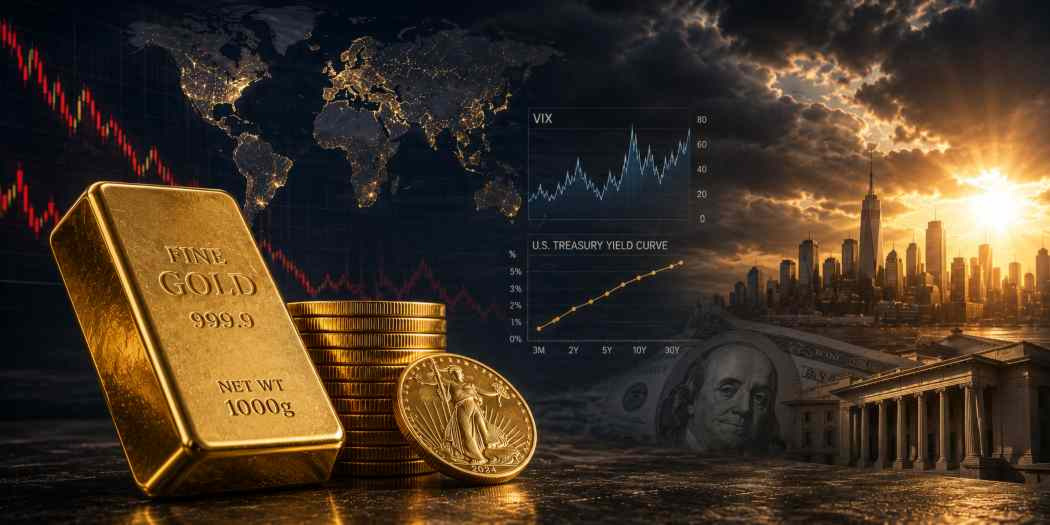
Interest rates also influence gold's performance during uncertain times. Rising real Treasury yields increase the opportunity cost of holding a non-yielding asset, while a stronger U.S. dollar can reduce international demand by making gold more expensive in local currencies. When those forces outweigh safe-haven buying, gold may struggle despite an uncertain economic backdrop.
Rather than viewing gold as an asset that always rises during crises, investors are generally better served by understanding it as a portfolio diversifier whose performance depends on the balance between risk aversion, monetary policy, currency movements, and market liquidity.
The Indicators Investors Watch During Uncertain Markets
Professional investors rarely rely on headlines alone when evaluating gold's prospects. Instead, they monitor several market indicators that help explain whether uncertainty is translating into stronger demand for precious metals.
Treasury yields remain one of the most closely watched signals because they influence the relative attractiveness of holding gold. The U.S. Dollar Index provides another important measure, as a weakening dollar often supports bullion prices while a stronger dollar can create headwinds. Market volatility, commonly reflected through the CBOE Volatility Index (VIX), also offers insight into investor sentiment during periods of financial stress.
Inflation expectations, central bank policy, and official-sector gold purchases have become increasingly important as well. In recent years, many central banks have expanded their gold reserves as part of broader reserve diversification strategies. Although these purchases are driven by long-term policy rather than short-term market volatility, they reinforce gold's enduring role within the global financial system and can provide structural support for demand.
Taken together, these indicators help investors distinguish between uncertainty that is likely to produce lasting demand for gold and volatility that may prove temporary.
Why Gold Continues to Matter in an Uncertain World
Periods of uncertainty are inevitable, but their causes constantly evolve. Inflation gives way to recession concerns, political disputes become geopolitical conflicts, and financial crises emerge from risks few investors anticipated only months earlier. Gold has remained relevant across these changing environments because its role extends beyond any single event or economic cycle.
Investors are rarely buying gold because they expect disaster. More often, they are recognizing that uncertainty increases the value of diversification and assets that are not directly tied to corporate earnings, government finances, or monetary policy. Gold's history, liquidity, and global acceptance have made it one of the few assets capable of filling that role consistently over time.
For investors seeking to understand why gold often rises when markets turn uncertain, the answer is ultimately less about fear than confidence. When confidence in other assets becomes harder to sustain, demand for stability tends to grow. Gold has spent centuries earning its place as one of the market's preferred destinations when that shift occurs.
FAQs
Why does gold usually rise during uncertainty?
Gold often rises during uncertainty because investors seek assets that can preserve value when confidence in stocks, bonds, or currencies weakens. Unlike many financial assets, physical gold carries no counterparty risk and has a long history as a store of value. During periods of economic, political, or geopolitical stress, demand for gold frequently increases as investors prioritize capital preservation over higher-risk investments.
Is gold considered a safe-haven asset?
Yes. Gold is widely regarded as a safe-haven asset because it has historically maintained value during periods of financial instability and market volatility. While its price can fluctuate in the short term, investors often view physical gold as a portfolio diversifier that is independent of corporate earnings, government debt, and many of the risks affecting traditional financial markets.
Does gold always increase during a crisis?
No. Gold does not rise during every crisis. In severe market selloffs, investors sometimes sell gold to raise cash or meet margin requirements, as occurred during the early stages of the COVID-19 market shock in 2020. Longer-term performance depends on factors such as interest rates, the U.S. dollar, inflation expectations, and overall investor demand for safe-haven assets.
Why do geopolitical events affect gold prices?
Geopolitical events increase uncertainty by creating risks that are difficult for financial markets to quantify. Wars, trade disputes, sanctions, and international tensions can disrupt economic activity and reduce investor confidence. As uncertainty rises, many investors increase exposure to gold because it has historically served as a globally recognized store of value during periods of political and economic instability.
How do interest rates influence gold during uncertain markets?
Interest rates affect gold because bullion does not generate income. Rising real interest rates increase the opportunity cost of holding gold, while falling rates generally improve its relative attractiveness. During uncertain periods, lower interest-rate expectations often support gold prices, although safe-haven demand can sometimes outweigh rate-related pressures.
Why is the U.S. dollar important for gold prices?
Gold is primarily priced in U.S. dollars, making the currency an important driver of demand. A stronger dollar typically makes gold more expensive for international buyers and can weigh on prices. A weaker dollar often has the opposite effect, supporting demand by making gold relatively less expensive in other currencies and improving its appeal worldwide.
What indicators do investors watch before buying gold?
Investors often monitor Treasury yields, the U.S. Dollar Index, inflation data, central bank policy, market volatility, and official-sector gold purchases. These indicators help determine whether uncertainty is likely to increase demand for precious metals or whether other market forces, such as higher interest rates, may offset safe-haven buying.
Why do central banks continue buying gold?
Many central banks purchase gold to diversify foreign exchange reserves and reduce reliance on individual currencies. Gold provides a globally recognized reserve asset that is not tied to another country's fiscal or monetary policies. Continued central bank buying has become an important source of long-term demand and reinforces gold's role within the international financial system.
Related reading you may find interesting:
Does Platinum Move With Gold? What Investors Should Know
How Inflation Affects Gold, Silver, Platinum & Palladium