

The Risks That a Beautiful Coin Can Hide
A century-old gold coin can look convincing, carry the correct date and still be a disappointing purchase. The problem is not always counterfeiting. A genuine coin may have undisclosed damage, an inflated grade, an altered mintmark or a price based on a collectible premium that the next buyer will not recognize.
That makes purchasing historic gold different from buying a newly issued bullion coin. The transaction involves several judgments that must agree: the coin's identity, its condition, the seller's representations and the price being charged. A mistake in any one can change the economics of the purchase.
For buyers considering pre-1933 U.S. gold or other historic issues, the most useful question is not simply whether a coin is valuable. It is whether the evidence available before payment supports the particular coin being offered.
The Description Is Part of What You're Buying
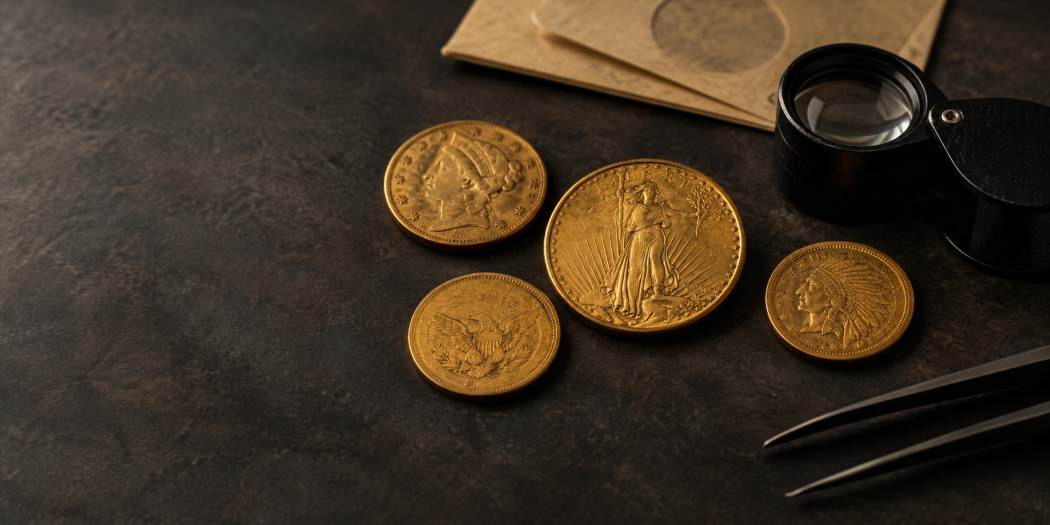
Consider a $20 Saint-Gaudens Double Eagle advertised as an attractive uncirculated example. That description sounds straightforward, but it leaves important questions unanswered. Is the coin independently graded? Has it been cleaned? Does the seller guarantee its authenticity? Are the photographs of the actual coin, or merely representative of the type?
Those details matter because the buyer is purchasing a specific object, not a generic example of a design. Even coins of the same date and mint can differ in surface preservation, luster, color and signs of previous handling. A description that identifies only the denomination and year may be sufficient for a low-premium bullion transaction, but it offers little protection when the asking price includes a meaningful numismatic premium.
Photographs deserve particular scrutiny. Bright lighting can conceal hairlines, while reflections may exaggerate luster or obscure marks. Images of both sides should be clear enough to examine the principal design elements and surrounding fields. For a significant purchase, additional photographs taken at different angles can reveal more than a single carefully staged image.
A seller should also distinguish between a coin's stated grade and its certification status. An informal description such as "choice uncirculated" is not equivalent to an independent numerical grade. If the asking price depends on an exceptional condition claim, buyers should understand exactly who made that assessment and what evidence supports it.
Certification Reduces Uncertainty, but Does Not End It
Professional certification is particularly useful when a small difference in grade produces a substantial difference in price. PCGS and NGC authenticate coins, assess their condition and encapsulate eligible examples in protective holders. Their opinions create a common reference point for buyers and sellers, although grading remains a matter of professional judgment.
The holder itself must be examined. Counterfeit slabs and copied certification numbers can accompany counterfeit coins, so a matching database entry should never be treated as absolute proof. PCGS provides an online certification verification service that allows buyers to compare recorded details with the coin being offered. Photographs, when available, can provide another useful comparison.
Condition problems deserve equal attention. Cleaning, polishing, repairs and evidence of jewelry mounting may affect collector demand even when the underlying coin is genuine. NGC's Details grading guidance explains how certain surface problems can prevent a coin from receiving a standard numerical grade.
For a common-date gold piece bought near its metal value, certification may be less important than it is for an expensive rarity. Nevertheless, the buyer should know whether the coin is problem-free, problem-graded or simply uncertified. Those are different situations, and they should not be priced as though they were interchangeable.
A Fair Price Requires More Than a Gold Calculation
A historic coin's gold content provides a useful starting point, but it does not establish the correct purchase price. A typical pre-1933 U.S. $20 gold piece contains approximately 0.9675 troy ounces of fine gold. Multiplying that figure by the prevailing gold price produces an approximate melt-value reference.
The amount above that reference needs its own justification. Sometimes the premium reflects a widely collected series or desirable condition. In other cases, it may be driven by an unusually scarce date, a recognized variety or documented provenance. NYC Bullion has previously examined why classic U.S. gold coins attract collectors; the practical purchasing issue is determining whether those attributes actually belong to the coin in front of you.
Recent completed sales are generally more useful than advertised prices. Compare the same date, mintmark, grade and certification service whenever possible. A coin offered at $3,000 cannot be judged fairly against a $2,500 example if one is certified, the other is cleaned and their condition differs substantially.
Auction results require interpretation as well. An unusually strong realization may reflect exceptional eye appeal, provenance or competition between particular bidders. Buyers should consider several comparable transactions, account for buyer's premiums where applicable and avoid treating a single record sale as the normal market price.
This research becomes especially important when a seller describes a coin as rare without explaining why. A limited surviving population does not automatically produce strong demand, and a premium paid at retail may not be recovered in a later dealer buyback.
The Seller's Terms Can Change the Entire Purchase
An apparently attractive price becomes less compelling when the transaction offers little recourse if something goes wrong. Before paying, buyers should establish whether the seller guarantees authenticity, how returns are handled and whether a disagreement about grading or undisclosed damage qualifies for a refund.
These questions matter for online purchases, private transactions and purchases made in person. A New York buyer inspecting a coin across a counter may have the advantage of seeing its surfaces directly, but that does not replace a written record of what was sold. A detailed invoice should identify the coin, its denomination, date and mintmark, along with any certification number and material representations made by the seller.
Be particularly careful with ambiguous language such as "appears genuine," "estate find" or "sold as pictured." Such phrases do not necessarily establish that a seller is dishonest, but they may indicate that the buyer is being asked to accept uncertainty. The distinction between a firm authenticity guarantee and a seller's personal opinion should be settled before the transaction.
Payment method can matter too. A lower price offered for a payment method with limited dispute options may not be worthwhile when purchasing an expensive uncertified coin from an unfamiliar seller. Review the full transaction cost, including shipping, insurance and any applicable charges, alongside the protections available if the coin does not match its description.
Think About the Next Buyer Before Paying Today's Premium
The final test is to consider how the coin would be evaluated if it were offered for sale tomorrow. A common-date Double Eagle may have an established market among bullion buyers and collectors, but an unusual variety or exceptionally high-grade piece can require a narrower audience. Its retail premium may depend on expertise and patience that are not available in an immediate sale.
Ask how a prospective buyer would verify the same claims you relied upon. Would the certification be recognized? Is the variety properly attributed? Does the invoice preserve important information? Are there comparable transactions demonstrating demand at the proposed price? If those questions are difficult to answer before purchase, they are unlikely to become easier afterward.
Historic gold coins reward careful selection because each surviving piece has its own history and condition. The strongest purchase is not necessarily the cheapest example or the one with the most impressive description. It is the coin whose identity, preservation, documentation and price can withstand independent scrutiny—and whose appeal remains understandable when it eventually changes hands again.
FAQs
Is it safe to buy old gold coins from a private seller?
Buying old gold coins from a private seller can be safe, but the transaction may involve greater uncertainty than purchasing from an established dealer. Ask for clear photographs, accurate descriptions, and documentation supporting any authenticity or grading claims. Understand the payment and return arrangements before sending money. For expensive uncertified coins, independent authentication may be advisable. A private seller's reputation and willingness to answer detailed questions are also important considerations.
Should I buy a raw or certified pre-1933 gold coin?
Certified pre-1933 gold coins are generally easier for inexperienced buyers to evaluate because a recognized grading service has examined their authenticity and condition. Raw, or uncertified, coins may offer opportunities at different price points, but buyers must assume more responsibility for identifying problems. Certification is particularly useful when grade significantly affects value. Neither option automatically guarantees a favorable purchase, so compare the coin's condition, asking price, and intended purpose.
Can a genuine gold coin have an altered date or mintmark?
Yes. A genuine gold coin can be altered to resemble a scarcer or more valuable issue. Unscrupulous individuals may modify mintmarks, dates, or other identifying details to create the appearance of rarity. Such alterations can be difficult to recognize without specialist knowledge. Buyers considering expensive key-date coins should favor professional authentication and carefully documented attribution. A coin's genuine gold content does not establish that every feature on its surface is original.
What should a receipt for an old gold coin include?
A receipt for an older gold coin should identify the seller, purchase date, price, and the specific coin acquired. Useful details include the denomination, date, mintmark, certification service, grade, and certification number where applicable. Any written authenticity guarantee or significant condition disclosure should also be retained. Good documentation helps establish the transaction's terms and can support later insurance, estate planning, or resale discussions, although it does not independently authenticate the coin.
Can I return a gold coin if I discover it has been cleaned?
Whether you can return a cleaned gold coin depends on the seller's return policy, the original description, and applicable law. If the coin was advertised as problem-free but has undisclosed cleaning, the buyer may have grounds to dispute the transaction. However, some sales are final or subject to specific restrictions. Request the seller's written terms before purchasing, and obtain an independent professional opinion promptly if a significant condition problem is discovered.
Are auction prices reliable when evaluating older gold coins?
Auction prices are useful evidence of market demand, but individual results should not be treated as guaranteed valuations. The realized price may reflect exceptional condition, provenance, eye appeal, or competition among bidders. Compare multiple sales involving the same issue and similar grades, and check whether reported figures include buyer's premiums. Coins with limited recent trading activity can be particularly difficult to value. Retail asking prices and dealer buyback offers may also differ substantially.