
Two American Gold Coins With Different Specifications
The American Gold Buffalo and American Gold Eagle are two of the United States Mint's most recognizable gold bullion coins. Both carry legal-tender denominations and government guarantees of weight and gold content, yet their differences extend beyond appearance. For buyers considering the 2027 editions, understanding those distinctions can make comparisons more meaningful.
The Gold Buffalo contains .9999 fine, 24-karat gold, while the Gold Eagle uses a 22-karat alloy containing gold, silver, and copper. Despite the difference in purity, their one-ounce versions contain exactly the same amount of fine gold. The coins also differ in total weight, available denominations, designs, and potentially their retail premiums.
Rather than treating either series as universally preferable, buyers can evaluate how these characteristics relate to their purchasing priorities.
Gold Purity and Actual Gold Content
Introduced in 2006, the American Gold Buffalo became the first 24-karat gold bullion coin produced by the U.S. Mint. Its composition is 99.99% gold, and the standard one-ounce coin weighs approximately 31.103 grams. The Buffalo carries a $50 face value, although its bullion value is determined primarily by the gold it contains.
The American Gold Eagle, introduced in 1986, follows a different standard. Its composition is 91.67% gold, 3% silver, and 5.33% copper, producing a 22-karat alloy that is harder than nearly pure gold. A one-ounce Eagle weighs approximately 33.931 grams because the silver and copper are added to its full troy ounce of fine gold. The additional metals increase its overall weight without reducing the stated gold content.
This distinction is important when comparing prices. A one-ounce Buffalo is purer by percentage, but it does not contain more fine gold than a one-ounce Eagle. Both provide approximately 31.103 grams of pure gold, making their premiums, physical characteristics, and personal appeal more useful points of comparison than fineness alone.
Fractional Gold Eagles Offer More Purchase Options
Available denominations represent another meaningful difference. The Gold Eagle bullion program includes four established sizes: one ounce with a $50 face value, one-half ounce with a $25 face value, one-quarter ounce with a $10 face value, and one-tenth ounce with a $5 face value. Each denomination contains its stated weight in fine gold, plus the additional alloy metals.
Standard Gold Buffalo bullion production, by contrast, centers on the one-ounce coin. Although the Mint has issued special fractional Buffalo products in the past, these exceptions do not establish a regular fractional bullion lineup. Buyers should not assume fractional 2027 Buffalos will be offered without an official announcement.
Fractional Eagles provide flexibility for those who prefer smaller purchases or want the option of selling individual coins rather than an entire ounce. That convenience generally involves higher premiums per ounce because manufacturing and distribution expenses represent a larger share of each smaller coin's price.
For example, ten one-tenth-ounce Gold Eagles contain the same total fine-gold weight as one one-ounce Gold Buffalo or Eagle. However, the combined cost of those ten smaller coins will often be higher. Comparing the total amount of gold acquired against the complete purchase price is therefore essential when evaluating fractional denominations.
Historic Designs Give Each Series Its Identity
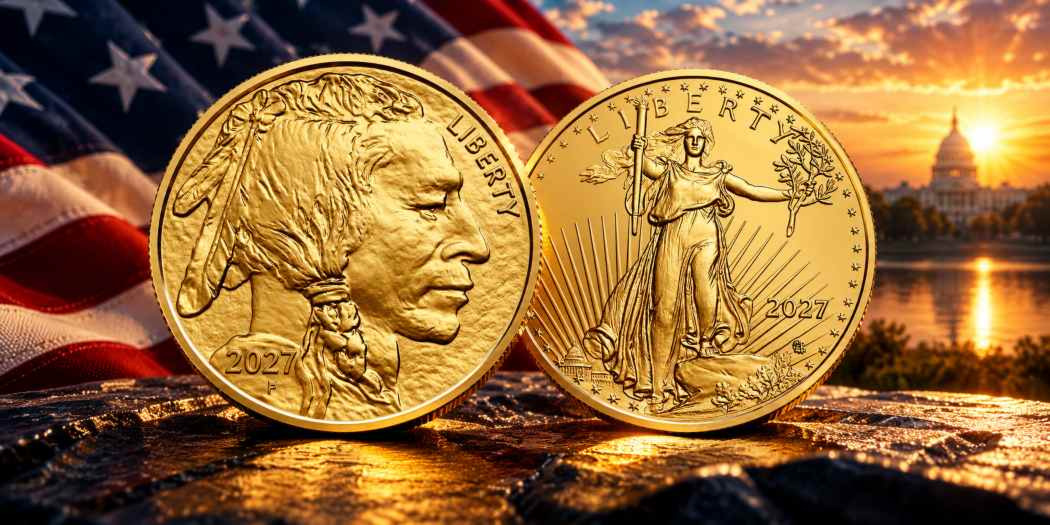
The Gold Buffalo draws its imagery from James Earle Fraser's Buffalo nickel, first issued in 1913. Its obverse features a composite Native American portrait, while the reverse depicts an American bison. The familiar designs connect modern bullion coinage with an earlier period of American numismatic history and have remained central to the series since its introduction.
The Gold Eagle follows a different artistic tradition. Its obverse adapts Augustus Saint-Gaudens' celebrated Liberty design from the early twentieth-century $20 double eagle, showing Liberty advancing with a torch and olive branch. Since 2021, the reverse has featured Jennie Norris' close-up eagle portrait, replacing the original family-of-eagles design.
These artistic differences do not change the coins' bullion content, but they may influence collecting preferences. Someone interested in historical American coinage might favor one design, while a collector building annual date sets may appreciate both programs.
The 2026 editions also featured special semiquincentennial design treatments. Those commemorative details should not be assumed to continue into 2027 without confirmation from the Mint. Established series characteristics remain the appropriate starting point until specific 2027 designs and release details are verified.
Comparing Dealer Premiums and Purchase Costs
Although both one-ounce coins contain identical fine-gold weights, they may sell for different prices. Bullion dealers typically charge a premium above the prevailing gold spot price to account for acquisition costs, distribution, operating expenses, and market conditions. Premiums can fluctuate with demand, wholesale availability, and dealer inventory.
A Gold Buffalo may carry a higher premium than a comparable Eagle at one dealer, while another dealer may offer the opposite relationship. Neither series should be assumed to have the lower premium under all circumstances.
Consider a hypothetical gold spot price of $4,000 per ounce. If a one-ounce Gold Eagle sells for $4,160 and a Buffalo for $4,200, their premiums are $160 and $200, respectively. The Eagle would cost $40 less for the same fine-gold content. These figures illustrate the calculation rather than current market quotations.
The comparison should also account for payment-method pricing, shipping, and applicable sales taxes. A lower advertised premium does not necessarily produce the lowest final checkout total, particularly when dealers apply different pricing structures.
The U.S. Mint's bullion program distributes bullion coins through authorized purchasers rather than selling them directly to individual retail customers. Dealer pricing therefore becomes an important part of the purchasing decision.
Recognition, Condition, and Resale Considerations
Both the Gold Buffalo and Gold Eagle benefit from established U.S. Mint programs, recognizable designs, and government-guaranteed specifications. These characteristics help dealers and buyers identify the coins, although recognition does not guarantee a particular resale price.
Buyback offers depend on prevailing gold prices, market demand, dealer inventory, coin condition, and the spread between buying and selling prices. A premium paid at purchase may not be recovered when the coin is sold, making resale pricing an important consideration alongside the initial purchase cost.
The coins' different compositions also affect handling. The Buffalo's nearly pure gold is softer and may be more susceptible to marks or abrasions, while the Eagle's alloy provides greater resistance to certain types of surface wear. Neither coin is immune to damage, and both benefit from careful storage in suitable protective packaging.
Buyers considering certified examples should distinguish ordinary bullion value from additional premiums associated with grading, condition, or collector demand. Those premiums can behave differently from the underlying gold price and may not appeal equally to all potential buyers.
Choosing Between the 2027 Gold Buffalo and Gold Eagle
For a one-ounce purchase, the fundamental comparison is straightforward: both coins contain one troy ounce of pure gold and carry a $50 face value. The 2027 Gold Buffalo offers .9999 purity and Fraser's historic design, while the 2027 Gold Eagle provides a harder 22-karat alloy and Saint-Gaudens' Liberty imagery. The Eagle series also offers established fractional denominations for buyers seeking smaller individual coins.
Price differences deserve attention because neither coin provides a fine-gold advantage over the other in its one-ounce form. Comparing premiums, final transaction costs, and potential dealer buyback offers can help buyers evaluate the financial implications of each choice without relying on assumptions about purity or popularity.
As the 2027 releases approach, official Mint announcements will establish any year-specific design details and product availability. Until then, the established specifications offer a reliable foundation for understanding these two American bullion programs.
Ultimately, the choice depends on whether purity, physical durability, denomination flexibility, design preference, or purchase cost carries the greatest importance to the individual buyer.
FAQs
What is the main difference between a Gold Buffalo and Gold Eagle?
The primary difference is their composition. The American Gold Buffalo contains .9999 fine, 24-karat gold, while the American Gold Eagle uses a 22-karat alloy consisting of 91.67% gold with additional silver and copper. Both one-ounce coins contain the same amount of pure gold. Their designs also differ, and Gold Eagles are regularly produced in fractional denominations, while standard Gold Buffalo bullion coins are issued in the one-ounce format.
Does a Gold Buffalo contain more gold than a Gold Eagle?
No. A one-ounce Gold Buffalo and a one-ounce Gold Eagle each contain one troy ounce of pure gold. The Buffalo is 99.99% gold and weighs approximately 31.103 grams. The Eagle contains 91.67% gold and weighs approximately 33.931 grams because additional alloy metals increase its total weight. The difference in purity does not mean that a standard one-ounce Buffalo provides more fine gold than a comparable Eagle.
Why is the Gold Eagle made from 22-karat gold?
The Gold Eagle uses a traditional 22-karat composition that combines gold with silver and copper. These additional metals create a harder alloy that provides greater resistance to certain forms of surface wear than nearly pure gold. The composition does not reduce the coin's stated fine-gold content. A one-ounce Gold Eagle still contains a full troy ounce of pure gold, with the alloy accounting for its additional overall weight.
Are fractional Gold Buffalo coins available for 2027?
Standard American Gold Buffalo bullion production is centered on the one-ounce denomination. Although the U.S. Mint has produced special fractional Buffalo issues in certain years, those exceptions do not establish a regular fractional bullion program. Buyers should not assume fractional 2027 Gold Buffalos will be available without an official announcement. Gold Eagles, by contrast, have an established bullion lineup of one-ounce, half-ounce, quarter-ounce, and tenth-ounce denominations.
Which coin usually has a lower premium, the Gold Buffalo or Gold Eagle?
Neither coin consistently has the lower premium under all market conditions. Premiums vary with dealer inventory, wholesale availability, demand, and transaction size. Although both one-ounce coins contain equivalent amounts of pure gold, their retail prices can differ. Buyers should compare offers made at the same time and account for payment-method adjustments, shipping, and applicable taxes. The lowest advertised premium does not always produce the lowest final purchase cost.
Is a 24-karat Gold Buffalo more easily damaged than a Gold Eagle?
A Gold Buffalo's nearly pure gold composition makes it softer than the Gold Eagle's 22-karat alloy. As a result, the Buffalo may be more susceptible to certain marks or abrasions during handling. However, both coins can sustain damage, and neither should be handled unnecessarily. Protective capsules, careful storage, and avoiding contact with the coin's surfaces can help maintain their appearance and reduce the risk of preventable wear.
Is the Gold Buffalo or Gold Eagle easier to resell?
Both coins belong to established U.S. Mint bullion programs and are recognizable in the precious-metals market. Resale conditions can nevertheless differ among dealers and over time. Buyback offers depend on gold prices, inventory needs, demand, and coin condition. Buyers should compare available dealer buyback prices rather than assume one series always commands a stronger offer. Any premium paid at purchase may not be fully recovered when selling.