


Is Election Day Really a Better Time to Buy Gold?
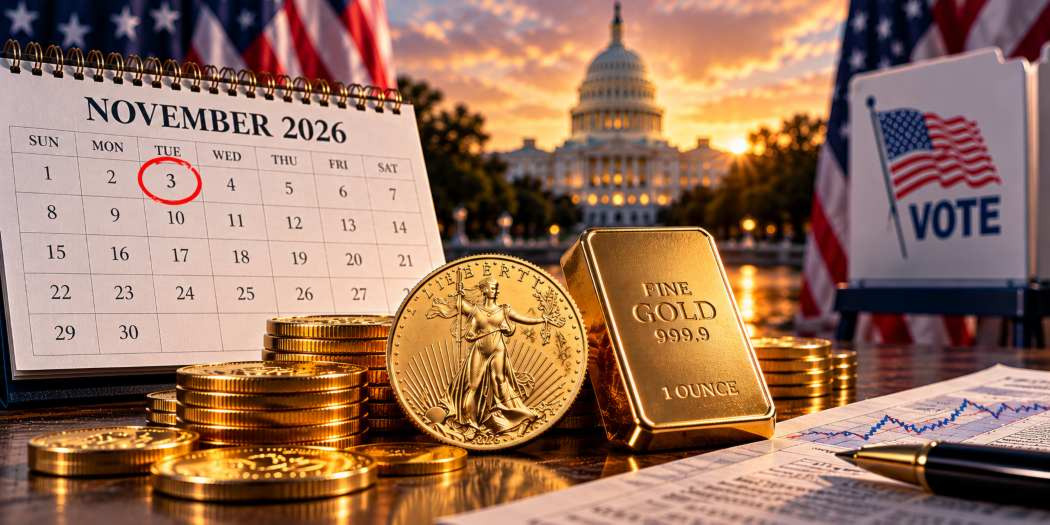
The November 2026 midterm elections give prospective gold buyers an obvious reason to hesitate. Political uncertainty can unsettle financial markets, and waiting until the results are known may seem like a sensible way to avoid buying immediately before a price decline.
Yet Election Day offers no reliable signal about where gold will trade afterward. Investors continuously reassess expectations for interest rates, federal spending, inflation, and the dollar. Much of the anticipated political outcome may already be reflected in prices before voters reach the polls.
For physical-gold buyers, the decision carries an additional complication. The price of a coin or bar includes dealer premiums and transaction costs that can change independently of spot gold. A successful prediction about the market's direction does not necessarily translate into a cheaper purchase.
What the Election Can—and Cannot—Tell Buyers
Gold does not respond to election results in isolation. A shift in congressional control could influence expectations for taxes, government borrowing, or fiscal negotiations, but those possibilities must be weighed against economic conditions. Federal Reserve policy, Treasury yields, and currency movements may ultimately have greater influence on bullion prices.
Even a surprising election outcome might produce only a temporary market reaction. Investors could initially seek safety, then reverse course as attention shifts toward economic reports or policy negotiations. Historical election-year comparisons are similarly limited because the financial conditions surrounding each vote differ.
This uncertainty matters less to someone building a long-term gold position than to a trader seeking a short-term opportunity. The World Gold Council's research on gold as a strategic asset examines characteristics such as liquidity and diversification over longer periods. Those considerations offer a more durable framework for ownership than predicting a single political event.
A buyer who intends to hold bullion for years should therefore begin with the purpose of the purchase. If the allocation is affordable and already planned, postponing it solely because an election is approaching may introduce unnecessary timing risk.
Why a Falling Gold Price Might Not Save Money
Suppose spot gold trades at a hypothetical $4,000 before the election, and a dealer offers a one-ounce bar for $4,100. The buyer waits, hoping political uncertainty will ease and gold prices will decline.
After Election Day, spot gold falls to $3,950. However, the dealer's available bar now carries a $170 premium, bringing its retail price to $4,120. The buyer correctly anticipated a decline in gold but would pay $20 more for the same amount of metal.
Dealer premiums reflect more than the underlying market price. Wholesale availability, fabrication costs, inventory levels, and demand for particular products can affect retail quotations. NYC Bullion's guide to understanding bullion premiums examines these factors in greater detail. Premiums may narrow during a market decline, but they can also remain elevated or increase.
Product choice introduces another variable. A one-ounce bar, a fractional bullion coin, and a collectible gold issue may carry substantially different premiums per ounce. The World Gold Council's guide to physical gold investment also identifies delivery, storage, and insurance as costs buyers should consider.
The comparison must therefore involve the same product and the complete purchase price, including payment and delivery costs. Otherwise, buyers risk judging the success of their timing decision against a market quotation they could never have purchased at.
The Resale Spread Deserves More Attention
A physical-gold purchase involves two prices: what the buyer pays and what a dealer would offer to repurchase the product. The difference, often called the transaction spread, affects how much gold must appreciate before a sale becomes profitable. The Commodity Futures Trading Commission's guidance for precious-metals buyers specifically recommends comparing dealer spreads and requesting buyback quotations.
A recognizable bullion coin may cost more initially than a comparable bar but attract different buyback offers. Product condition, dealer demand, and ease of authentication can also influence resale terms. Buyers comparing gold coins and gold bars should consider these differences alongside the initial premium.
Size matters as well. Larger bars may offer favorable per-ounce pricing, yet they provide limited flexibility when an owner needs to sell only a portion of a holding. Smaller coins or bars permit partial sales, generally at a higher initial cost.
Before committing to a purchase, buyers can request a current buyback quotation for the exact product under consideration. Although future offers will change, the present spread reveals a cost that could easily exceed the modest election-related savings a buyer hopes to capture.
Three Approaches to Buying Around the Midterms
Buying before the election establishes ownership at today's available retail price. This approach may suit someone with a long investment horizon, adequate cash reserves, and a predetermined gold allocation. The buyer accepts the possibility of an immediate price decline in exchange for eliminating the risk of paying more later.
Waiting preserves flexibility. It may be appropriate when a purchase is discretionary, current premiums are unattractive, or the buyer has identified a specific retail price worth pursuing. The danger is that gold could rise, preferred inventory could become unavailable, or the buyer could repeatedly postpone a decision while searching for a perfect entry point.
A third approach is to divide the intended purchase across several dates. Someone planning to acquire four ounces might purchase part before November and reserve the balance for afterward. This reduces dependence on one entry price without requiring a prediction about the election result.
Staged purchases are not automatically cheaper. Smaller transactions may carry higher premiums, and the average purchase price could still exceed what a single earlier transaction would have cost. NYC Bullion's analysis of buying gold gradually versus making larger purchases examines that trade-off.
These choices reflect different priorities. A buyer seeking long-term ownership may value certainty of acquisition, while someone with upcoming expenses may reasonably prefer to retain cash. Neither decision requires confidence about which political outcome would favor gold.
Set a Purchase Target, Not an Election Prediction
Buyers considering a delay should establish what would make waiting worthwhile. Start with the exact coin or bar, the intended quantity, and the maximum affordable expenditure. Record the current delivered price using the preferred payment method.
Next, define a target based on the retail quotation rather than spot gold alone. Someone hoping to save $100 on a one-ounce coin needs to know the final price that would produce that saving. A lower spot price is insufficient if the dealer premium rises enough to offset it.
The plan should also address an unfavorable outcome. If prices increase after November, will the buyer purchase a smaller amount, accept the higher cost, or postpone again? Deciding beforehand reduces the temptation to chase rising prices or abandon a reasonable strategy after a disappointing market move.
Most importantly, a purchase should not compromise emergency savings or money needed for near-term obligations. Gold can fluctuate substantially, and physical ownership introduces transaction costs that make forced short-term sales particularly undesirable.
What to Reconsider After Election Day
Once the votes are counted, buyers can compare current retail quotations with those recorded beforehand. Changes in premiums, available products, and buyback spreads will reveal more about the actual purchasing opportunity than the election result alone.
They should also revisit their original reason for owning gold. A long-term diversification objective may remain unchanged despite a modest market movement, while a speculative purchase requires a more demanding assessment of timing and costs.
Waiting until after the midterms can be reasonable when it follows a defined budget and price target. Buying beforehand can be equally sensible when the purchase is affordable and consistent with a longer-term plan. The election may influence gold prices, but the quality of a physical-gold purchase ultimately depends on its total cost, resale economics, and suitability for the buyer.
FAQs
Should I buy gold before or after the 2026 midterm elections?
There is no universally better time to buy physical gold around an election. Prices may rise, fall, or remain relatively stable as markets respond to economic data, interest rates, and policy expectations. Buyers should compare actual retail prices, premiums, and their financial circumstances before deciding. A long-term buyer may prioritize affordability and portfolio goals, while someone seeking a short-term price opportunity must accept greater timing uncertainty.
Does gold usually become cheaper after an election?
Gold does not consistently become cheaper after elections. Markets often incorporate expected political outcomes before voting takes place, and subsequent price movements can reflect economic developments unrelated to the result. Interest rates, currency movements, inflation expectations, and global investment demand may have greater influence. Buyers hoping for a post-election discount should establish a specific purchase-price target rather than assuming political uncertainty will disappear and gold prices will automatically decline.
Can gold coin premiums increase even when spot gold falls?
Yes. The retail premium on a gold coin or bar can change independently of the spot price. Product availability, wholesale supply, manufacturing costs, and dealer demand can affect the amount charged above the metal's underlying value. A buyer may therefore encounter a lower spot price but a higher final retail quote. Comparing the same product across dates, with payment and delivery costs included, provides a more meaningful assessment of savings.
Is buying gold in smaller amounts safer than making one large purchase?
Buying in smaller amounts spreads entry prices across multiple dates, reducing reliance on a single purchase decision. However, it does not eliminate the risk of falling gold prices or guarantee a lower average cost. Smaller products may carry higher premiums per ounce, and repeated transactions can create additional expenses. Buyers should weigh those costs against the flexibility of gradual accumulation, especially when deciding how much money to commit before an uncertain event.
What should I compare when buying physical gold around an election?
Start with the exact coin or bar, its precious-metal content, and the total price you would pay. Compare dealer premiums, payment-method charges, delivery costs, product availability, and current buyback quotations. Resale flexibility also matters, particularly when choosing between a larger bar and several smaller pieces. Recording these details before and after Election Day can reveal whether waiting actually improved the transaction rather than simply producing a lower quoted spot price.
What if gold prices rise after the midterm elections?
If gold prices rise after the election, a buyer who waited may face a higher acquisition cost. That does not necessarily mean postponing was unreasonable; decisions should be judged against the information and financial constraints available when they were made. Buyers can reassess their budget, purchase a smaller amount, or maintain a predetermined schedule. Avoid increasing a planned purchase solely because prices are rising and the opportunity feels urgent.