


Why the 1944 Lincoln Wheat Cent Still Captivates Collectors
At first glance, the 1944 Lincoln Wheat Cent may appear to be just another vintage penny, but its story reflects a pivotal moment in American history. Produced at the tail end of World War II, this coin represents a return to traditional copper coinage while preserving the legacy of wartime innovation. Today, it remains a favorite among collectors and investors alike, not only for its historical significance but also for its potential value in the numismatic market. As interest in tangible assets grows alongside movements in the gold spot price and silver spot price, coins like the 1944 Wheat Penny continue to attract attention. Whether you are building a collection or exploring rare coin values, this issue offers both accessibility and intrigue.
From Wartime Steel to Reclaimed Copper: A Historic Transition
The origins of the 1944 Wheat Penny are rooted in wartime necessity. In 1943, the U.S. Mint temporarily shifted to zinc-coated steel cents to conserve copper for military use, as the metal was critical for ammunition and equipment. While functional, these steel coins proved unpopular due to their susceptibility to rust and confusion with other denominations.
By 1944, copper returned—but not in its original form. The Mint used recycled shell casings to produce cents composed of approximately 95% copper and 5% zinc. This “shell case bronze” restored the coin’s familiar appearance while symbolizing resourcefulness during wartime. That year also marked a milestone in U.S. coin production, with total mintage surpassing one billion coins for the first time. This combination of history and scale makes the 1944 cent a standout issue in American numismatics.
The Legendary 1944 Steel Cent Error
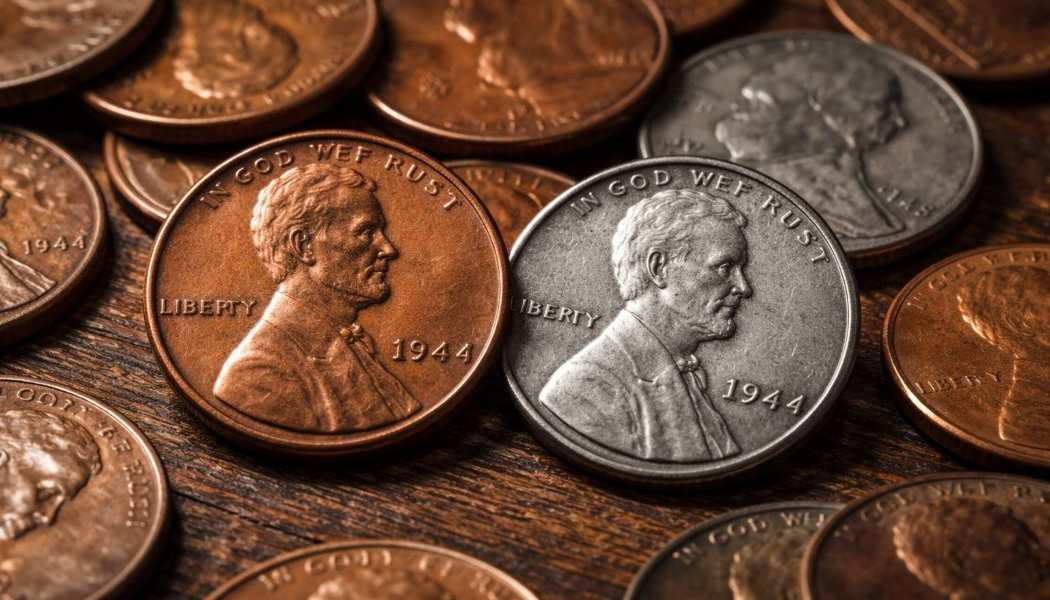
Among collectors, the most exciting aspect of the 1944 Wheat Penny is the rare steel error. Although production had shifted back to copper, a small number of leftover steel planchets from 1943 were accidentally used. These coins are now considered some of the most valuable error coins in U.S. history.
Key identifiers of a genuine 1944 steel cent include:
-
Magnetic properties: Steel cents will stick to a magnet
-
Weight: Approximately 2.7 grams versus 3.11 grams for copper
-
Color: A distinct silver-gray tone rather than copper
Only a limited number of authentic examples are known to exist, and high-grade specimens have sold for tens of thousands of dollars at auction. Their rarity and historical context make them highly sought after by serious collectors.
Avoiding Counterfeits: What to Watch For
Due to the high value of the 1944 steel cent, counterfeit versions are common. Many involve copper pennies that have been coated or plated to mimic the appearance of steel. While these may look convincing, they can be identified with basic testing.
Important verification steps include:
-
Magnet test: Genuine steel cents are magnetic; plated copper is not
-
Weight check: Counterfeits often retain the heavier copper weight
-
Professional Grading: Certification by PCGS or NGC ensures authenticity
For collectors and investors, authentication is essential, especially when dealing with high-value coins. A certified example not only confirms legitimacy but also enhances resale value.
Mint Marks, Mintage Figures, and Current Value
The 1944 Lincoln Wheat Cent was produced at three U.S. Mint facilities, each with significant output:
-
Philadelphia (no mint mark): Over 1.4 billion coins
-
Denver (D): Over 430 million coins
-
San Francisco (S): Nearly 283 million coins
Due to these high mintages, most copper examples remain common and affordable. In circulated condition, values typically range from a few cents to a few dollars. However, uncirculated coins can command higher premiums, particularly those with strong eye appeal. The rare steel error, by contrast, can reach values of $40,000 or significantly more depending on condition and market demand.
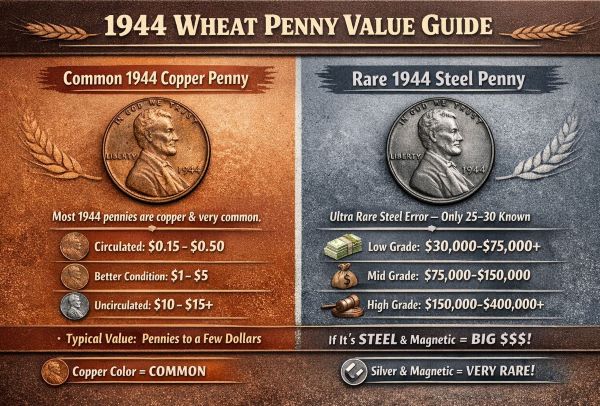
Note: Values fluctuate based on market demand, condition, grading, and rarity. For the most accurate valuation, consult a certified coin dealer or professional grading service.
Why the 1944 Wheat Penny Remains a Collector Favorite
The enduring appeal of the 1944 Wheat Penny lies in its unique combination of history, accessibility, and rarity potential. It represents a transitional period in U.S. coinage, bridging wartime innovation with peacetime restoration. For collectors, it offers an opportunity to own a piece of American history, while for investors, it provides a chance to uncover hidden value.
As interest in alternative assets grows alongside trends in the gold market price today and silver spot price today, rare coins continue to gain relevance. The possibility of discovering a valuable error coin adds an element of excitement that few other collectibles can match. Whether preserved as a keepsake or pursued as an investment, the 1944 Lincoln Wheat Cent stands as a testament to the enduring value of numismatics.
A Small Coin with a Lasting Legacy
The 1944 Wheat Penny proves that even the most modest denomination can carry extraordinary significance. From its origins in recycled wartime materials to the mystery of its rare steel counterparts, this coin embodies both history and opportunity. It serves as a reminder that value is not always immediately visible—and that sometimes, the most remarkable treasures are hiding in plain sight.
For collectors and investors alike, the 1944 Lincoln Wheat Cent continues to offer insight, intrigue, and the potential for discovery in today’s evolving market landscape.
FAQs: 1944 Wheat Penny
How much is a 1944 wheat penny worth today?
Most 1944 copper wheat pennies are worth between a few cents and a few dollars, depending on condition, while uncirculated coins can be worth more.
Why is the 1944 steel penny so valuable?
The 1944 steel penny is a rare mint error made from leftover steel planchets, with only a few known examples, making it highly collectible.
How can I tell if my 1944 penny is steel or copper?
A genuine steel penny is silver in color and magnetic, while copper pennies are reddish-brown and do not stick to a magnet.
What is the rarest 1944 wheat penny?
The rarest version is the 1944 steel cent, which can be worth tens of thousands of dollars depending on condition.
Are all 1944 wheat pennies valuable?
No, most are common due to high mintage, but rare errors and high-grade examples can be significantly more valuable.
What mint marks exist for 1944 wheat pennies?
They were minted in Philadelphia (no mark), Denver (D), and San Francisco (S), with all three being widely available.
How do I check if my 1944 penny is real?
Use a magnet test, check weight, and examine color, but professional grading is the most reliable way to confirm authenticity.
Can a 1944 penny be worth $100,000?
Yes, a genuine 1944 steel penny in high condition can reach six-figure values at auction.
Should I get my 1944 penny graded?
If you suspect it may be rare or in excellent condition, professional grading can confirm authenticity and increase value.
Why do collectors like the 1944 wheat penny?
Its wartime history, massive mintage, and rare error variants make it both accessible and potentially valuable.
Related reading you may find interesting:
1943 Lincoln Wheat Penny: Value, History & Key Facts