



Inflation Isn't the Only Force Moving Silver
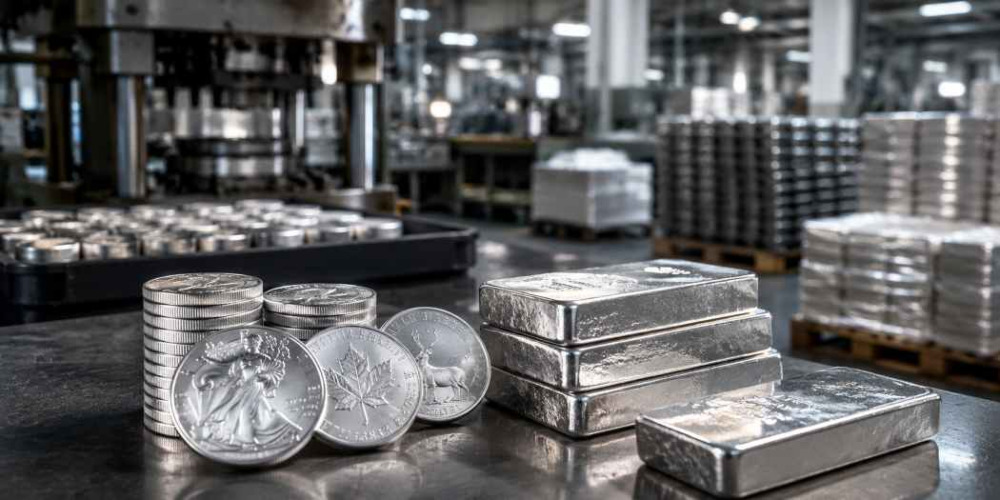
Inflation has a way of changing investor behavior long before it changes purchasing power. As prices climb, interest inevitably turns toward tangible assets that seem insulated from a weakening currency. Gold usually dominates that conversation, but silver coins often enter the discussion for a different reason: they're accessible. Investors who hesitate to commit thousands of dollars to gold can begin building a physical precious-metals position with a far smaller investment.
That accessibility has helped create one of the oldest assumptions in the bullion market—that silver coins are a dependable inflation hedge. The idea sounds straightforward. If paper currency buys less over time, tangible assets should preserve value. History, however, tells a more nuanced story.
Silver has protected purchasing power over long periods, but it has rarely done so in a smooth or predictable fashion. Unlike gold, which is driven primarily by monetary demand, silver occupies two worlds at once. It serves as both a precious metal and an industrial commodity, leaving its price vulnerable to forces that have little to do with inflation itself.
The more useful question, then, isn't whether silver works as an inflation hedge. It's when it works—and why investors sometimes mistake short-term price swings for long-term protection.
Inflation Doesn't Automatically Lift Silver Prices
Many investors expect silver prices to rise whenever inflation accelerates. The historical record is less accommodating.
Some of silver's strongest bull markets have coincided with periods of elevated inflation, but others have not. Likewise, inflation has occasionally risen while silver struggled or traded sideways for extended periods. The disconnect reflects the fact that inflation is only one of several variables influencing the metal's price.
Interest rates often matter just as much. When central banks respond to inflation by raising rates aggressively, higher bond yields increase the opportunity cost of holding non-yielding assets such as precious metals. A strengthening U.S. dollar can create additional pressure because silver is priced globally in dollars, making it more expensive for many international buyers.
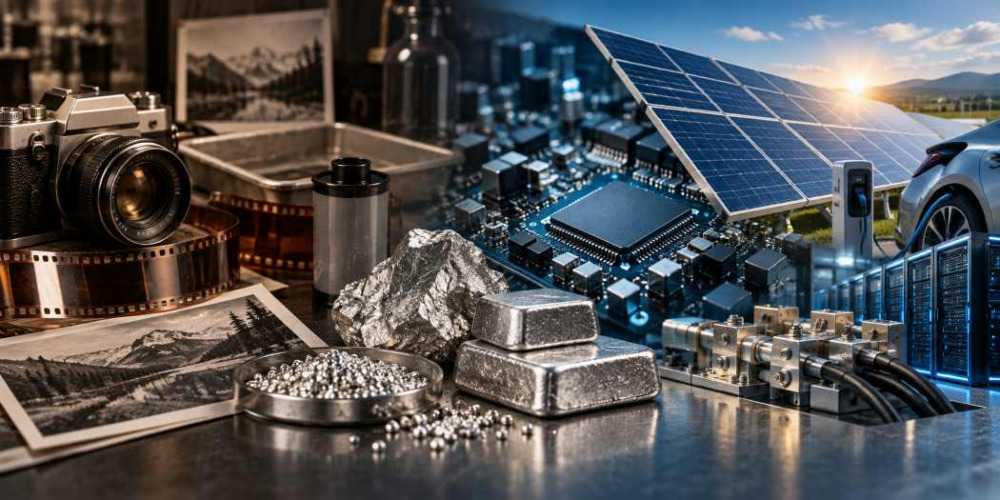
Industrial demand adds another layer of complexity. Unlike gold, more than half of annual silver demand comes from industrial applications, including solar panels, electronics, medical devices, electric vehicles, and advanced manufacturing. During periods of slowing economic growth, weaker industrial consumption can offset the investment demand created by inflation concerns.
That combination explains why silver often behaves differently from the simple inflation narrative repeated in investment circles. Rising consumer prices may provide support, but they rarely determine the market on their own.
Where Silver Coins Have Historically Added Value
If silver isn't a reliable inflation hedge in every environment, why do experienced investors continue buying physical silver?
Part of the answer lies in time horizon.
Over decades rather than months, physical silver has generally maintained purchasing power better than cash. Fiat currencies gradually lose value as inflation compounds, while a tangible asset with limited supply cannot be created through monetary policy. That doesn't guarantee consistent price appreciation, but it does provide protection against one of the defining characteristics of modern currencies: long-term depreciation.
Silver coins also offer something inflation statistics cannot measure directly—financial optionality.
Physical bullion carries no counterparty risk. It doesn't depend on a company's earnings, a government's promise to repay debt, or the solvency of a financial institution. During periods of market stress, geopolitical uncertainty, or declining confidence in traditional assets, that independence can become valuable regardless of whether inflation is the immediate catalyst.
Investors sometimes overlook another advantage. Silver coins can be accumulated gradually. Building a meaningful precious-metals position doesn't require large lump-sum purchases, allowing buyers to average their costs across changing market conditions rather than trying to predict the perfect entry point.
The result is an investment that often functions less like an inflation trade and more like long-term portfolio insurance.
The Gold Comparison Leaves Out an Important Detail
Gold is often described as the superior inflation hedge, and in many respects that reputation is deserved. Its price is driven primarily by investment demand, central-bank purchases, and monetary policy rather than industrial consumption. That narrower set of influences has historically produced less volatility than silver.
Yet the comparison is often framed too simply.
For investors concerned exclusively with preserving purchasing power, gold has generally provided a steadier experience. For investors willing to accept greater price swings in exchange for higher upside potential, silver has occasionally outperformed during precious-metals bull markets. The trade-off is that silver's corrections have also tended to be sharper and more frequent.
That difference matters because inflation rarely arrives in isolation. Economic expansions, recessions, changing interest-rate expectations, manufacturing activity, and investor sentiment all affect silver simultaneously. A period that proves highly favorable for gold may produce only modest gains in silver, while another cycle could reverse those roles entirely.
Rather than asking which metal is the better inflation hedge, experienced investors often ask a different question: how much of each belongs in a diversified precious-metals allocation?
The answer depends less on inflation forecasts than on an investor's objectives, risk tolerance, and investment horizon.
Coins Offer Benefits Beyond Spot Price
The discussion also changes once the investment takes the form of physical silver coins instead of paper exposure.
Exchange-traded funds and futures contracts provide price exposure, but they don't provide direct ownership of bullion. Physical coins introduce considerations that don't appear on a price chart. Government-issued bullion coins are widely recognized, easy to verify, and highly liquid through established precious-metals dealers. They can also be held outside the traditional financial system, an attribute many investors value regardless of the inflation outlook.
Premiums deserve equal attention. Investors buying physical silver pay more than the spot price to cover minting, distribution, and dealer costs. Those premiums expand and contract with market conditions, occasionally rising sharply during periods of exceptional retail demand. As a result, short-term returns on physical coins may differ from movements in the underlying silver price.
That isn't necessarily a disadvantage. Premiums can remain resilient even during periods when spot prices soften, particularly for widely recognized bullion coins. Understanding that distinction helps investors evaluate physical silver on its own terms rather than treating it as a simple proxy for the futures market.
The Better Question Is What Role Silver Should Play
The debate over whether silver coins are an inflation hedge often assumes there should be a simple yes-or-no answer.
History suggests otherwise.
Silver has demonstrated an ability to preserve purchasing power over long periods, but it has not delivered that protection consistently or in lockstep with inflation. Its industrial role introduces variables that can amplify gains during favorable economic conditions or create headwinds when manufacturing demand weakens. Investors expecting silver to rise every time inflation increases are likely to be disappointed.
Viewed within a broader portfolio, however, silver occupies a more compelling position. It combines the characteristics of a monetary metal with exposure to industries expected to remain important for decades, including renewable energy, electrification, advanced electronics, and emerging technologies. That combination gives silver a distinct investment profile that differs from both gold and most traditional financial assets.
The strongest case for owning silver coins has never rested solely on inflation. It rests on diversification, tangible ownership, and the possibility that a metal serving both monetary and industrial purposes may continue to play an increasingly important role in the global economy. Inflation is simply one chapter of that story—not the entire investment thesis.
FAQs
Are silver coins a good hedge against inflation?
Silver coins can help preserve purchasing power over long periods, but they are not a consistent short-term inflation hedge. Unlike gold, silver is influenced by both investment demand and industrial consumption, meaning its price can rise or fall independently of inflation. Investors generally benefit most when silver is viewed as one component of a diversified portfolio rather than a direct substitute for inflation-indexed assets.
Why doesn't silver always rise when inflation increases?
Inflation is only one of several factors affecting silver prices. Interest rates, the strength of the U.S. dollar, industrial demand, investor sentiment, and global economic growth all influence the market. During periods when central banks aggressively raise rates to combat inflation, higher bond yields and a stronger dollar can offset inflation-driven buying in precious metals.
Is silver or gold a better inflation hedge?
Historically, gold has been the more consistent inflation hedge because its price is driven primarily by monetary and investment demand. Silver often experiences greater price volatility because it also serves as an industrial metal. Investors seeking stability frequently favor gold, while those willing to accept higher risk may allocate part of their portfolio to silver for its potential upside during precious-metals bull markets.
Do physical silver coins perform differently than silver ETFs?
Yes. Physical silver coins include dealer premiums, minting costs, and supply-demand dynamics that do not affect exchange-traded funds. During periods of elevated retail demand, premiums on popular bullion coins can increase significantly, meaning the value of physical coins may not move exactly in line with the spot price of silver or silver-backed ETFs.
Which silver coins are most popular for long-term investing?
Government-issued bullion coins remain the preferred choice for many long-term investors because they are widely recognized and highly liquid. Popular examples include the American Silver Eagle, Canadian Silver Maple Leaf, Austrian Silver Philharmonic, and British Silver Britannia. Their global recognition often makes them easier to buy, sell, and authenticate than privately minted bullion rounds.
How much silver should be included in an investment portfolio?
There is no universal allocation because investment objectives and risk tolerance vary. Many investors who own precious metals choose to divide their allocation between gold and silver rather than concentrating entirely in one metal. Silver can add growth potential and diversification, but its greater price volatility often means it represents a smaller portion of an overall portfolio than gold.
Can silver protect purchasing power during economic uncertainty?
Silver has historically helped preserve purchasing power over long investment horizons, particularly when fiat currencies lose value over time. However, its performance during individual inflationary periods can vary considerably. Investors generally benefit from viewing silver as a long-term store of value and portfolio diversifier rather than expecting it to respond immediately to every increase in consumer prices.
Should investors buy silver coins during periods of high inflation?
High inflation can increase interest in physical silver, but it should not be the only factor guiding a purchase decision. Investors should also consider interest-rate trends, industrial demand, precious-metals valuations, and their broader asset allocation. Building a position gradually through disciplined purchases often reduces the risk of buying during periods of unusually high premiums or short-term price spikes.
Related reading you may find interesting:
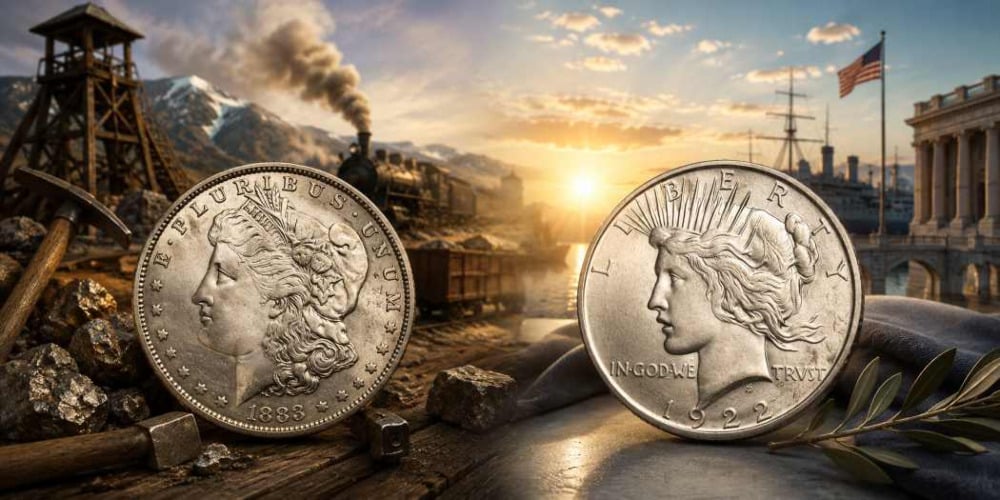
Morgan vs Peace Dollars: Two Eras of American Silver Coinage