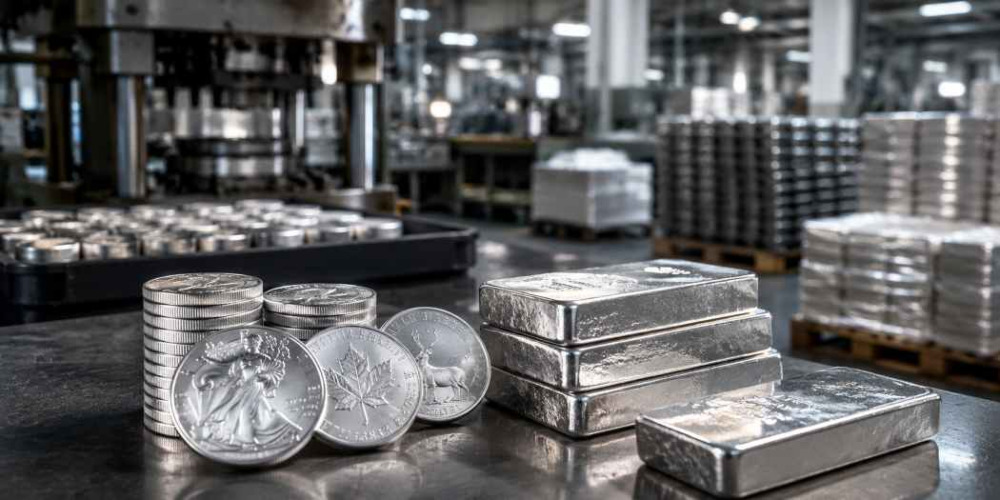





Why Global Investors Track Shanghai Silver Pricing
Most investors monitor the silver spot price using benchmarks established in London and New York. The LBMA and the COMEX silver prices are widely used references for bullion dealers, institutional traders, and precious metals investors around the world.
However, the Shanghai silver price has emerged as another important indicator within the global silver market. Because Chinese exchanges are closely connected to industrial demand and physical metal delivery, pricing in Shanghai often reflects real consumption trends rather than financial speculation alone.
When differences appear between the Shanghai silver price, the COMEX silver price, and the LBMA silver price, analysts examine these gaps to understand whether the global silver spot price is being driven by futures trading, regional demand, or physical market conditions.
The Shanghai Silver Market Explained
China’s primary precious metals markets operate through two major exchanges:
-
Shanghai Gold Exchange (SGE)
-
Shanghai Futures Exchange (SHFE)
The Shanghai Gold Exchange focuses largely on physical precious metals trading, including silver bullion that is delivered between participants. By contrast, the Shanghai Futures Exchange lists derivatives contracts similar to those traded on Western futures markets.
Because the SGE emphasizes physical settlement, the Shanghai silver price often reflects the availability of real metal within China’s supply chain. This structure gives analysts a unique perspective on the underlying health of the silver market.
Prices on Chinese exchanges are quoted in yuan per kilogram, but analysts convert them into U.S. dollars per troy ounce so they can be compared with the international silver spot price.
COMEX: The Futures Engine Behind the Silver Spot Price
The Commodity Exchange (COMEX) in New York is one of the most influential markets affecting the silver spot price used globally. COMEX is part of the CME Group, which operates some of the largest derivatives markets in the world.
Rather than trading physical bullion directly, COMEX primarily lists silver futures contracts. These financial instruments allow market participants to speculate on or hedge against changes in the price of silver.
Major participants include:
-
Investment funds
-
Commercial hedgers
-
Commodity trading firms
-
Banks and financial institutions
Although COMEX contracts are technically deliverable in physical silver, most positions are closed before delivery occurs. As a result, the COMEX silver price often reflects market sentiment, macroeconomic trends, and speculative positioning.
Despite its derivative-focused structure, COMEX remains one of the primary sources used to determine the global silver spot price.
LBMA: The Global Benchmark for Physical Silver
The London Bullion Market Association (LBMA) oversees the largest over-the-counter trading network for precious metals.
The LBMA administers the London silver price, which acts as a key benchmark for large wholesale transactions. This benchmark is widely used by:
-
Central banks
-
Precious metals refiners
-
Global bullion dealers
-
Institutional investors
Unlike futures markets, the LBMA operates primarily as a physical bullion trading hub where large bars of silver move between vaults and financial institutions.
The association also sets strict Good Delivery standards that determine the quality and specifications of silver bars accepted in international markets.
Because of its global role, the LBMA silver price remains one of the most important references for the international silver spot price and often influences pricing for silver bullion products sold to investors.
Why China’s Silver Demand Influences Global Prices
China is one of the world’s largest consumers of silver, particularly in industrial manufacturing.
Silver plays a critical role in numerous technologies, including:
-
Solar photovoltaic panels
-
Electronics and circuit boards
-
Electric vehicle systems
-
Semiconductors
-
High-efficiency electrical components
When Chinese manufacturing activity expands, demand for silver can increase rapidly. In these periods, the Shanghai silver price may rise faster than the COMEX silver price or the LBMA silver price.
This demand can eventually affect the global silver spot price, especially if physical inventories begin to tighten.
The relationship between industrial demand and pricing is similar to how central bank buying can influence the gold spot price in global bullion markets.
Key Structural Differences Between the Markets
The Shanghai, London, and New York markets each play distinct roles in the precious metals ecosystem.
Shanghai Exchanges
-
Strong connection to physical bullion delivery
-
Prices influenced by industrial consumption
-
Quoted in yuan per kilogram
-
Often trade at a premium to Western markets
COMEX
-
Dominated by futures and derivatives trading
-
Influenced by financial market sentiment
-
Contracts frequently closed before delivery
-
Key driver of the silver spot price
LBMA
-
Largest wholesale bullion trading center
-
Establishes the London silver benchmark
-
Focuses on large physical silver transactions
-
Sets global Good Delivery standards
Because these markets operate differently, short-term price discrepancies are common.
Understanding the Shanghai Premium
A Shanghai premium occurs when the Shanghai silver price exceeds both the COMEX silver price and the LBMA silver price.
Several factors can create this premium, including:
-
Rising domestic industrial demand
-
Limited local supply
-
Import taxes or tariffs
-
Currency movements
-
Chinese value-added tax (VAT) policies
When the Shanghai premium widens significantly, it indicates that physical silver demand within China is strong relative to global supply.
Although the premium does not guarantee immediate changes to the silver spot price, it can signal tightening market conditions.
Arbitrage and Cross-Market Trading
When price differences appear between global markets, professional traders may attempt arbitrage strategies.
Arbitrage involves purchasing silver where it is cheaper and selling it where prices are higher.
Example:
-
Shanghai silver price: $87 per ounce
-
LBMA silver price: $84 per ounce
-
COMEX silver price: $83 per ounce
In theory, traders could buy silver in London or New York and sell it into the Chinese market.
However, executing these trades requires overcoming several obstacles:
-
Transportation logistics
-
Insurance costs
-
Import taxes and duties
-
Currency conversion risks
-
Delivery specifications
-
Capital flow regulations
Because of these challenges, price spreads between the Shanghai silver price and Western benchmarks can remain for extended periods.
What Silver Price Spreads Reveal
Tracking price spreads between major markets helps investors interpret the forces driving the silver spot price.
Large differences between markets may suggest:
-
Regional supply shortages
-
Strong industrial demand
-
Currency fluctuations
-
Disconnections between futures markets and physical demand
-
Regulatory or tax influences
By analyzing spreads between Shanghai, London, and New York, investors gain a clearer picture of the global silver supply chain.
The Bigger Picture for Silver Investors
Understanding the relationship between the Shanghai silver price, the COMEX silver price, and the LBMA silver price provides valuable context for interpreting movements in the silver spot price.
While COMEX futures markets often respond quickly to economic news and financial sentiment, Shanghai pricing frequently reflects industrial demand for physical metal.
For investors who also follow the spot price of gold, these dynamics illustrate how different regions can influence precious metals markets in unique ways.
Why the Shanghai Silver Price Matters More Than Ever
The Shanghai silver price offers an important perspective on the physical side of the global silver market. When it diverges from Western benchmarks, it highlights the structural differences between futures-driven pricing and real-world metal demand.
As global precious metals markets continue to integrate, investors increasingly monitor the Shanghai silver price, the COMEX silver price, and the LBMA silver price together.
Tracking these benchmarks allows market participants to better understand supply trends, identify price spreads, and anticipate shifts in the global silver spot price.
FAQs
What is the difference between Shanghai and COMEX silver prices?
Shanghai prices often reflect physical demand, while COMEX prices are heavily influenced by futures trading and financial speculation.
What is the LBMA silver price?
The LBMA silver price is the London benchmark used for wholesale precious metals transactions worldwide.
Why do silver prices vary between markets?
Differences can occur due to regional demand, currency exchange rates, taxes, and trading structures.
What is the global silver spot price?
The silver spot price represents the current market value for immediate delivery of silver.
How does China affect silver demand?
China consumes large quantities of silver for solar panels, electronics, and industrial manufacturing.
What is arbitrage in the silver market?
Arbitrage is the strategy of buying silver in one market and selling it in another to capture price differences.
Can Shanghai prices influence the silver spot price?
Yes. Strong demand in Shanghai can draw silver imports and tighten global supply.
Why do investors watch price spreads between exchanges?
Price spreads can signal supply shortages, increased industrial demand, or market inefficiencies.
Is the silver market global?
Yes. Silver trading is interconnected across major financial centers including Shanghai, London, and New York.