

From Everyday Change to Finite Collectible
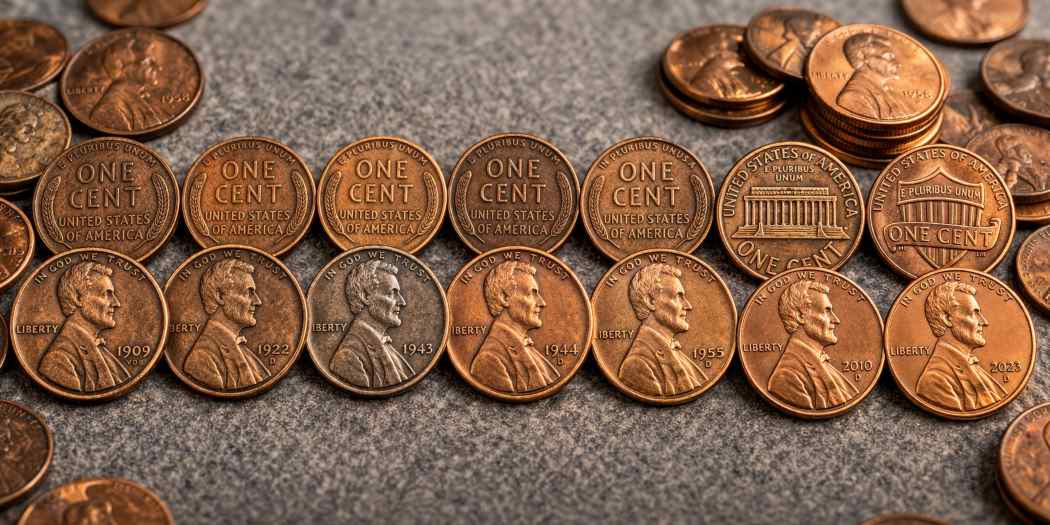
For generations, the Lincoln penny was one of the most familiar coins in American life—circulating through commerce, collections, and coin jars alike. Introduced in 1909 and designed by Victor David Brenner, the series became the first U.S. coin to feature a real historical figure, setting a precedent that continues today.
Over time, the coin evolved through several reverse designs, including the Wheat ears (1909–1958), the Lincoln Memorial created by Frank Gasparro, and the Union Shield designed by Lyndall Bass—the final reverse used for circulation. With the U.S. Mint discontinuing the production of the penny for circulation in November 2025, the Lincoln Cent has now entered a new era as a finite collectible.
This shift has dramatically changed how collectors and investors view these coins. What was once abundant is now fixed in supply, making rarity, condition, and historical context more important than ever.
Why Lincoln Pennies Are Becoming More Valuable
The value of a Lincoln penny has always extended beyond its face value, but recent changes have sharpened that focus. While pennies remain in circulation and continue to be accepted in everyday transactions, the U.S. Mint’s decision to stop producing new pennies for circulation in November 2025 means that no additional supply is being introduced into the market.
As a result, the total number of Lincoln Cents in circulation is now effectively fixed over time, with attrition gradually reducing the available population. This dynamic places greater emphasis on existing coins—particularly those that are rare, historically significant, or preserved in high grades.
Several factors are contributing to increased collector interest:
-
Renewed demand for historic U.S. coinage
-
Growing awareness of key dates and mint errors
-
Limited availability of well-preserved examples
-
Continued expansion of the collector base
In this evolving environment, understanding which coins stand out—and why—has become increasingly important for both collectors and market participants.
A New Chapter: The 2026 Lincoln Cent Issue
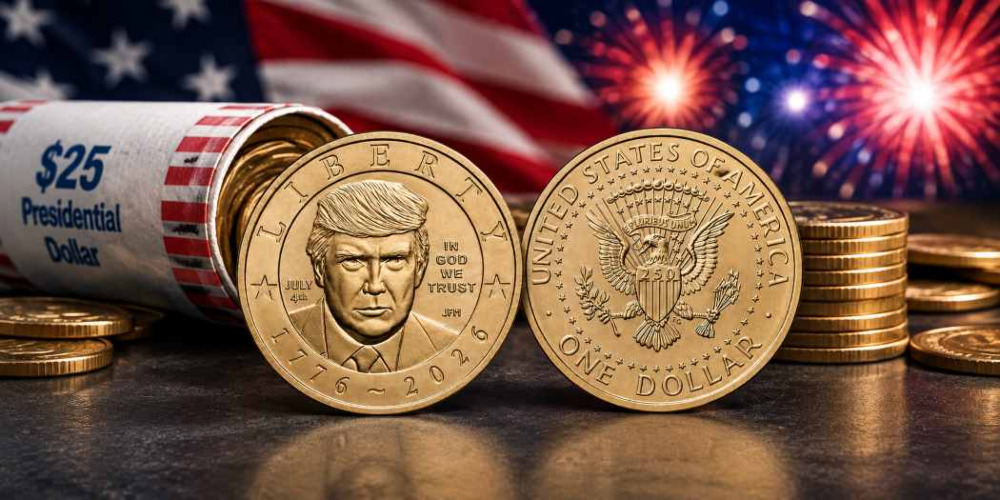
Although the Lincoln Cent has been discontinued for circulation as of November 2025, the U.S. Mint is issuing a special dual-date 1776–2026 Lincoln cent as part of its commemorative sets for the nation’s 250th anniversary.
These coins are produced exclusively for collectors and will not enter general circulation. At this time, it remains unclear whether Lincoln cents will continue to be included in future Mint-issued sets beyond this commemorative release. As a result, the 2026 issue stands as a unique moment in the series—bridging its long history as circulating coinage with its emerging role as a collectible-only product.
Top 50 Most Valuable Lincoln Pennies
Elite Rarities and Historic Errors
1. 1943 Bronze Lincoln Cent — $100,000–$350,000+
Why It’s Valuable: A famous wartime error struck in bronze instead of steel, with extremely limited survivors.
2. 1943-S Bronze Lincoln Cent — $200,000+
Why It’s Valuable: One of the rarest San Francisco Mint errors, highly coveted by collectors.
3. 1944 Steel Lincoln Cent — $75,000–$175,000
Why It’s Valuable: Transitional error from leftover steel blanks.
4. 1944-D Steel Lincoln Cent — $100,000+
Why It’s Valuable: Rare Denver Mint variation of the steel error.
5. 1958 Doubled Die Lincoln Cent — $100,000+
Why It’s Valuable: Extremely rare doubled die with minimal known examples.
6. 1982-D Small Date Copper Cent — $15,000+
Why It’s Valuable: A key transitional variety combining copper composition and small date design.
Classic Key Dates and Collector Staples
7. 1909-S VDB Lincoln Cent — $700–$2,500+
Why It’s Valuable: A low-mintage first year coin featuring Brenner’s initials.
8. 1955 Doubled Die Lincoln Cent — $1,000–$15,000
Why It’s Valuable: One of the most recognizable error coins due to bold doubling.
9. 1914-D Lincoln Cent — $150–$2,000+
Why It’s Valuable: A key date issue with limited mintage.
10. 1922 No D Lincoln Cent — $600–$4,000+
Why It’s Valuable: Mintmark removed due to die polishing.
11. 1909-S Lincoln Cent (No VDB) — $90–$500
Why It’s Valuable: Scarce early issue following design controversy.
12. 1931-S Lincoln Cent — $75–$300
Why It’s Valuable: Low mintage during the Great Depression.
Early Lincoln Cent Scarcity
13. 1911-S Lincoln Cent — $50–$250
Why It’s Valuable: Limited availability in higher grades.
14. 1910-S Lincoln Cent — $40–$200
Why It’s Valuable: Difficult to locate in mint condition.
15. 1915-S Lincoln Cent — $35–$180
Why It’s Valuable: Scarcity in well-preserved examples.
16. 1924-D Lincoln Cent — $55–$400
Why It’s Valuable: Weak strikes make high-grade coins rare.
17. 1926-S Lincoln Cent — $45–$300
Why It’s Valuable: Poor strike quality reduces top-tier survivors.
18. 1912-S Lincoln Cent — $35–$150
Why It’s Valuable: Rare in uncirculated grades.
19. 1913-S Lincoln Cent — $30–$135
Why It’s Valuable: Often poorly struck, making sharp coins valuable.
20. 1915-D Lincoln Cent — $25–$100
Why It’s Valuable: Heavy circulation limits availability.
21. 1916-S Lincoln Cent — $30–$125
Why It’s Valuable: Scarce with strong detail.
22. 1917-S Lincoln Cent — $20–$95
Why It’s Valuable: Lower mintage and strike issues.
Mid-Series Rarities
23. 1918-D Lincoln Cent — $20–$85
Why It’s Valuable: Difficult to find well-struck.
24. 1918-S Lincoln Cent — $20–$90
Why It’s Valuable: Increasing demand for high-grade coins.
25. 1919-S Lincoln Cent — $15–$70
Why It’s Valuable: Scarce in higher grades.
26. 1920-S Lincoln Cent — $20–$75
Why It’s Valuable: Weak strikes reduce availability.
27. 1921-S Lincoln Cent — $25–$90
Why It’s Valuable: Limited mint-state population.
28. 1923-S Lincoln Cent — $25–$110
Why It’s Valuable: Rare in full red condition.
29. 1925-D Lincoln Cent — $20–$95
Why It’s Valuable: Inconsistent strike quality.
30. 1926-D Lincoln Cent — $25–$110
Why It’s Valuable: Valuable in higher grades.
31. 1927-S Lincoln Cent — $20–$85
Why It’s Valuable: Weak strikes limit quality examples.
32. 1930-S Lincoln Cent — $15–$65
Why It’s Valuable: Rare in top condition.
Depression-Era and Later Dates
33. 1932-D Lincoln Cent — $15–$60
Why It’s Valuable: Reduced mintage.
34. 1933-D Lincoln Cent — $15–$55
Why It’s Valuable: Scarce in high grades.
35. 1935-S Lincoln Cent — $10–$40
Why It’s Valuable: Premium in mint condition.
36. 1937-D Lincoln Cent — $10–$40
Why It’s Valuable: Difficult to find in top grades.
37. 1939-S Lincoln Cent — $10–$35
Why It’s Valuable: Strong examples carry premiums.
Error Coins and Modern Varieties
38. 1936-D RPM — $40–$150
Why It’s Valuable: Repunched mintmark variety.
39. 1951-D/S Overmintmark — $20–$75
Why It’s Valuable: Dual mintmark error.
40. 1956-D RPM — $10–$40
Why It’s Valuable: Visible mintmark doubling.
41. 1960 Small Date — $5–$30
Why It’s Valuable: Recognized design difference.
42. 1960-D Over D RPM — $15–$50
Why It’s Valuable: Doubled mintmark.
43. 1970-S Small Date — $40–$250
Why It’s Valuable: Scarce modern variety.
44. 1983 Doubled Die Reverse — $100–$300
Why It’s Valuable: Strong reverse doubling.
45. 1984 Doubled Ear — $35–$150
Why It’s Valuable: Easily identifiable error.
46. 1992 Close AM — $1,000–$5,000
Why It’s Valuable: Rare reverse spacing variety.
47. 1999 Wide AM — $400–$1,200
Why It’s Valuable: Opposite spacing variation.
48. 1995 Doubled Die — $50–$200
Why It’s Valuable: Noticeable doubling on obverse.
Additional Coins to Watch
49. 1946-S Lincoln Cent — $5–$30
Why It’s Valuable: Scarce in high-grade red condition.
50. 1950-D Lincoln Cent — $3–$20
Why It’s Valuable: Valuable in top mint-state grades.
What Makes One Penny Worth More Than Another
Not all Lincoln cents are created equal. Value is determined by a combination of rarity, condition, and collector demand. Coins that remain close to their original mint state—especially those with full red coloration—tend to command the highest prices.
Errors and transitional varieties add another layer of value, as they represent anomalies in the minting process that are unlikely to be repeated.
Why Professional Grading Is Critical in Today’s Lincoln Cent Market
As the Lincoln Cent transitions into a finite collectible following the end of circulation in November 2025, the gap between average coins and truly valuable examples is widening. In this environment, professional grading has become a key factor in establishing not just authenticity, but market credibility and liquidity.
Certification by leading grading services such as PCGS and NGC provides a standardized assessment of a coin’s condition, including precise Mint State grades and color designations like Red (RD), Red-Brown (RB), and Brown (BN). These distinctions can dramatically influence value, with high-grade “Red” examples often commanding multiples of the price of similar coins in lower grades.
Graded coins also benefit from stronger buyer confidence and more consistent pricing across the market. For key dates, rare varieties, and error coins, professional certification is often the difference between a coin being viewed as a curiosity and being recognized as a serious collectible asset.
A Finite Series with Expanding Demand
The Lincoln penny has entered a new phase—while it remains in circulation and continues to be accepted in everyday transactions, it is no longer being produced for general circulation by the U.S. Mint. This shift means that the overall supply is no longer growing, gradually transforming the series into a finite collectible over time.
As interest continues to expand, collectors are placing greater emphasis on identifying key dates, preserving condition, and understanding the factors that drive long-term value. The combination of fixed supply and ongoing demand is reshaping how Lincoln Cents are viewed within the numismatic market.
Whether focusing on rare Wheat Pennies or modern varieties, the Lincoln Cent series continues to offer a wide range of opportunities in today’s evolving collecting landscape.