
A Missing Box Does Not Mean a Missing Investment
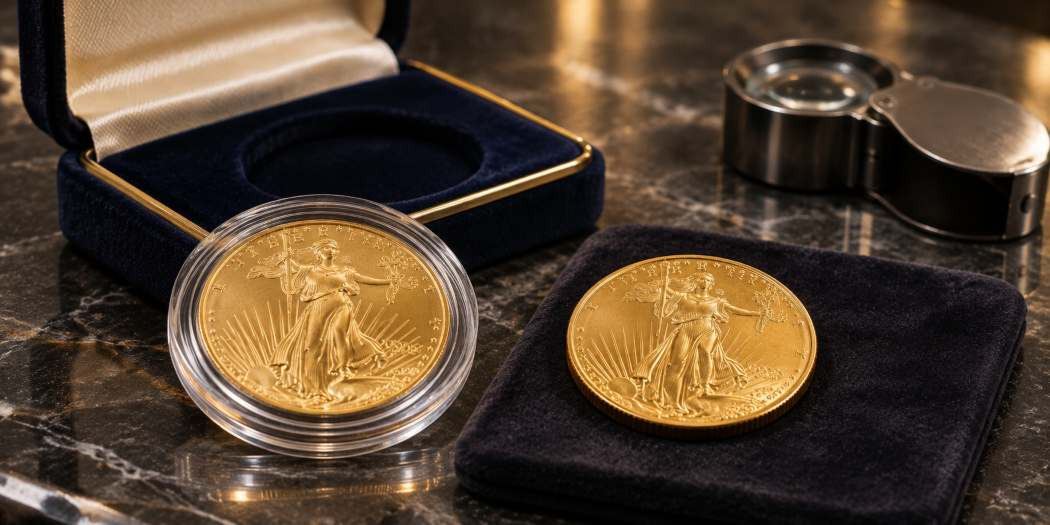
Two identical one-ounce gold coins sit in a dealer's display case. One comes in a presentation box with a certificate; the other rests in a protective capsule. The boxed coin costs more. Is the difference justified, or is the buyer paying extra for something that contributes little to the gold's underlying value?
The answer depends on the coin. Ordinary bullion is valued primarily for its precious-metal content and prevailing market premiums. Collectible issues may command additional value for condition, rarity, and original presentation. Packaging can therefore matter greatly in one transaction and barely at all in another.
For buyers, the challenge is separating these considerations before comparing prices. Missing packaging should prompt questions about a coin's identity and condition, but it should not automatically disqualify an otherwise attractive purchase.
Why Bullion Coins Often Trade Without Original Packaging
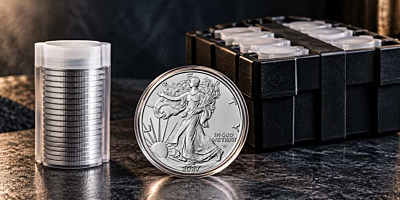
Modern gold bullion coins regularly change ownership after their initial distribution. American Gold Eagles, Canadian Gold Maple Leafs, South African Krugerrands, and Austrian Gold Philharmonics may be removed from mint tubes, transferred into individual capsules, or sold without their original containers.
The Royal Mint's bullion terminology guide explains key distinctions in precious-metals products. Government-issued bullion coins have recognized specifications, allowing dealers to evaluate them independently of packaging. A genuine one-ounce Gold Eagle still contains one troy ounce of fine gold after being removed from its original tube.
Packaging practices differ among mints and products. Some bullion coins are distributed in bulk rather than individual presentation boxes, making the absence of a certificate entirely normal. Buyers should establish how the specific issue was originally sold before treating missing materials as a concern.
Consider a loose Gold Krugerrand offered alongside an identical example in a protective capsule. Assuming both are genuine and similarly preserved, their market values may be nearly identical. Comparing prices across equivalent gold bullion coins is more useful than assuming elaborate presentation means greater value.
When Original Packaging Becomes Part of the Collectible
The calculation changes for proof coins, commemorative issues, and special collector editions. These products may have been distributed in presentation cases with certificates, explanatory booklets, or numbered documentation. Collectors often value the complete original offering alongside the coin itself.
A proof American Gold Eagle, for example, belongs to a different category from a standard bullion Gold Eagle. Proof coins receive specialized finishes and are commonly sold in presentation packaging. When collectors expect the original case and certificate, missing components can affect desirability and resale negotiations.
The impact varies. A scarce certified coin may command substantial value because of its grade and rarity even without its original box. Conversely, a modern collector set may be harder to sell as complete when its packaging is missing. This distinction between metal content and collectible premiums is explored in the guide to gold coin numismatic value.
Before paying a premium, identify what the original product included. A replacement capsule should not be mistaken for original mint presentation, and a missing certificate matters only when one was supplied. Compare genuinely equivalent products, including condition and accessories.
Authentication Matters More Than Presentation
A familiar box or printed certificate can create confidence, but neither independently proves authenticity. Packaging can be copied, replaced, or paired with a different item. A loose coin purchased from a reputable dealer may present less uncertainty than an attractively packaged coin offered by an unknown seller.
Authentication begins with the coin itself. Its design, diameter, thickness, weight, and composition should match the identified issue. Dealers may also use specialized non-destructive testing equipment. These checks matter regardless of whether original packaging is present.
A standard bullion coin can often be evaluated through recognized physical characteristics and professional testing. A rare historical issue may require closer numismatic examination because altered dates, counterfeit mint marks, or surface problems can affect its value. The guide to identifying counterfeit gold coins discusses common warning signs and verification methods.
Buyers should ask what authenticity assurances the seller provides and whether transaction documentation identifies the coin purchased. Packaging may support provenance, but uncertainty about authenticity must be resolved before completing the purchase.
Why Condition Can Outweigh the Original Box
Removing a coin from its original container does not necessarily damage it, but improper handling can. Scratches, fingerprints, rim marks, and other surface disturbances may reduce collector appeal. Proof surfaces are particularly vulnerable, making protective storage important even when original presentation materials have been lost.
Never clean or polish a gold coin to improve its appearance. Cleaning can permanently alter its surfaces and reduce numismatic value. Handle coins by their edges and store them in appropriate protective holders. If professional grading may be warranted, leave the surfaces untouched.
Third-party certification provides another form of documentation. Services such as PCGS authenticate and grade submitted coins before encapsulating them in tamper-evident holders. The PCGS guarantee of grade and authenticity describes protections associated with qualifying certified coins, subject to its terms.
A certified coin without its original mint box may consequently be easier to evaluate than an uncertified example accompanied by elaborate packaging. Certification does not guarantee future market value, but authentication and grading provide information that a presentation case cannot.
Comparing the Price of a Loose Gold Coin
A useful comparison begins with the coin's gold content and current market value. Standard bullion premiums reflect fabrication, distribution, recognizability, inventory, and demand. Missing packaging may influence that premium, but the effect depends on the specific product.
Suppose a loose bullion coin is offered at a discount to an equivalent encapsulated example. If both are authentic and similarly preserved, the discount may provide an opportunity to acquire the same gold content at a lower cost. That advantage diminishes if the coin requires expensive authentication or has damage affecting resale.
For collectible proof coins, compare recent sales of examples with and without original packaging. Completed transactions offer stronger evidence than asking prices, particularly when collector demand is limited. A presentation box may add value, but its contribution should be supported by market behavior.
Buyers should also ask whether the dealer would repurchase the coin without its packaging and whether that would affect the offer. The broader relationship between premiums and resale is examined in NYC Bullion's guide to gold coin marketability.
What the Next Buyer Will Actually Care About
A loose gold coin purchased today will face the same questions when resold. The next buyer will want to establish its identity, authenticity, preservation, and market price. Original packaging may help, but its importance depends on the product.
For widely traded bullion, recognized specifications and condition generally carry greater weight than an absent box. For collectible editions, missing certificates or presentation materials can narrow the pool of interested buyers or reduce the premium they will pay.
Someone accumulating recognizable gold bullion may prioritize authenticity, condition, and competitive premiums. A collector seeking a complete original release should establish which accessories belong with the coin before negotiating. Missing packaging becomes meaningful only when considered alongside the coin itself and the market in which it will eventually be sold.
FAQs
Can I buy a gold coin without its original packaging?
Yes. Many genuine gold bullion coins are bought and sold without their original packaging, especially after entering the secondary market. Their value generally depends on gold content, authenticity, condition, and current demand. Buyers should verify the specific coin and its specifications rather than treating a missing box as evidence of a problem. Packaging becomes more important for collectible products originally sold as complete presentation sets.
Does removing a gold coin from its capsule reduce its value?
Removing a gold coin from a capsule does not automatically reduce its value, provided the coin remains undamaged. Standard bullion coins are primarily valued for their metal content, although scratches and handling marks may affect resale appeal. Proof and collectible coins can be more sensitive to surface imperfections. If the coin is professionally graded, however, removing it from its certified holder invalidates the holder-dependent certification and associated protections.
Do American Gold Eagles come with certificates of authenticity?
Standard American Gold Eagle bullion coins are generally distributed through bullion channels without individual certificates of authenticity. Collector versions, including proof issues sold directly by the U.S. Mint, may include certificates and special presentation packaging. Buyers should identify the exact product before deciding whether anything is missing. A certificate expected for a particular collector release may affect completeness, while its absence from an ordinary bullion coin is typically normal.
Is a gold coin with a certificate always authentic?
No. A certificate of authenticity can document an issuer's original product, but the document alone does not establish that the accompanying coin is genuine. Certificates can be separated from their coins, replaced, or counterfeited. Authentication should focus on the coin's design, specifications, physical characteristics, and appropriate professional testing. A reputable seller's guarantees and accurate transaction records provide additional protection, particularly when buying an expensive or unusual issue.
Should I pay more for a gold coin in its original box?
Paying more for original packaging may be justified when the coin is a collectible proof, commemorative issue, or presentation set whose completeness affects demand. For ordinary bullion coins, the additional premium may offer little practical benefit if both examples are authentic and similarly preserved. Compare prices for equivalent products, examine their condition, and consider likely resale offers. An attractive box should not substitute for a fair assessment of the coin itself.
Can a dealer authenticate a gold coin without opening its capsule?
Often, yes, although the available methods and degree of certainty depend on the coin and holder. Dealers may inspect design details, verify dimensions where accessible, and use appropriate non-destructive equipment. Some situations require additional examination or removal from an ordinary capsule. Professionally certified holders should not be opened casually because doing so can invalidate certification. Buyers should ask how the dealer established authenticity and whether further testing is necessary.
Does missing packaging make a gold coin harder to resell?
Missing packaging may make certain collectible gold coins harder to resell, particularly when buyers expect original certificates, cases, or complete sets. For familiar bullion coins, resale typically depends more heavily on authenticity, gold content, condition, and dealer demand. A loose coin may still trade readily if it can be verified. The potential effect should be assessed before purchase by comparing actual buyback offers for similar packaged and unpackaged examples.
Related reading you may find interesting:
Where to Buy Gold in NYC for Diwali 2026